Skip to content
GAYLORD BOXES TXHOUSTON · SINCE 2009
Company · Houston since 2009

Sixteen years of
other people’s boxes.

We started in 2009 buying corrugated that was on its way into a compactor. The business has changed shape several times since — mostly because we kept discovering that the thing we were throwing away still had value.

Founded 2009Houston, TX38,000 boxes/year94% kept in service
In short: Gaylord Boxes TX was founded in Houston in 2009 as a two-person box brokerage. It now runs a full six-station loop — recovery, grading, reconditioning, redeployment, fabrication and recycling — out of a yard at 1050 E Richey Rd, Houston, TX 77073, serving Texas and the Gulf Coast.
Request a quote

Get a written quote in one business day

Tell us what you have or what you need. A real person in Houston reads every one of these — usually within a couple of hours during dock time.

US or Canada, 10 digits — area code first.

US state or Canadian province.

ZIP like 77073, or Canadian M5V 2T6.

Whole boxes. A rough number is fine.

No phone number required from us — we quote in writing so you have the numbers on paper. We never sell or share your details.

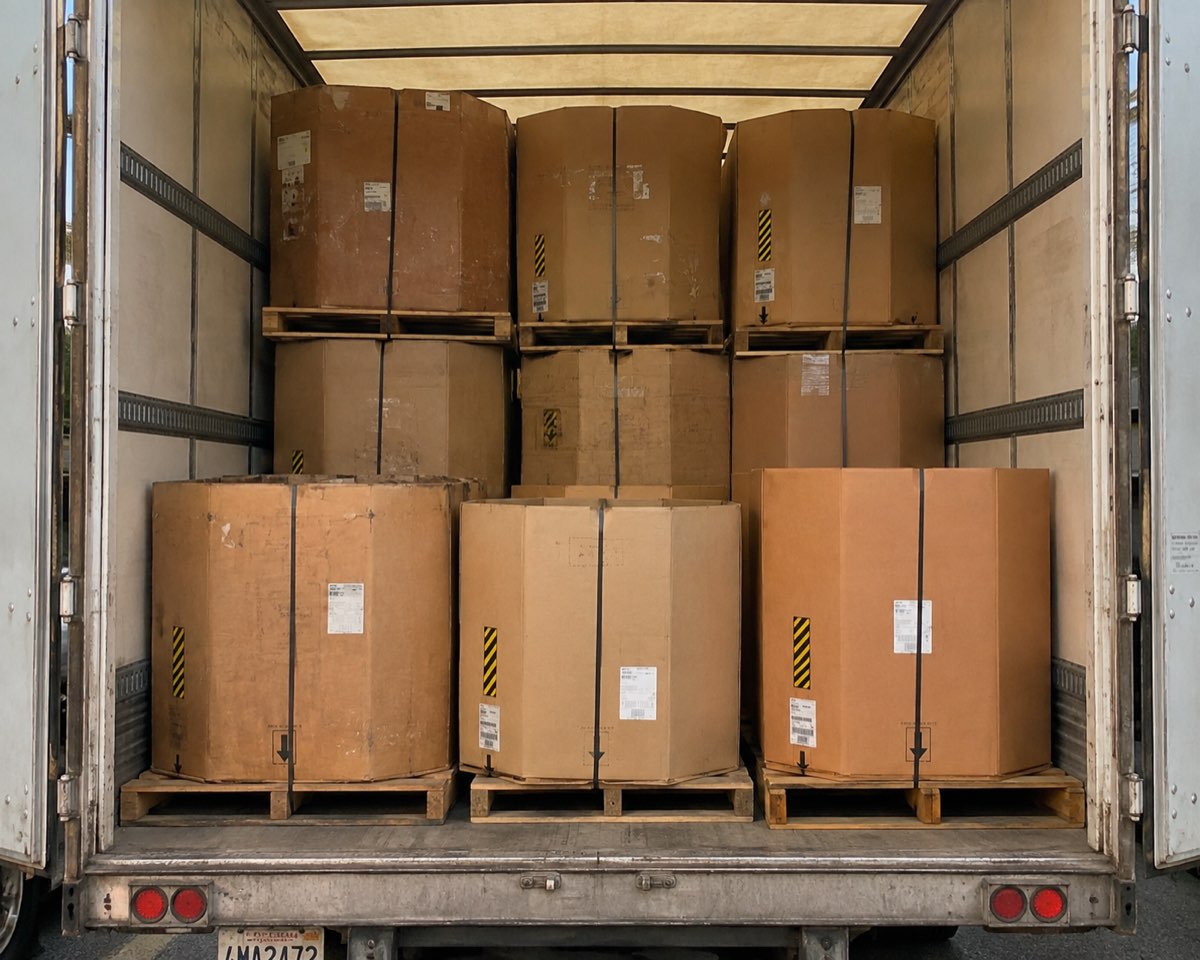
The open rear of a loaded 53-foot trailer, filled floor to ceiling with bulk bins on pallets
A loaded trailer, counted at the dock before the doors close.
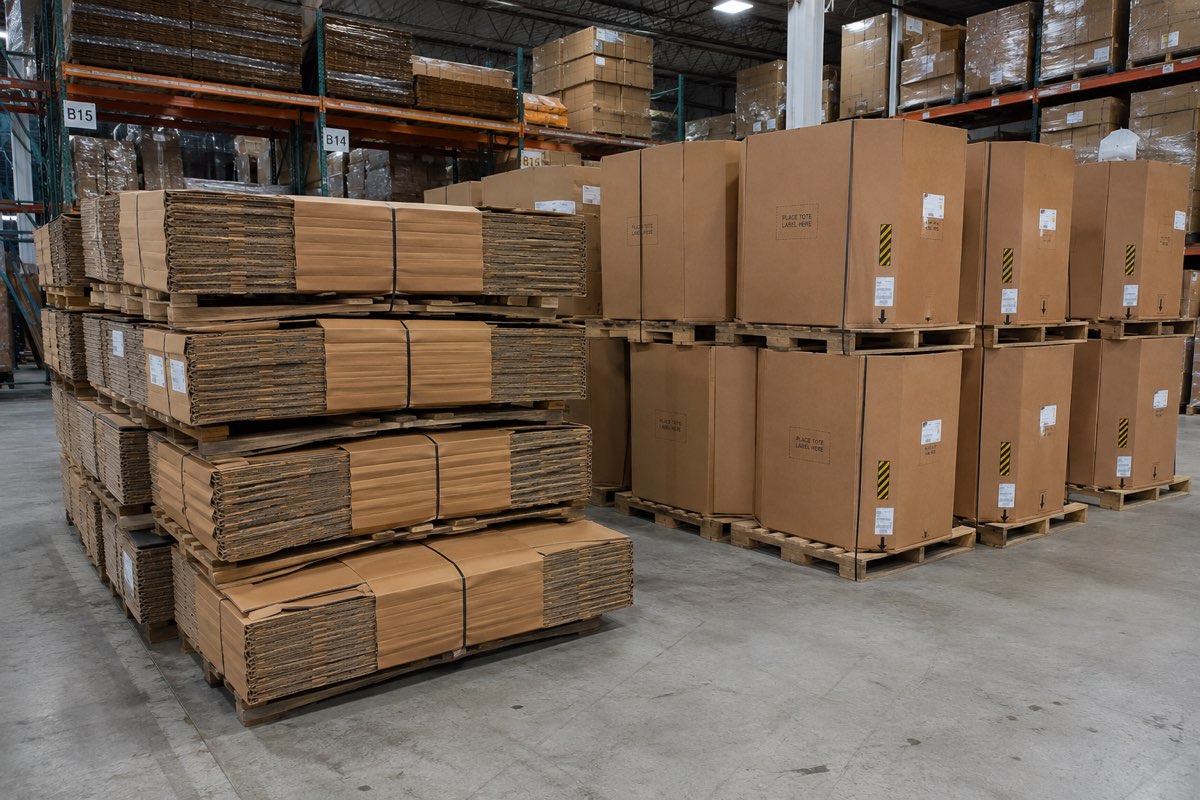
Flat banded bundles of knocked-down boxes on the left and assembled bulk bins on pallets on the right
Flat on the left, assembled on the right. The difference is most of your freight bill.
2009Year one
38k+Boxes graded a year
94%Inbound kept in service
6Stations in the loop
Timeline

How it actually went

Including the parts that did not work, because a company history with no mistakes in it is a brochure.

2009

A pickup truck and a bad recession

We started in the worst year to start anything. Plants along the ship channel were closing lines and clearing warehouses, and there was more good corrugated going into compactors than anyone could count. The first year was two people, one pickup, and a rented bay off Rankin Road — buying boxes nobody wanted and selling them to processors who could not justify new stock.

2011

The first grading line

For two years we sold boxes the way everyone else did: by the pallet, sight unseen, and argued about condition afterwards. In 2011 we built a proper grading line and wrote the six-point inspection down. Sales dropped for a quarter because we were now telling people their boxes were Grade B. Then they came back, because a customer who gets the grade they paid for orders again.

2013

Moving to E Richey Rd

The Rankin Road bay could hold about 900 boxes. We moved to the current yard on E Richey Rd, just off I-45 north, because it put a truck within same-day reach of Harris County, Montgomery County and the ship channel without touching the 610 loop at rush hour. That decision has done more for our freight costs than any negotiation since.

2015

We stopped answering the phone

Genuinely the most controversial thing this business has ever done. We were quoting on the phone, misremembering the numbers, and re-litigating the same order three times. So we took the number off the website and put everything in writing. We lost a handful of customers who wanted to talk. We kept the ones who wanted a document they could forward to purchasing.

2017

Baling, and the honest number

We had been sending scrap fiber to a third party and never seeing the ticket. Bringing baling in-house meant we could put a certified weight in front of a customer the same day. It also meant discovering that roughly a third of what customers labelled scrap was still a working box — which changed how we buy, permanently.

2019

First closed-loop pool

A resin compounder in Pasadena asked whether we could just keep their boxes circulating instead of selling them new ones every month. We sized a pool, built a swap route, trained their dock team on where to put a box knife, and their packaging spend fell by just over half in two cycles. We have been running loops ever since.

2021

The fabrication table

Baling boxes with three good walls always felt wasteful. We put in a cutting table and started making dividers, layer pads and pallet caps from recovered board. It began as a way to use scrap and turned into a line of business, mostly because short runs of 50 to 500 pieces are miserable to buy new and easy to make from board we already own.

2023

Publishing the playbook

We put the grading thresholds, the freight math, the wall-count derates and the whole specification logic on the website, free, including the parts a salesperson would normally hold back. The reasoning was straightforward: our advantage is a yard full of graded stock in Houston, not an information gap.

Now

Six stations, one loop

Recover, grade, recondition, redeploy, refabricate, recycle. Roughly 38,000 boxes graded a year, 94% of inbound volume kept in service or converted rather than landfilled, and lanes running north to Dallas, west to Austin and San Antonio, and east to the Golden Triangle.
How we operate

Four positions we are not flexible on

Everything in writing

We do not have a phone number and we are not planning to get one. Every quote is a one-page document with sizes, grades, quantities, freight and terms on it — something you can forward to purchasing without reconstructing a conversation from memory.

Published thresholds, not opinions

Our grading criteria are on the website. If you think a delivered pallet was mis-graded, you can check it against the same six points we used. We would rather re-grade a load than have someone stop trusting the categories.

We will talk you out of things

Over-specified wall counts, Grade A boxes for material that never leaves your building, assembled delivery when knocked down would do. Selling someone a more expensive box than they need is a one-order strategy.

Reuse before recycling, always

Every load that arrives for baling goes across the grading line first. It costs us labour, it earns customers a better settlement, and it is the reason our diversion numbers are what they are.

The yard

We operate from 1050 E Richey Rd, Houston, TX 77073, on the north side of Houston just off I-45. It is not a showroom. It is a working yard with a grading line, a baler, a fabrication table, a stack of trailers and several thousand boxes sorted by grade and wall count.

You are welcome to come and look at what you would be buying — most customers who do end up ordering, because the difference between a description of a Grade B box and an actual Grade B box is instructive. Dock hours are Monday to Friday 7:00 to 17:00 and Saturday 8:00 to 12:00, Central.

The people

About two dozen of us: grading line, baler, fabrication, drivers, and the quote desk that reads every form submission that arrives. The quote desk is the part customers interact with most, and it is staffed by people who have worked the grading line — which is why the numbers you get back tend to hold up.

VISIT

1050 E Richey Rd, Houston, TX 77073

Mon–Fri 7:00 AM – 5:00 PM CT
Sat 8:00 AM – 12:00 PM CT
Sun closed

WRITE

info@gaylordboxestx.com

One business day, usually a couple of hours during dock time. No phone number — that is deliberate, and explained at length in the FAQ.

Ready to move some boxes?

Send the form once. We answer in writing with grades, quantities, sizes and freight — no phone tag, because we don't even have a phone number.

Quick reference

Every number on this site, on one screen

The numbers we get asked for most

Standard size
48" × 40" × 36"
Standard volume
40 cu ft nominal
Usable volume
80–85% of nominal
Capacity range
900 – 4,500 lb
Per 53′ trailer, KD
≈ 480 boxes
Per 53′ assembled
26 pallet positions
Overhang penalty
≈ 20% per inch
Humidity at 90% RH
≈ 50% strength
Trips per box
3–6 when handled well
New box CO₂e
≈ 13 lb
Reuse cycle CO₂e
≈ 1.2 lb
OCC per 53′ trailer
≈ 20 tons

Stocked sizes, capacities and truckload counts

Inside dimensionsVolumeCapacityPer 53′ KDStock
48″ × 40″ × 3640 cu ft1,200 – 2,800 lb480Deep stock
48″ × 40″ × 3033.3 cu ft1,000 – 2,000 lb540Deep stock
48″ × 40″ × 2426.7 cu ft900 – 1,800 lb600Regular stock
48″ × 40″ × 4246.7 cu ft1,800 – 3,000 lb420Regular stock
48″ × 40″ × 4853.3 cu ft2,500 – 4,000 lb360Regular stock
40″ × 48″ × 4550 cu ft2,400 – 3,400 lb390Seasonal
41″ × 28″ × 2516.6 cu ft700 – 1,400 lb900Regular stock
30″ × 30″ × 3015.6 cu ft500 – 900 lb1100Regular stock
45″ × 30″ × 4535.2 cu ft1,500 – 2,200 lb560Seasonal
47″ × 38″ × 4445.5 cu ft2,000 – 3,000 lb400Seasonal
48″ × 48″ × 4053.3 cu ft2,800 – 4,500 lb320Made to order
48″ × 40″ × 4044.4 cu ft2,500 – 4,000 lb400Regular stock

Inside dimensions. Outside runs ½″ to 1½″ larger per dimension depending on wall count — use OD for racking and trailer clearances. Full size chart →

Wall count and load ratings

WallsStatic loadStackTypical ECT
2-wall1,000–1,200 lb2 high48–61 lb/in
3-wall (tri-wall)1,800–2,000 lb2–3 high71–82 lb/in
4-wall2,500–3,000 lb3 high90–110 lb/in
5-wall4,000 lb+3–4 high120+ lb/in

Ratings assume dry, aligned, fully supported, short duration. Derating explained →

Grades, at a glance

GradeConditionTrips left
1AStraight from the corrugator, unused, printed or plain.4–6 trips typical
AOne fill, clean, no repairs, no cuts. The sweet spot.3–5 trips typical
BTwo or three uses. Up to two clean repairs. Structurally honest.2–3 trips typical
CWorking boxes. Cosmetically rough, structurally usable, cheap.1–2 trips typical
SCRAPEnd of life as a container. Beginning of life as fiber.Reborn as new liner within weeks

Every pass/fail threshold →

Derating factors — apply all that fit, multiplied

ConditionFactorWhy
Storage under a month×1.0No creep adjustment needed
One to six months loaded×1.4Corrugated creeps under sustained load
Over six months loaded×1.6Long-term storage
Dry warehouse×1.15Mild humidity exposure
Open dock, no A/C×1.3Most of Houston, most of the year
Outdoors or cooler×1.5Needs a lid as well

Required load = full box weight × (stack − 1) × creep × humidity. Run it automatically →

Service area and turnaround

AreaTurnaroundRegion
HoustonSame day, most ZIPsHarris County
Pasadena & Deer ParkSame dayShip Channel East
Conroe & The WoodlandsSame dayMontgomery County
Beaumont & Port ArthurNext day, scheduled routesGolden Triangle
Dallas–Fort WorthScheduled backhaul lanesNorth Texas
San Antonio & AustinScheduled lanes, 2–4 daysI-35 Corridor
Yard
1050 E Richey Rd, Houston, TX 77073
Monday – Friday
7:00 AM – 5:00 PM CT
Saturday
8:00 AM – 12:00 PM CT
Sunday
Closed
Telephone
None — every quote is issued in writing
Quote turnaround
One business day