Skip to content
GAYLORD BOXES TXHOUSTON · SINCE 2009
Product · Pallets

The thing under the box, which decides whether the box survives

A box hanging one inch over a pallet edge loses roughly 20% of its stacking strength, because the corners lose their support. Pallets are not an afterthought line item — they are half of the structural system.

GMA 48×40 A & BHeat-treated / ISPM-15Plastic palletsDelivered with your boxes
Short answer: We stock 48×40 GMA pallets in Grade A and Grade B, heat-treated ISPM-15 pallets for export, and plastic pallets, sold alongside boxes so a single delivery arrives complete. Pallet size must match box footprint exactly — overhang costs stacking strength where you can least afford it.
Request a quote

Ask about pallets

Tell us what you have or what you need. A real person in Houston reads every one of these — usually within a couple of hours during dock time.
US or Canada, 10 digits — area code first.

US state or Canadian province.

ZIP like 77073, or Canadian M5V 2T6.

Whole boxes. A rough number is fine.

No phone number required from us — we quote in writing so you have the numbers on paper. We never sell or share your details.

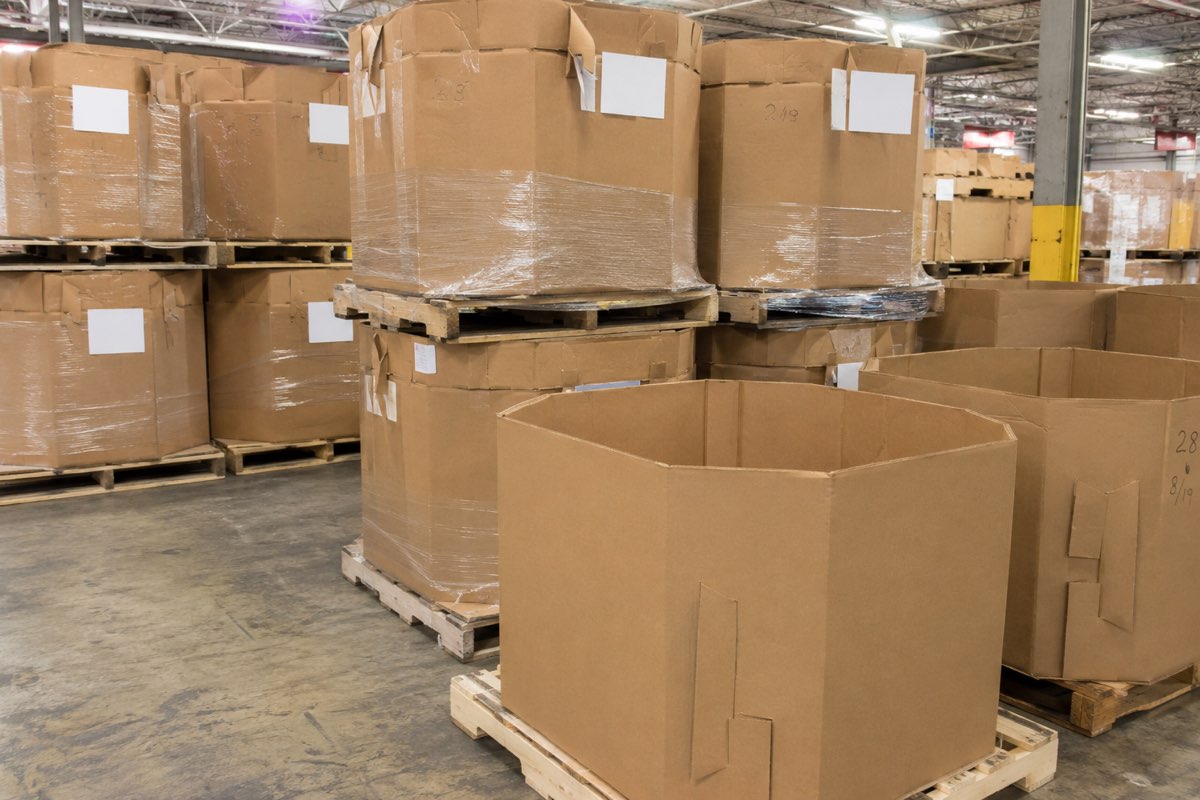
Rows of octagon bulk bins on wooden pallets inside the Houston warehouse, some shrink-wrapped and stacked two high
Graded stock on the floor. Every one of these has been through the six-point inspection.
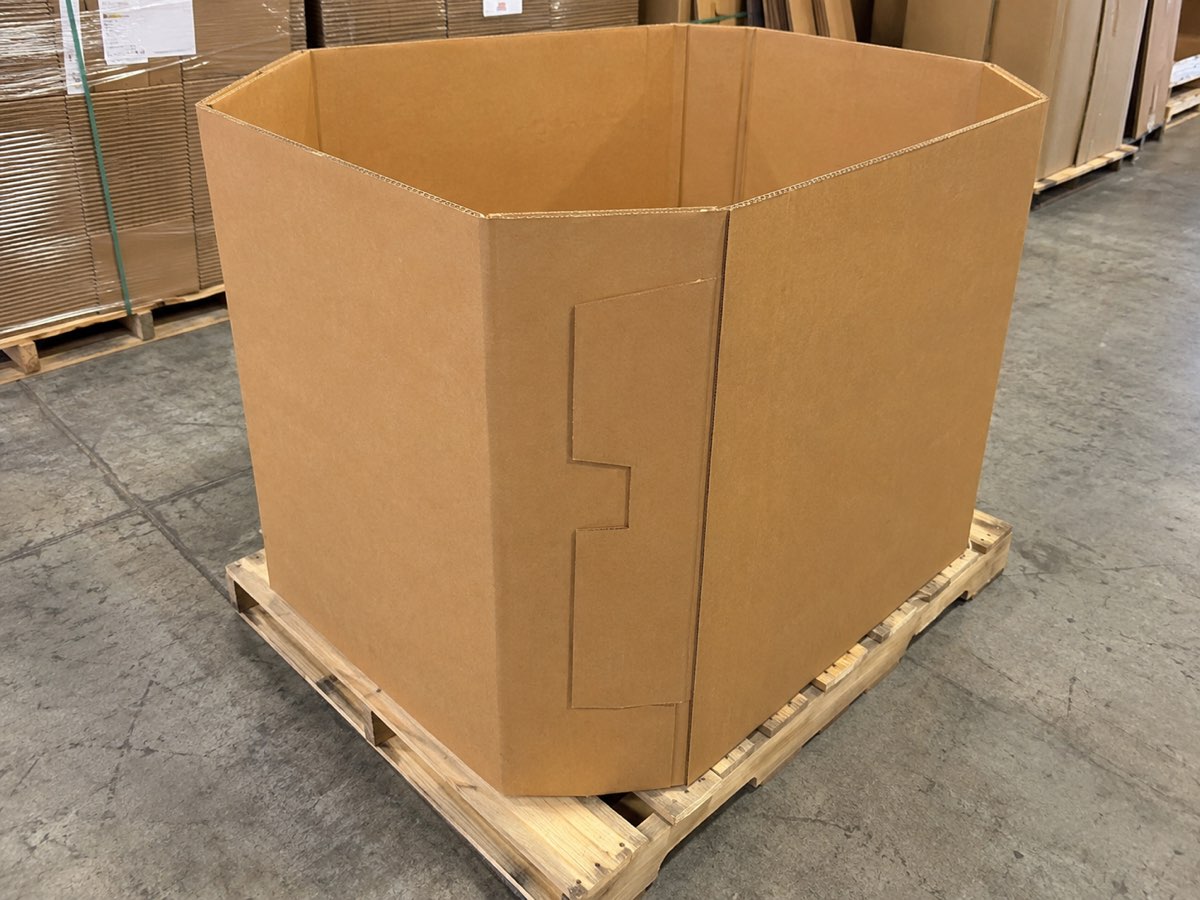
A single open octagon bulk bin standing on a wooden pallet on a warehouse floor
An eight-sided bin on a standard 48 × 40 pallet. No corner to blow out.
Spec sheet

At a glance

GMA Grade A
48" × 40", no repairs, stringers intact
GMA Grade B
One or two repaired stringers, fully serviceable
Heat treated
ISPM-15 stamped for international shipment
Plastic
Nestable and rackable, for wash-down and closed loops
Square sizes
48" × 48" for square boxes — do not improvise this
We also buy
Yes, per pallet by grade, usually on the same truck

Overhang is the failure mode nobody plans for

Published box compression ratings assume the box is fully supported and stacked corner to corner. Hang the box over the pallet edge and the corners — which carry 60–70% of the load — are supported by air. One inch of overhang costs roughly 20% of stacking strength. Two inches and you are into the range where a bottom box in a three-high stack is genuinely unsafe.

If you buy 48×48 square boxes, buy 48×48 pallets. This sounds obvious and it is the single most common structural mistake we see on customer docks.

Grades

GradeConditionBest for
GMA ANo repairs, all stringers and boards intactOutbound loads, racking, customer-facing
GMA BOne or two repaired stringers, serviceableInternal transfer, collection, storage
Heat treatedISPM-15 stampedExport — required for most international shipments
PlasticMoulded HDPE, nestable or rackableWash-down, food, closed loops

Wood versus plastic

Wood is cheaper, repairable, recyclable and heavier. Plastic is more expensive up front, washable, dimensionally consistent (which robots appreciate) and lasts far longer in a closed loop. The break-even is similar to the box question: high-cycle short loops favour plastic, one-way and variable-volume favours wood.

Buying and selling on the same truck

Pallets accumulate the same way empty boxes do, and they have the same problem: they eat dock space and eventually somebody pays to remove them. We buy them by the grade, usually on the truck that is already coming to you with boxes. It is the least glamorous efficiency in this business and one of the most reliable.

Questions

Pallets — common questions

Do I need heat-treated pallets?

Only for international shipments — ISPM-15 is a phytosanitary requirement for solid wood packaging crossing most borders. Domestic freight does not require it.

Can you deliver pallets without boxes?

Yes, though the freight math works considerably better if they ride along with a box order.

Do you buy broken pallets?

Yes, for repair or for grinding. The rate is lower but it beats paying to dispose of them.

What pallet does a standard gaylord box need?

A 48×40 GMA. That footprint is precisely why the standard gaylord box is 48×40 in the first place.

Need pallets?

Send the form once. We answer in writing with grades, quantities, sizes and freight — no phone tag, because we don't even have a phone number.

Quick reference

Every number on this site, on one screen

The numbers we get asked for most

Standard size
48" × 40" × 36"
Standard volume
40 cu ft nominal
Usable volume
80–85% of nominal
Capacity range
900 – 4,500 lb
Per 53′ trailer, KD
≈ 480 boxes
Per 53′ assembled
26 pallet positions
Overhang penalty
≈ 20% per inch
Humidity at 90% RH
≈ 50% strength
Trips per box
3–6 when handled well
New box CO₂e
≈ 13 lb
Reuse cycle CO₂e
≈ 1.2 lb
OCC per 53′ trailer
≈ 20 tons

Stocked sizes, capacities and truckload counts

Inside dimensionsVolumeCapacityPer 53′ KDStock
48″ × 40″ × 3640 cu ft1,200 – 2,800 lb480Deep stock
48″ × 40″ × 3033.3 cu ft1,000 – 2,000 lb540Deep stock
48″ × 40″ × 2426.7 cu ft900 – 1,800 lb600Regular stock
48″ × 40″ × 4246.7 cu ft1,800 – 3,000 lb420Regular stock
48″ × 40″ × 4853.3 cu ft2,500 – 4,000 lb360Regular stock
40″ × 48″ × 4550 cu ft2,400 – 3,400 lb390Seasonal
41″ × 28″ × 2516.6 cu ft700 – 1,400 lb900Regular stock
30″ × 30″ × 3015.6 cu ft500 – 900 lb1100Regular stock
45″ × 30″ × 4535.2 cu ft1,500 – 2,200 lb560Seasonal
47″ × 38″ × 4445.5 cu ft2,000 – 3,000 lb400Seasonal
48″ × 48″ × 4053.3 cu ft2,800 – 4,500 lb320Made to order
48″ × 40″ × 4044.4 cu ft2,500 – 4,000 lb400Regular stock

Inside dimensions. Outside runs ½″ to 1½″ larger per dimension depending on wall count — use OD for racking and trailer clearances. Full size chart →

Wall count and load ratings

WallsStatic loadStackTypical ECT
2-wall1,000–1,200 lb2 high48–61 lb/in
3-wall (tri-wall)1,800–2,000 lb2–3 high71–82 lb/in
4-wall2,500–3,000 lb3 high90–110 lb/in
5-wall4,000 lb+3–4 high120+ lb/in

Ratings assume dry, aligned, fully supported, short duration. Derating explained →

Grades, at a glance

GradeConditionTrips left
1AStraight from the corrugator, unused, printed or plain.4–6 trips typical
AOne fill, clean, no repairs, no cuts. The sweet spot.3–5 trips typical
BTwo or three uses. Up to two clean repairs. Structurally honest.2–3 trips typical
CWorking boxes. Cosmetically rough, structurally usable, cheap.1–2 trips typical
SCRAPEnd of life as a container. Beginning of life as fiber.Reborn as new liner within weeks

Every pass/fail threshold →

Derating factors — apply all that fit, multiplied

ConditionFactorWhy
Storage under a month×1.0No creep adjustment needed
One to six months loaded×1.4Corrugated creeps under sustained load
Over six months loaded×1.6Long-term storage
Dry warehouse×1.15Mild humidity exposure
Open dock, no A/C×1.3Most of Houston, most of the year
Outdoors or cooler×1.5Needs a lid as well

Required load = full box weight × (stack − 1) × creep × humidity. Run it automatically →

Service area and turnaround

AreaTurnaroundRegion
HoustonSame day, most ZIPsHarris County
Pasadena & Deer ParkSame dayShip Channel East
Conroe & The WoodlandsSame dayMontgomery County
Beaumont & Port ArthurNext day, scheduled routesGolden Triangle
Dallas–Fort WorthScheduled backhaul lanesNorth Texas
San Antonio & AustinScheduled lanes, 2–4 daysI-35 Corridor
Yard
1050 E Richey Rd, Houston, TX 77073
Monday – Friday
7:00 AM – 5:00 PM CT
Saturday
8:00 AM – 12:00 PM CT
Sunday
Closed
Telephone
None — every quote is issued in writing
Quote turnaround
One business day