Standard 48×40
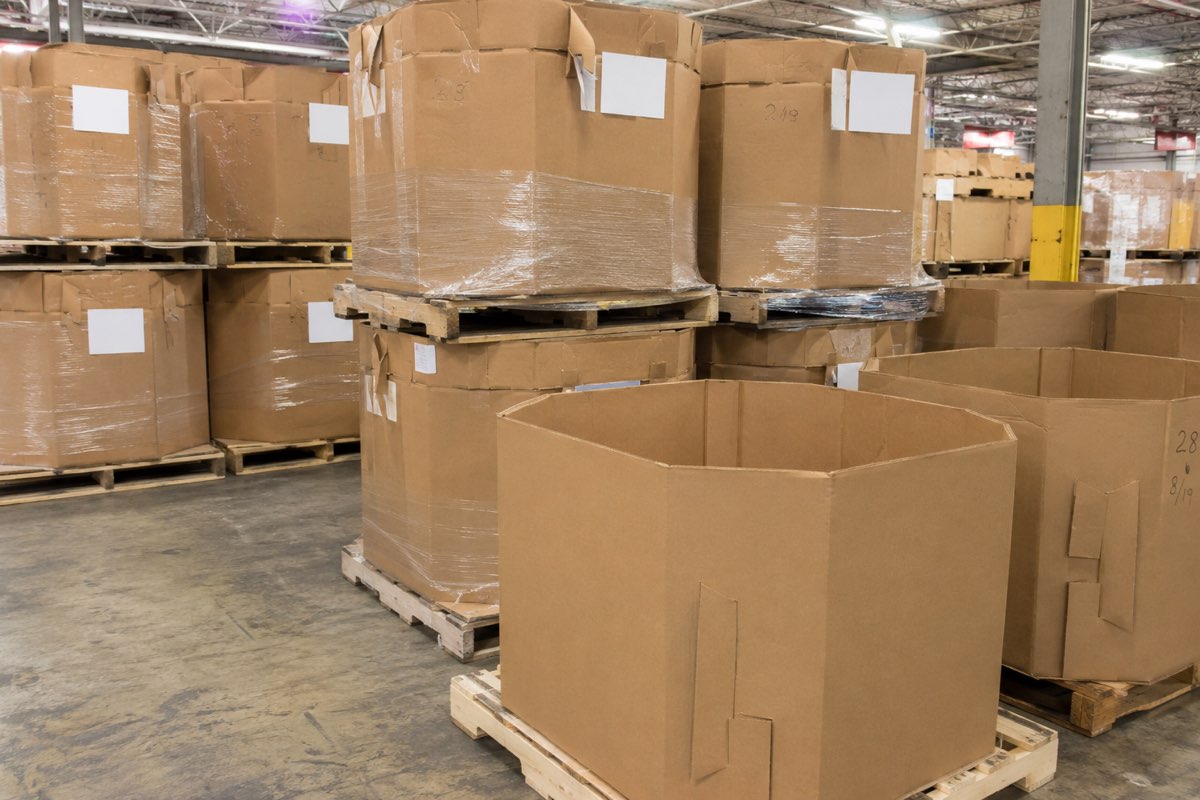
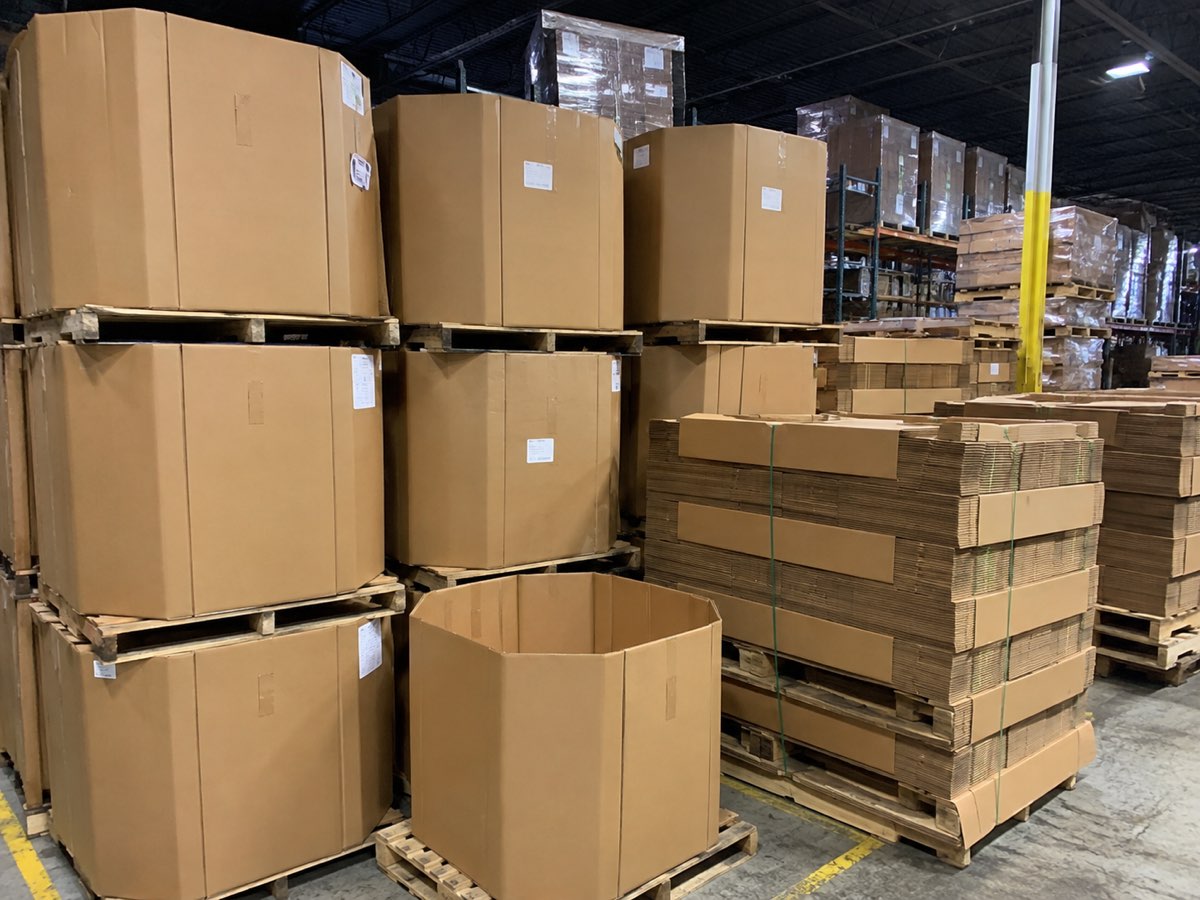
If someone says 'a gaylord' with no other information, this is what they mean.
- 48″ × 40″ × 36″ — 1,200 – 2,800 lb
- 48″ × 40″ × 30″ — 1,000 – 2,000 lb
- 48″ × 40″ × 24″ — 900 – 1,800 lb
Every size in this chart exists because a specific combination of material density, handling method and freight economics made the others wrong. Below is the full table, then the reasoning behind each dimension.
Tell us what you have or what you need. A real person in Houston reads every one of these — usually within a couple of hours during dock time.
Capacity ranges span the wall counts we stock in that footprint. Truckload counts are knocked-down and banded.
| Size (ID) | Family | Walls | Capacity | Volume | Per 53′ KD | Stock | Best for |
|---|---|---|---|---|---|---|---|
| 48″ × 40″ × 36″ | Standard 48×40 | 2-wall to 4-wall | 1,200 – 2,800 lb | 40 cu ft | 480 | Deep stock | The default. Regrind, textiles, plastics, e-scrap, retail returns. |
| 48″ × 40″ × 30″ | Standard 48×40 | 2-wall to 3-wall | 1,000 – 2,000 lb | 33.3 cu ft | 540 | Deep stock | Dense material — metal turnings, glass cullet, wet fiber, minerals. |
| 48″ × 40″ × 24″ | Standard 48×40 | 2-wall to 3-wall | 900 – 1,800 lb | 26.7 cu ft | 600 | Regular stock | Line-side WIP, heavy castings, ergonomic hand-pick stations. |
| 48″ × 40″ × 42″ | Tall & extra-tall | 3-wall to 4-wall | 1,800 – 3,000 lb | 46.7 cu ft | 420 | Regular stock | Fluff, foam, film, EPS, light plastics, apparel. |
| 48″ × 40″ × 48″ | Tall & extra-tall | 4-wall to 5-wall | 2,500 – 4,000 lb | 53.3 cu ft | 360 | Regular stock | Baled film, bulk pellets in liners, long parts, seat cushions. |
| 40″ × 48″ × 45″ | Tall & extra-tall | 4-wall | 2,400 – 3,400 lb | 50 cu ft | 390 | Seasonal | Automotive interiors, converted foam, bulky returns. |
| 41″ × 28″ × 25″ | Half & quarter | 2-wall to 3-wall | 700 – 1,400 lb | 16.6 cu ft | 900 | Regular stock | Two-per-pallet picking, retail backrooms, sample runs. |
| 30″ × 30″ × 30″ | Half & quarter | 2-wall | 500 – 900 lb | 15.6 cu ft | 1100 | Regular stock | Lab waste, e-scrap sorting, small-parts kitting, mobile carts. |
| 45″ × 30″ × 45″ | Oversize & odd | 3-wall | 1,500 – 2,200 lb | 35.2 cu ft | 560 | Seasonal | Aisle-side collection, narrow racking, tight production cells. |
| 47″ × 38″ × 44″ | Oversize & odd | 3-wall to 4-wall | 2,000 – 3,000 lb | 45.5 cu ft | 400 | Seasonal | Resin, imported components, one-way inbound freight. |
| 48″ × 48″ × 40″ | Oversize & odd | 4-wall to 5-wall | 2,800 – 4,500 lb | 53.3 cu ft | 320 | Made to order | Chemical totes, heavy powders, foundry sand, aggregate blends. |
| 48″ × 40″ × 40″ | Octagon | Tri-wall octagon | 2,500 – 4,000 lb | 44.4 cu ft | 400 | Regular stock | Free-flowing solids, resin, food-grade dry goods, agriculture. |
Scroll the table sideways on a phone. Every size links to a full spec page with load calculations, pallet fit and the reasoning behind the dimension.
Most buyers do not need to compare twelve sizes. They need to identify which of five families their material belongs to, and then pick a wall height.
If someone says 'a gaylord' with no other information, this is what they mean.
When your material weighs nothing and takes everything, buy height instead of buying more boxes.
Two of these land on one 48×40 pallet with room for straps.
Thirty inches wide clears most standard aisle widths with a pallet jack.
Eight sides means no corner to blow out — hoop stress spreads instead of concentrating.
Inside versus outside, why the difference grows with wall count, and which one your racking cares about.
2-wall through 5-wall load ratings, edge crush, creep, humidity and the four things that destroy stacking strength.
The five-minute procedure for measuring a box you already have, so the replacement actually matches.
Overhang, pallet matching, boxes per trailer knocked down and assembled, and how to plan a load.
48" × 40" × 36" inside dimensions. It matches the GMA pallet footprint exactly, which is the entire reason it exists in that dimension. Wall heights of 30" and 42" are the next most common.
Inside dimensions (ID), because what matters is what fits in the box. Outside dimensions run roughly ½" to 1½" larger per side depending on wall count. If a dimension matters for racking or trailer fit, ask for OD explicitly.
Multiply volume in cubic feet by your material's bulk density in pounds per cubic foot, then check that number against the box's weight capacity. Dense material hits the weight limit long before it fills the volume — which is exactly why short-wall boxes exist.
Yes. New boxes are made to any inside dimension in one-inch increments, and we can cut down used boxes to a shorter wall height. Cut-downs are usually cheaper and always faster.
| Inside dimensions | Volume | Capacity | Per 53′ KD | Stock |
|---|---|---|---|---|
| 48″ × 40″ × 36″ | 40 cu ft | 1,200 – 2,800 lb | 480 | Deep stock |
| 48″ × 40″ × 30″ | 33.3 cu ft | 1,000 – 2,000 lb | 540 | Deep stock |
| 48″ × 40″ × 24″ | 26.7 cu ft | 900 – 1,800 lb | 600 | Regular stock |
| 48″ × 40″ × 42″ | 46.7 cu ft | 1,800 – 3,000 lb | 420 | Regular stock |
| 48″ × 40″ × 48″ | 53.3 cu ft | 2,500 – 4,000 lb | 360 | Regular stock |
| 40″ × 48″ × 45″ | 50 cu ft | 2,400 – 3,400 lb | 390 | Seasonal |
| 41″ × 28″ × 25″ | 16.6 cu ft | 700 – 1,400 lb | 900 | Regular stock |
| 30″ × 30″ × 30″ | 15.6 cu ft | 500 – 900 lb | 1100 | Regular stock |
| 45″ × 30″ × 45″ | 35.2 cu ft | 1,500 – 2,200 lb | 560 | Seasonal |
| 47″ × 38″ × 44″ | 45.5 cu ft | 2,000 – 3,000 lb | 400 | Seasonal |
| 48″ × 48″ × 40″ | 53.3 cu ft | 2,800 – 4,500 lb | 320 | Made to order |
| 48″ × 40″ × 40″ | 44.4 cu ft | 2,500 – 4,000 lb | 400 | Regular stock |
Inside dimensions. Outside runs ½″ to 1½″ larger per dimension depending on wall count — use OD for racking and trailer clearances. Full size chart →
| Walls | Static load | Stack | Typical ECT |
|---|---|---|---|
| 2-wall | 1,000–1,200 lb | 2 high | 48–61 lb/in |
| 3-wall (tri-wall) | 1,800–2,000 lb | 2–3 high | 71–82 lb/in |
| 4-wall | 2,500–3,000 lb | 3 high | 90–110 lb/in |
| 5-wall | 4,000 lb+ | 3–4 high | 120+ lb/in |
Ratings assume dry, aligned, fully supported, short duration. Derating explained →
| Grade | Condition | Trips left |
|---|---|---|
| 1A | Straight from the corrugator, unused, printed or plain. | 4–6 trips typical |
| A | One fill, clean, no repairs, no cuts. The sweet spot. | 3–5 trips typical |
| B | Two or three uses. Up to two clean repairs. Structurally honest. | 2–3 trips typical |
| C | Working boxes. Cosmetically rough, structurally usable, cheap. | 1–2 trips typical |
| SCRAP | End of life as a container. Beginning of life as fiber. | Reborn as new liner within weeks |
| Condition | Factor | Why |
|---|---|---|
| Storage under a month | ×1.0 | No creep adjustment needed |
| One to six months loaded | ×1.4 | Corrugated creeps under sustained load |
| Over six months loaded | ×1.6 | Long-term storage |
| Dry warehouse | ×1.15 | Mild humidity exposure |
| Open dock, no A/C | ×1.3 | Most of Houston, most of the year |
| Outdoors or cooler | ×1.5 | Needs a lid as well |
Required load = full box weight × (stack − 1) × creep × humidity. Run it automatically →
| Area | Turnaround | Region |
|---|---|---|
| Houston | Same day, most ZIPs | Harris County |
| Pasadena & Deer Park | Same day | Ship Channel East |
| Conroe & The Woodlands | Same day | Montgomery County |
| Beaumont & Port Arthur | Next day, scheduled routes | Golden Triangle |
| Dallas–Fort Worth | Scheduled backhaul lanes | North Texas |
| San Antonio & Austin | Scheduled lanes, 2–4 days | I-35 Corridor |