What we make from boxes that will never be boxes again
A wall panel with a blown corner is still 12 square feet of perfectly good tri-wall board. Our fabrication table turns that into the dividers, pads and inserts most operations were buying new.
Request a upcycled fabrication quote
Tell us what you have or what you need. A real person in Houston reads every one of these — usually within a couple of hours during dock time.
The logic
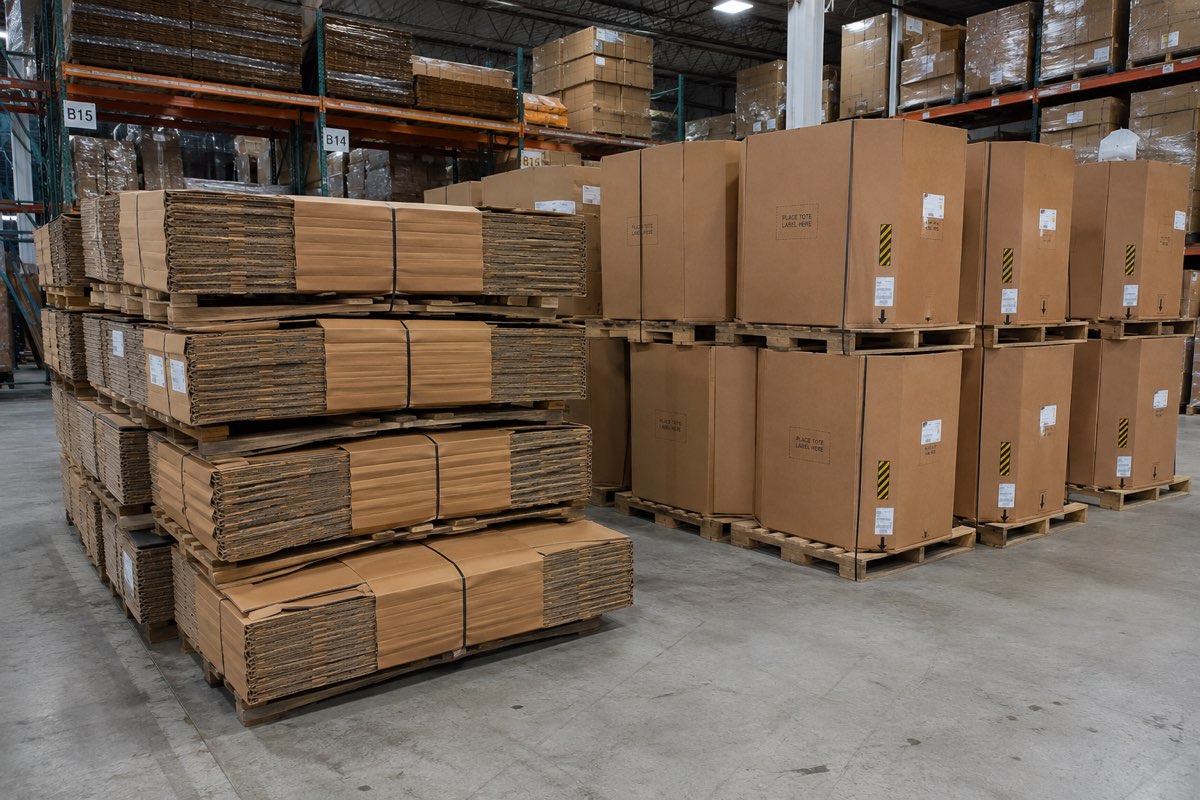
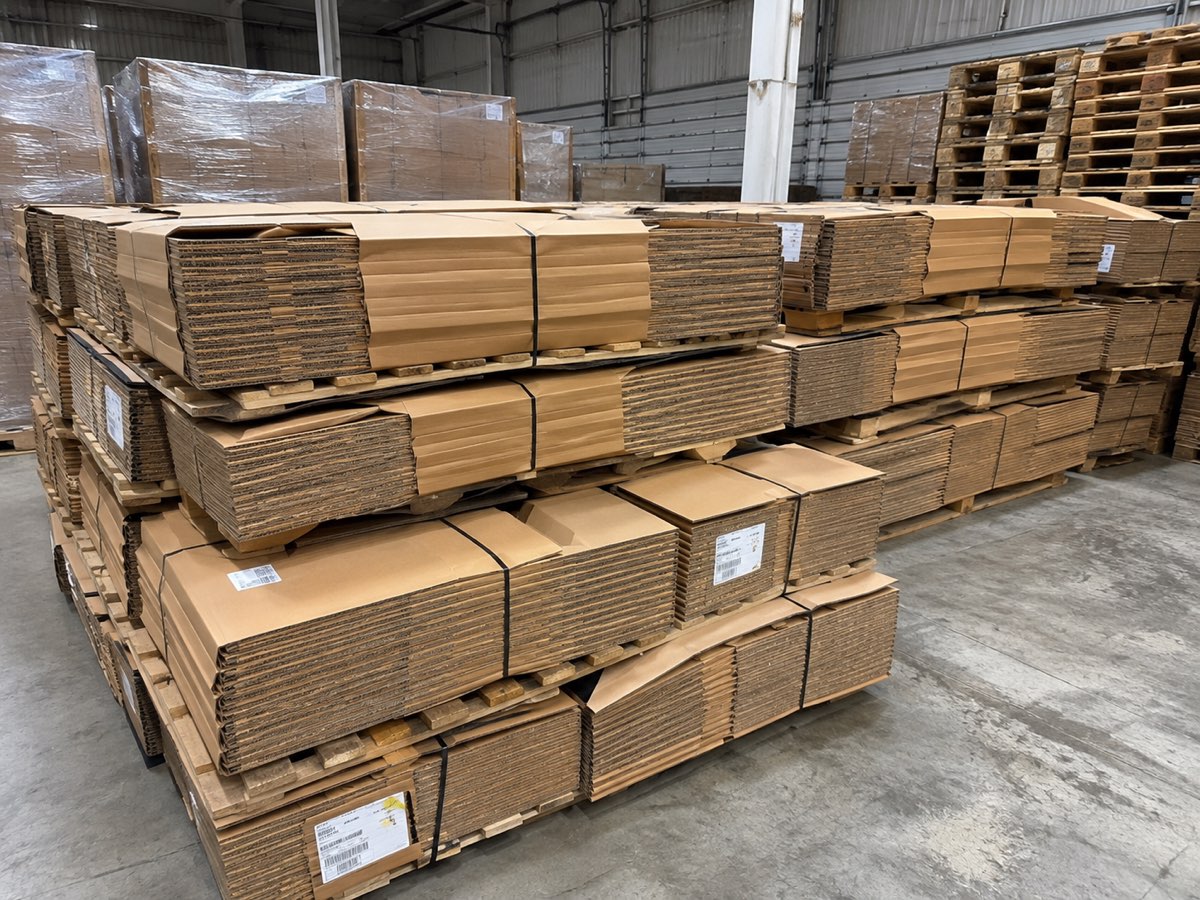
When a bulk box fails, it rarely fails everywhere. A blown bottom leaves four intact walls. A crushed top band leaves twenty-four good inches below it. That board has already been paid for, already been made, and already emitted its carbon — and it is dimensionally identical to the board somebody is about to buy new to make dividers out of.
What we make
| Item | Made from | Typical use |
|---|---|---|
| Cell dividers & partitions | Recovered 2- and 3-wall walls | Separating parts, glass, bottles, components |
| Layer pads | Recovered wall panels, die-cut square | Between stacked layers inside a bulk box |
| Pallet caps & top sheets | Recovered board, scored | Protecting a load top, enabling stacking |
| Corner protectors | Laminated recovered board | Under banding, protecting box corners |
| Cut-down bins | Boxes with top-band damage | Shorter working boxes at a lower grade cost |
| Display bases & plinths | Clean Grade A panels | Retail floor displays, trade show stands |
| Custom inserts & cradles | Mixed, application-dependent | Holding irregular or fragile parts in place |
| Sleeves & collars | Recovered walls, re-scored | Four-sided bodies used with separate cap and base |
Where we use new board instead
Direct food contact, regulated packaging, anything that has to carry a printed certification, and any application where a customer will evaluate you on the packaging. We will tell you which category your job falls into before quoting, because getting that wrong is expensive in a way that a divider price cannot compensate for.
How a custom job runs
Send dimensions, quantity, what goes in it and how it will be handled. For anything unusual we will make one, send you a photograph with a tape measure in the frame, and adjust before cutting the run. Prototypes on standard geometry are typically same week.
Volumes we handle
- One-offs and prototypes — genuinely welcome. Some of our best standing jobs started as one weird cradle.
- Short runs of 50–500 — the sweet spot for recovered board, where new-board tooling never pays back.
- Ongoing production runs — quoted per piece with a standing schedule and stock held on our floor.
How it runs, start to finish
Send the geometry
Dimensions, quantity, what it holds, how it is handled. A sketch on a napkin photographed with a phone is completely fine.
Material call
We tell you whether recovered board is appropriate or whether the application needs new, and why.
Prototype
One piece, photographed with a tape measure, before we cut a run. Usually same week.
Production
Cut, scored, bundled and labelled by part. Standing jobs get stock held on our floor.
Iterate
Most designs change once after the first month in real use. That revision is included.
Upcycled Fabrication — common questions
Is upcycled board weaker than new?
Recovered board that passes inspection retains its original flute geometry and therefore its original strength. What we will not do is use board with crush, moisture history or delamination — those are pulled to the baler regardless of how good the flat area looks.
Can you print or label?
Simple stencilling and label application, yes. Full flexographic printing is a corrugator service — we will point you to one rather than pretend.
What is the lead time?
Prototypes typically within a week, production runs one to two weeks depending on size. Considerably faster than new-board tooling.
Do you make retail-quality displays?
Yes, from clean Grade A panels — but be realistic about the finish. Recovered board looks like recovered board, which for a lot of brands is exactly the point.