How to measure a box so the replacement actually matches
Most mismatched reorders trace back to one of two mistakes: measuring a loaded box, or reading outside dimensions and ordering them as inside. Both take five minutes to avoid.
Get a written quote in one business day
Tell us what you have or what you need. A real person in Houston reads every one of these — usually within a couple of hours during dock time.
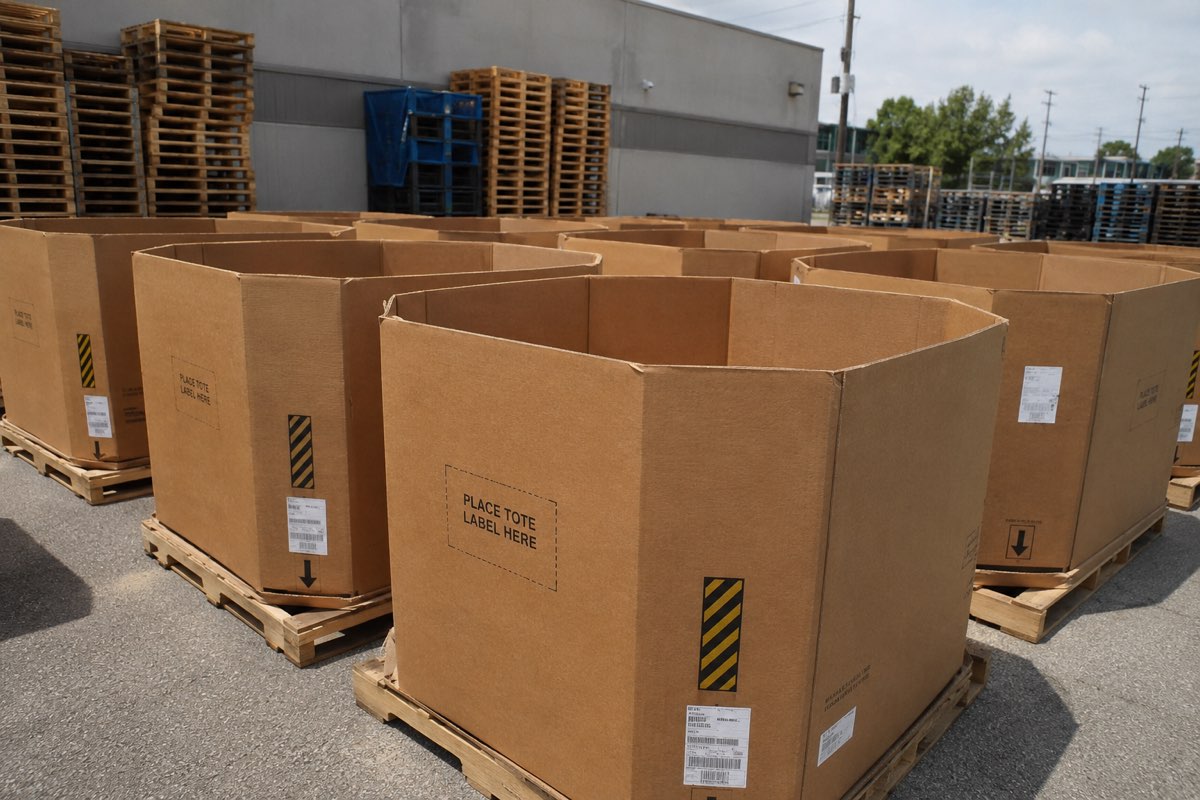
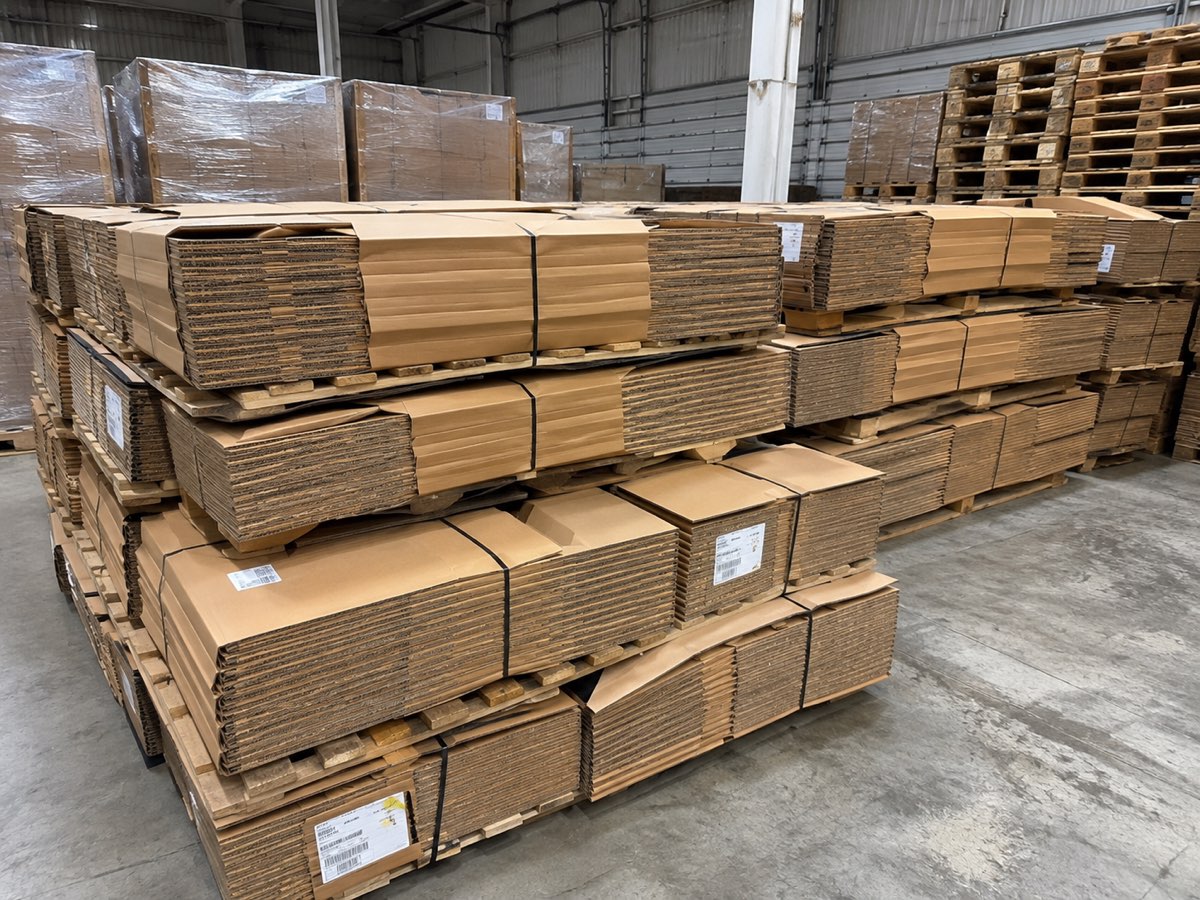
What you need
A tape measure, a phone camera and one empty box, standing up on a flat surface with the flaps open. Five minutes. Do not measure a box that is loaded — a full box bulges, and you will order replacements an inch too big forever after.
Step by step
1. Measure inside length and width
Hook the tape inside one wall and read to the inside of the opposite wall, at mid-height. Do it at the top and again near the bottom — if they differ by more than half an inch, the box has spread and you should measure a different one. The longer of the two horizontal figures is the length.
2. Measure inside height
From the inside of the bottom to the top edge of the wall, not to the top of the flaps. Wall height is the box height, full stop.
3. Count the walls
Look at the cut edge at the top of a wall. You will see the fluted layers stacked between liners. Count the wavy layers — that is your wall count. Two waves is 2-wall, three is tri-wall, and so on. This is far more reliable than measuring thickness with a tape.
4. Note the flap and closure style
- Flaps meet in the middle → RSC.
- Flaps overlap completely → full overlap (FOL).
- No top flaps, separate lid fits over the outside → HSC with telescoping cap.
- No top or bottom at all → sleeve, used with a separate cap and base.
5. Measure the pallet
Outside length and width of the pallet the box sits on, plus deck height. If the box overhangs, note by how much — that overhang is costing you stacking strength and it is worth fixing when you re-order.
6. Photograph the cut edge
One clear photo of the top wall edge, close up, with the flutes visible, and one wide shot of the whole box. Between those two images and your measurements, we can match a box without you ever shipping us a sample.
What else to record while you are there
| Detail | Why it matters |
|---|---|
| Any printing or maker's marks | Often identifies the original converter and spec |
| Whether it has a liner, and its gauge | Liner spec is half the container for fine material |
| How it is closed — tape, staples, strapping | Determines what accessories you need to reorder |
| Where it is cut open on your line | The most common cause of premature box death |
| How many trips it has been through | Sets a realistic expectation for the replacement |
If you are measuring to replace a box you dislike
Worth saying out loud: the box you currently have may not be the box you should reorder. Plenty of operations inherited a size from a previous supplier and have been buying it for a decade without asking whether it fits the material. Measure what you have, then tell us the weight of a full one and how it is stored — a fair number of these conversations end with a shorter box and a lower bill.
The whole procedure, in order
Empty the box and stand it up
A loaded box bulges. Measuring one is how you end up with replacements an inch too large forever.
Inside length and width, at mid-height
Take it twice — top and bottom. More than half an inch of difference means the box has spread; find another.
Inside height to the top of the wall
Not to the top of the flaps. Wall height is box height.
Count the flutes at the cut edge
Two waves is 2-wall, three is tri-wall. Far more reliable than measuring thickness.
Note flap style and closure
RSC, full overlap, half-slotted with a cap, or a sleeve. Each behaves differently on a fill line.
Measure the pallet and note any overhang
Overhang costs about 20% of stacking strength per inch, at the corners, where it matters most.
Two photographs
One close-up of the cut edge showing the flutes, one wide shot of the whole box. Send both with your quote request.
Do I need to send you a sample box?
Almost never. Measurements plus two photographs — one close-up of the cut edge, one wide — are enough to match a box in the large majority of cases.
What if my box is a metric size?
Common in Houston, because imported boxes are built for 1200 × 1000 mm pallets. We will tell you the nearest imperial equivalent and whether the difference matters for your handling.
Can you match a box exactly?
In used stock, we match to the nearest stocked footprint and tell you the difference. In new builds, we match exactly to any inside dimension in one-inch increments.
What if I only have a damaged box left?
Measure it anyway and tell us where the damage is. Damage patterns are diagnostic — they frequently tell us more about what you actually need than the dimensions do.