Inside, outside, and the inches that ruin a racking plan
Corrugated is quoted in inside dimensions everywhere in the industry. That is the right convention — until the moment you are fitting boxes into a fixed opening, at which point it becomes a trap.
Get a written quote in one business day
Tell us what you have or what you need. A real person in Houston reads every one of these — usually within a couple of hours during dock time.
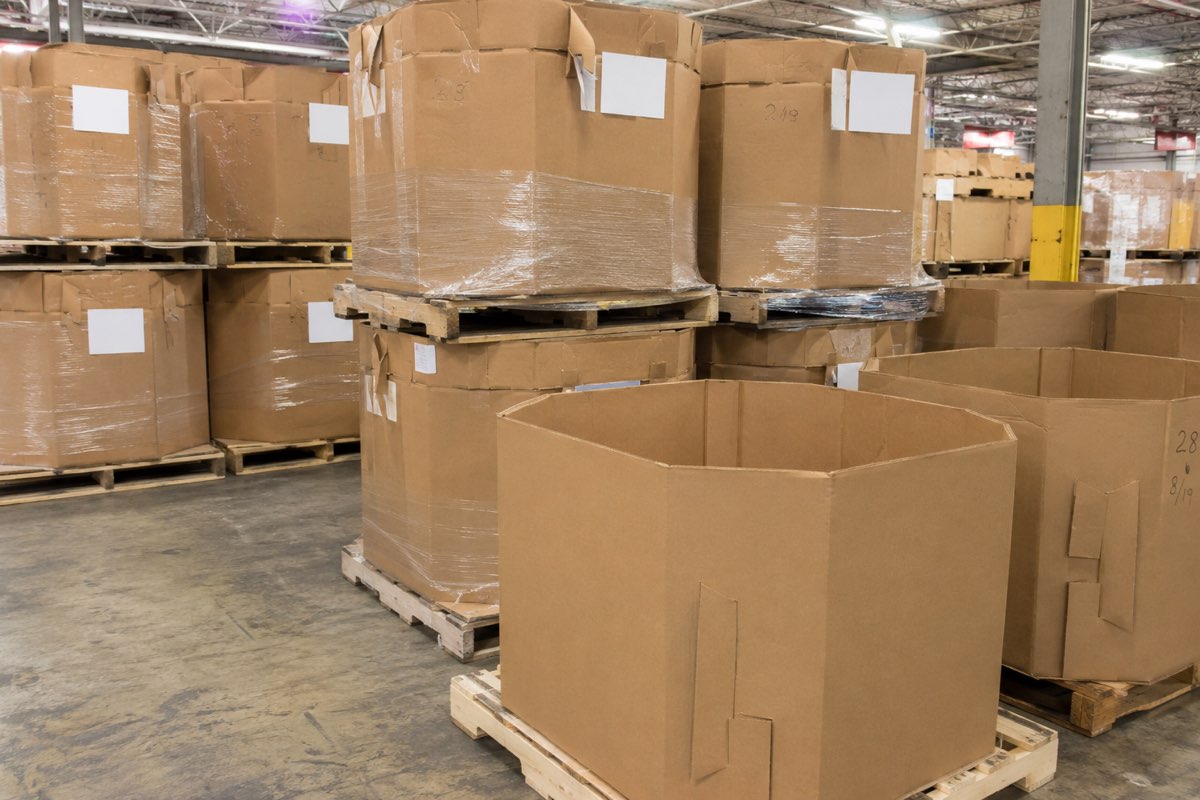
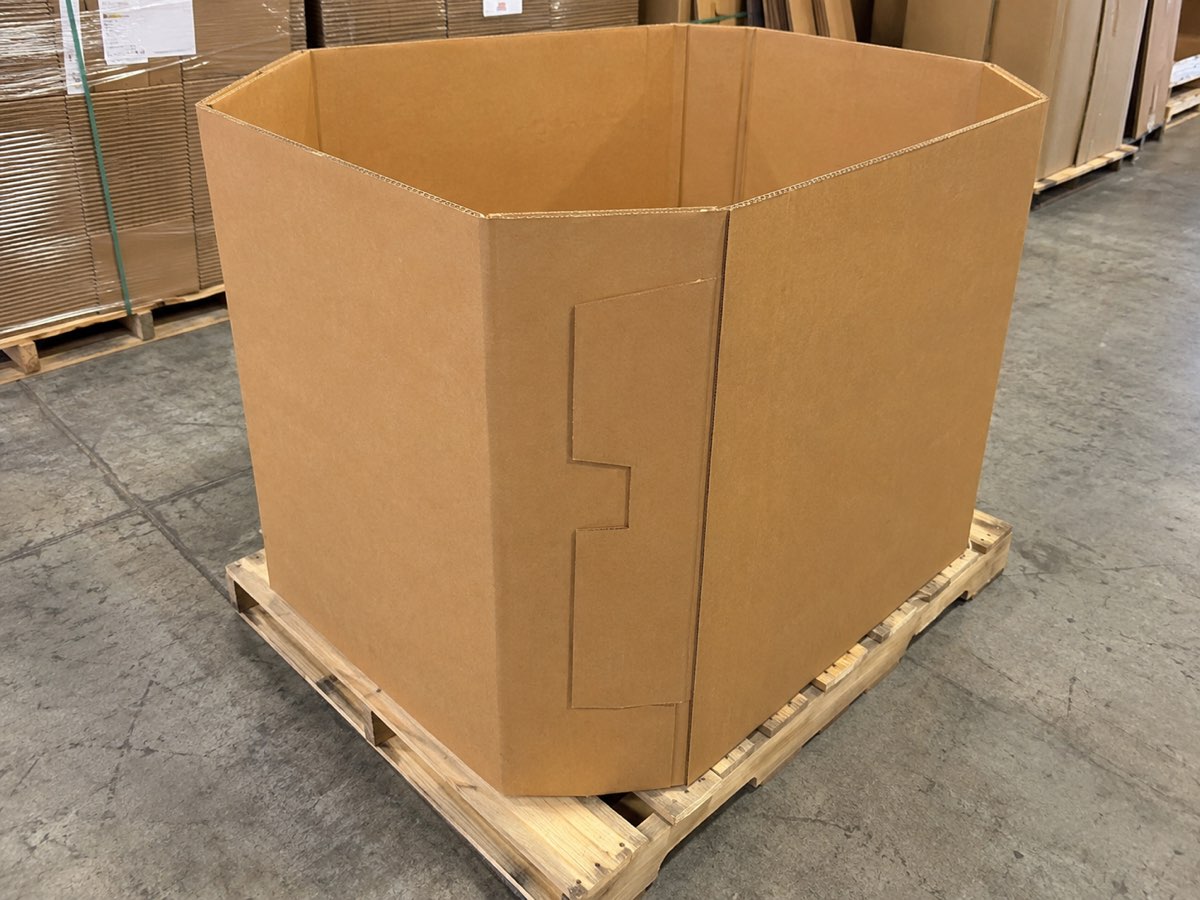
The convention: dimensions are inside, unless stated
Corrugated is quoted in inside dimensions across the industry, and for a good reason: the only thing anybody actually cares about is what fits in the box. A box described as 48 × 40 × 36 has 48 inches of usable length inside it.
The order is length × width × height, where length is the longer of the two horizontal dimensions. A 48 × 40 and a 40 × 48 are the same box; the second is just written by someone whose pallet spec lists the stringer direction first, which is common in automotive.
How much bigger is the outside?
Each wall of corrugated has real thickness, and it adds up on both sides of every dimension. The gap grows with wall count, which is why a 5-wall box takes noticeably more trailer space than a 2-wall of the same nominal size.
| Construction | Board thickness (approx) | OD added per dimension |
|---|---|---|
| 2-wall | ~0.30 in | ~0.6 in |
| 3-wall / tri-wall | ~0.44 in | ~0.9 in |
| 4-wall | ~0.60 in | ~1.2 in |
| 5-wall | ~0.75 in | ~1.5 in |
So a 3-wall 48 × 40 × 36 measures roughly 48.9 × 40.9 externally. On a 48 × 40 pallet, that is just under half an inch of overhang per side — which is normal, expected, and precisely why boxes are quoted in ID rather than OD.
When outside dimensions are the number that matters
- Rack openings and drive-in racking clearances.
- Trailer door height when a box is loaded on a pallet — deck height plus pallet plus box OD.
- Conveyor widths and automated handling equipment.
- Any application where two boxes must sit side by side inside a fixed opening.
- Container and intermodal loading, where inches compound across a row.
Height is measured differently than you might expect
Box height is the wall height — the vertical dimension of the four sides — not the height of the box with flaps up. When you fold flaps closed on an RSC, the assembled box is the same height as the wall. When you put a telescoping lid on, add roughly 2 to 3 inches for the lid skirt.
For load planning, the height that matters is pallet (typically 5.5 in for a GMA) plus box OD height plus lid if fitted. A 36-inch box on a GMA pallet with a lid stands roughly 44 inches, which is why two of them stack comfortably inside a standard 110-inch trailer interior and three do not.
Volume, and why the arithmetic disappoints
Cubic feet = (L × W × H) ÷ 1728, using inside dimensions. A 48 × 40 × 36 gives 40 cubic feet on paper. In practice you will fill 30 to 34, because material does not level perfectly, you leave headroom for the flaps to close, and nobody fills a box flush to the rim.
Plan on roughly 80–85% of nominal volume for granular material and 70–75% for irregular solids. Every capacity figure on our size chart is nominal — the honest usable number is lower, and any supplier who tells you otherwise has not loaded a box.
Metric sizes and why they show up on our yard
Boxes built for the 1200 × 1000 mm European pallet convert to roughly 47.2 × 39.4 inches. They ride into Houston full of imported resin and components and then sit a little loose on a GMA pallet forever after. They are perfectly good boxes — just be aware that the half-inch difference means a metric box inside a GMA-sized rack behaves slightly differently than you expect.
Dimension questions
Are gaylord box sizes inside or outside dimensions?
Inside, by industry convention. Outside runs roughly ½" to 1½" larger per dimension depending on wall count.
Which dimension is length?
The longer of the two horizontal dimensions. A 48 × 40 box and a 40 × 48 box are identical; the order just reflects whose spec sheet you are reading.
How much volume do I actually get?
Plan on 80–85% of nominal for granular material and 70–75% for irregular solids. Nobody fills a box flush to the rim.
Does a lid change the height?
A telescoping lid adds roughly 2 to 3 inches to overall stack height. Flat pallet caps add almost nothing.