Skip to content
GAYLORD BOXES TXHOUSTON · SINCE 2009
Reference

Grades explained, with the thresholds published

Anybody can call a box 'good'. Below are the actual pass/fail criteria we grade against on our own yard, so you can check our work on your dock instead of taking our word for it.

Published thresholdsSix-point inspectionGrade your own
Answer first: 1A is new and unused. Grade A has one clean fill with no cuts and square corners. Grade B has up to two properly patched repairs. Grade C has multiple repairs but still stands on its own. Anything with soft corners, a bulged bottom, moisture history or odour is scrap and is priced as fiber by the ton.
Request a quote

Get a written quote in one business day

Tell us what you have or what you need. A real person in Houston reads every one of these — usually within a couple of hours during dock time.

US or Canada, 10 digits — area code first.

US state or Canadian province.

ZIP like 77073, or Canadian M5V 2T6.

Whole boxes. A rough number is fine.

No phone number required from us — we quote in writing so you have the numbers on paper. We never sell or share your details.

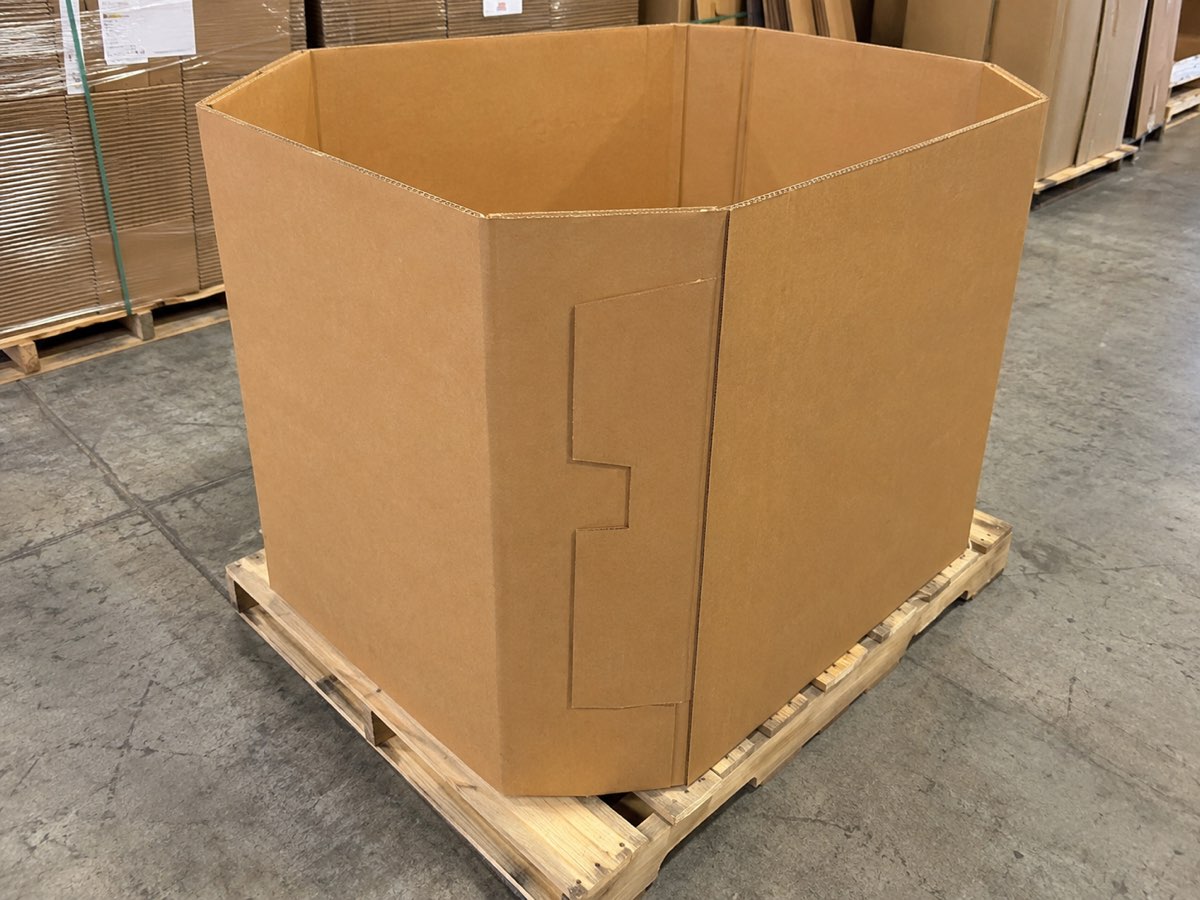
A single open octagon bulk bin standing on a wooden pallet on a warehouse floor
An eight-sided bin on a standard 48 × 40 pallet. No corner to blow out.
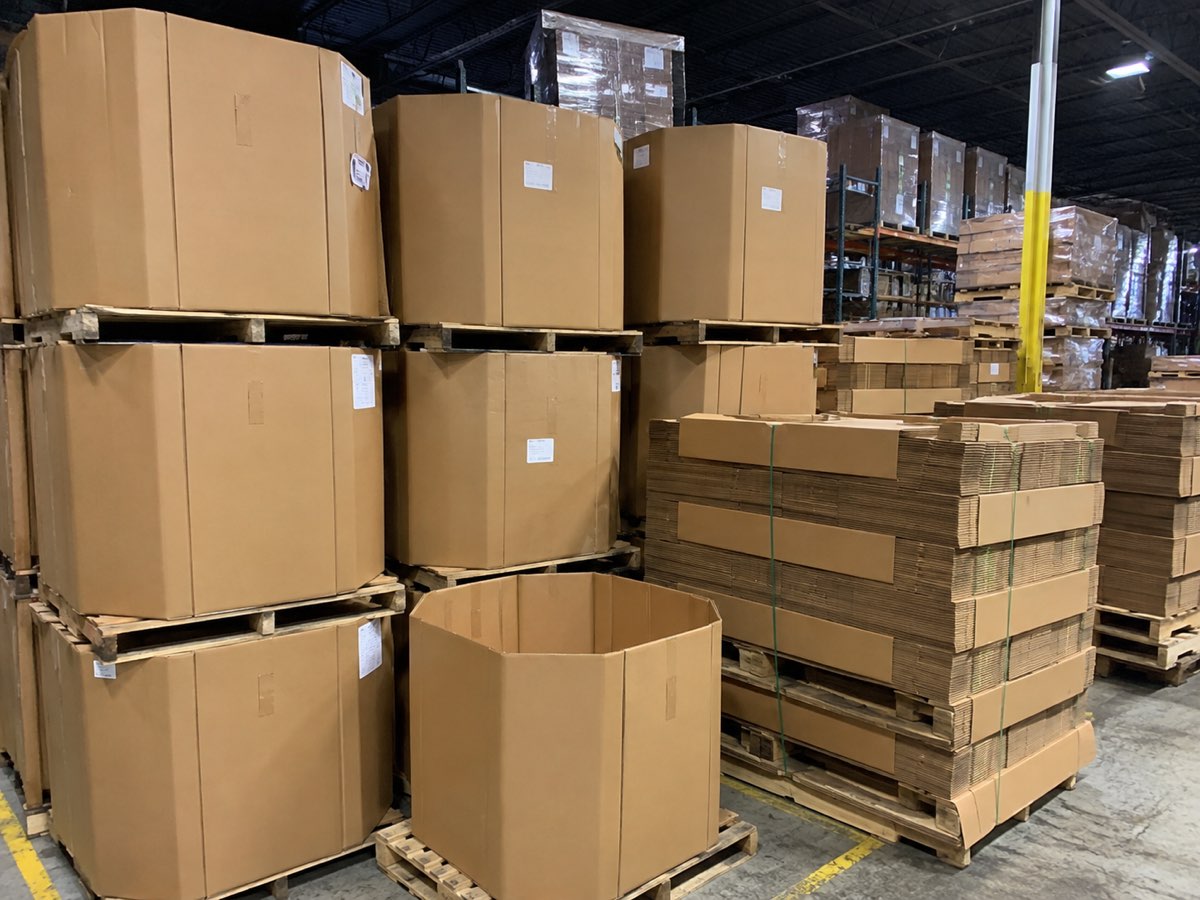
Bulk bins stacked two high on pallets down a warehouse aisle, with banded knocked-down bundles alongside
Assembled bins stacked two high, knocked-down bundles alongside — the two ways stock waits to move.
The five categories

What each grade is, costs, and survives

GRADE 1A

New / never filled

Straight from the corrugator, unused, printed or plain.

Specification

  • Zero prior fill cycles
  • Full published edge-crush and burst rating
  • Square corners, no crush anywhere on the stack
  • Cut to your exact ID, wall count and flap style
Trips remaining
4–6 trips typical
Price position
Highest cost per box, lowest cost per trip if you only get one trip
Typical use
Food-contact, export, cleanroom, first-article shipments, anything a customer will photograph.
Automatic rejection
Nothing. If it is not perfect it is not 1A.
GRADE A

Grade A used

One fill, clean, no repairs, no cuts. The sweet spot.

Specification

  • One prior use, usually a single inbound freight leg
  • No cuts, no tape patches, no staples through the wall
  • Clean interior — no residue, odour, oil or staining
  • Square, self-standing, flaps intact
Trips remaining
3–5 trips typical
Price position
Roughly 35–55% of new, depending on wall count and volume
Typical use
Outbound shipments to customers, retail returns, textile and plastics collection, anything visible.
Automatic rejection
Any cut, any moisture line, any odour, any pest evidence.
GRADE B

Grade B used

Two or three uses. Up to two clean repairs. Structurally honest.

Specification

  • Up to two patched cuts or taped seams, done properly with box tape or glued patches
  • Minor scuffing, print bleed-through or ink transfer allowed
  • Corners intact, no delamination of the liner
  • Still self-standing when empty
Trips remaining
2–3 trips typical
Price position
Roughly 20–35% of new
Typical use
In-plant WIP, scrap collection, internal transfer, anything staying inside your four walls.
Automatic rejection
Delamination, soft corners, blown bottoms, more than two repairs.
GRADE C

Grade C used

Working boxes. Cosmetically rough, structurally usable, cheap.

Specification

  • Multiple repairs, heavy print, mismatched flaps
  • Some crush on the top edge is acceptable if the walls hold
  • May need a lid or a strap to hold shape when full
  • Sold as-is, by the truckload, sorted for wall count only
Trips remaining
1–2 trips typical
Price position
Roughly 10–20% of new
Typical use
One-way scrap moves, floor sweep, demolition debris, landscape and nursery use.
Automatic rejection
Wet, mouldy, contaminated or pest-infested. Those go to the baler, not the rack.
GRADE SCRAP

Scrap / OCC

End of life as a container. Beginning of life as fiber.

Specification

  • Baled old corrugated container (OCC), grade #11 or #12
  • Moisture below mill spec, no wax, no plastic liner left in
  • Sold to regional mills by the ton, not the box
  • Weighed on a certified scale, ticket issued the same day
Trips remaining
Reborn as new liner within weeks
Price position
Paid by the ton at the prevailing regional OCC index
Typical use
Anything that failed grading, plus your own baled cardboard waste stream.
Automatic rejection
Wax-coated, foil-lined and heavily contaminated fiber — those need a different outlet.
The inspection

Six points, ninety seconds, same answer every time

Stand the box up empty on a flat surface, flaps open. If it will not stand on its own, stop — that box is Grade C at best and probably scrap.

01

Corners

Run a hand down all four verticals. Softness, rounding or delamination is structural. Corners carry 60–70% of a stacked load.

02

Bottom seam

Look from underneath. Intact glue or staples, no bulge, no separation at the fold. A bulged bottom is an automatic C.

03

Wall integrity

Raking light across each wall shows crush as a shadow line. Count cuts and patches: zero is A, one or two is B, three or more is C.

04

Flaps

All four present, folding cleanly at the score. Missing flaps drop a grade — a lid will not seat and the box cannot be stacked without a cap.

05

Moisture

Palm flat against the inside wall. Damp is obvious; the tide line is the real find. Even bone dry, a tide line means permanent strength loss.

06

Odour

Head in the box. Solvent, food, mildew or chemical sweetness means residue that will transfer to your next load.

The whole rule in one line: cosmetics never change a grade, geometry always does. Ink, print, labels and scuffing are free. Crush, cuts and curves cost you.
Decision table

Which grade should you actually buy?

SituationBuyWhy
Product touches the fiber1A newUsed stock has no documented history an auditor will accept
UN-rated or regulated shipment1A newCertification covers the box, closure, liner and pallet as one system
A customer will see itGrade AClean face, no repairs, no explaining to do
Stays inside your buildingGrade BSame strength envelope, roughly two thirds of the price
One-way scrap or debrisGrade CThe box is a consumable — buy by the truckload, sort for walls only
Everything elseGrade ACovers roughly 60% of real-world demand
Questions

Grading questions

Who decides the grade?

We do, on our own line, against the six-point inspection published on this page. If you disagree with a grade on a delivered load, tell us — we would rather re-grade a pallet than have a customer stop trusting the categories.

Does a repair always drop the grade?

Yes. One or two clean patched repairs makes a box Grade B, permanently. Reconditioning without honest re-grading is just hiding damage under tape.

Do cosmetics matter at all?

Only for what a customer sees. Ink, labels, print bleed and scuffing have zero effect on load capacity, which is exactly why buying on physics rather than appearance is cheaper.

Can a Grade C box be used safely?

For one-way scrap and debris moves at modest weight, yes. It should not be stacked high, stored loaded for long, or trusted with anything you would mind losing on a forklift.

What is the difference between scrap and Grade C?

Grade C still works as a container. Scrap does not — soft corners, bulged bottom, will not stand empty, or wet. Scrap is priced as fiber by the ton, not as a box.

Ready to move some boxes?

Send the form once. We answer in writing with grades, quantities, sizes and freight — no phone tag, because we don't even have a phone number.

Quick reference

Every number on this site, on one screen

The numbers we get asked for most

Standard size
48" × 40" × 36"
Standard volume
40 cu ft nominal
Usable volume
80–85% of nominal
Capacity range
900 – 4,500 lb
Per 53′ trailer, KD
≈ 480 boxes
Per 53′ assembled
26 pallet positions
Overhang penalty
≈ 20% per inch
Humidity at 90% RH
≈ 50% strength
Trips per box
3–6 when handled well
New box CO₂e
≈ 13 lb
Reuse cycle CO₂e
≈ 1.2 lb
OCC per 53′ trailer
≈ 20 tons

Stocked sizes, capacities and truckload counts

Inside dimensionsVolumeCapacityPer 53′ KDStock
48″ × 40″ × 3640 cu ft1,200 – 2,800 lb480Deep stock
48″ × 40″ × 3033.3 cu ft1,000 – 2,000 lb540Deep stock
48″ × 40″ × 2426.7 cu ft900 – 1,800 lb600Regular stock
48″ × 40″ × 4246.7 cu ft1,800 – 3,000 lb420Regular stock
48″ × 40″ × 4853.3 cu ft2,500 – 4,000 lb360Regular stock
40″ × 48″ × 4550 cu ft2,400 – 3,400 lb390Seasonal
41″ × 28″ × 2516.6 cu ft700 – 1,400 lb900Regular stock
30″ × 30″ × 3015.6 cu ft500 – 900 lb1100Regular stock
45″ × 30″ × 4535.2 cu ft1,500 – 2,200 lb560Seasonal
47″ × 38″ × 4445.5 cu ft2,000 – 3,000 lb400Seasonal
48″ × 48″ × 4053.3 cu ft2,800 – 4,500 lb320Made to order
48″ × 40″ × 4044.4 cu ft2,500 – 4,000 lb400Regular stock

Inside dimensions. Outside runs ½″ to 1½″ larger per dimension depending on wall count — use OD for racking and trailer clearances. Full size chart →

Wall count and load ratings

WallsStatic loadStackTypical ECT
2-wall1,000–1,200 lb2 high48–61 lb/in
3-wall (tri-wall)1,800–2,000 lb2–3 high71–82 lb/in
4-wall2,500–3,000 lb3 high90–110 lb/in
5-wall4,000 lb+3–4 high120+ lb/in

Ratings assume dry, aligned, fully supported, short duration. Derating explained →

Grades, at a glance

GradeConditionTrips left
1AStraight from the corrugator, unused, printed or plain.4–6 trips typical
AOne fill, clean, no repairs, no cuts. The sweet spot.3–5 trips typical
BTwo or three uses. Up to two clean repairs. Structurally honest.2–3 trips typical
CWorking boxes. Cosmetically rough, structurally usable, cheap.1–2 trips typical
SCRAPEnd of life as a container. Beginning of life as fiber.Reborn as new liner within weeks

Every pass/fail threshold →

Derating factors — apply all that fit, multiplied

ConditionFactorWhy
Storage under a month×1.0No creep adjustment needed
One to six months loaded×1.4Corrugated creeps under sustained load
Over six months loaded×1.6Long-term storage
Dry warehouse×1.15Mild humidity exposure
Open dock, no A/C×1.3Most of Houston, most of the year
Outdoors or cooler×1.5Needs a lid as well

Required load = full box weight × (stack − 1) × creep × humidity. Run it automatically →

Service area and turnaround

AreaTurnaroundRegion
HoustonSame day, most ZIPsHarris County
Pasadena & Deer ParkSame dayShip Channel East
Conroe & The WoodlandsSame dayMontgomery County
Beaumont & Port ArthurNext day, scheduled routesGolden Triangle
Dallas–Fort WorthScheduled backhaul lanesNorth Texas
San Antonio & AustinScheduled lanes, 2–4 daysI-35 Corridor
Yard
1050 E Richey Rd, Houston, TX 77073
Monday – Friday
7:00 AM – 5:00 PM CT
Saturday
8:00 AM – 12:00 PM CT
Sunday
Closed
Telephone
None — every quote is issued in writing
Quote turnaround
One business day