Plastics & Resin Processors
Regrind, purge, pellets and film — the biggest single user of bulk corrugated on the Gulf Coast.
Powders, minerals, catalysts and compounds that punish weak packaging.
Tell us what you have or what you need. A real person in Houston reads every one of these — usually within a couple of hours during dock time.
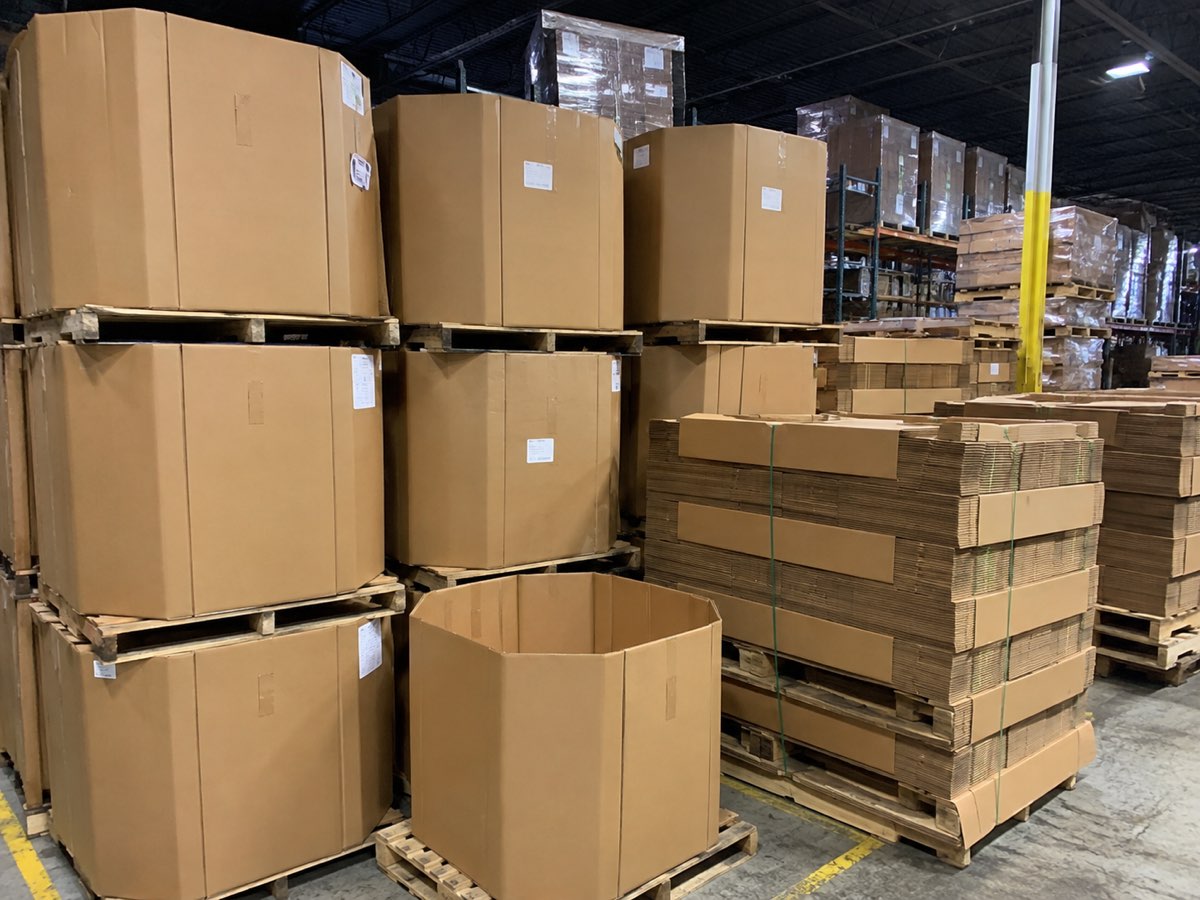
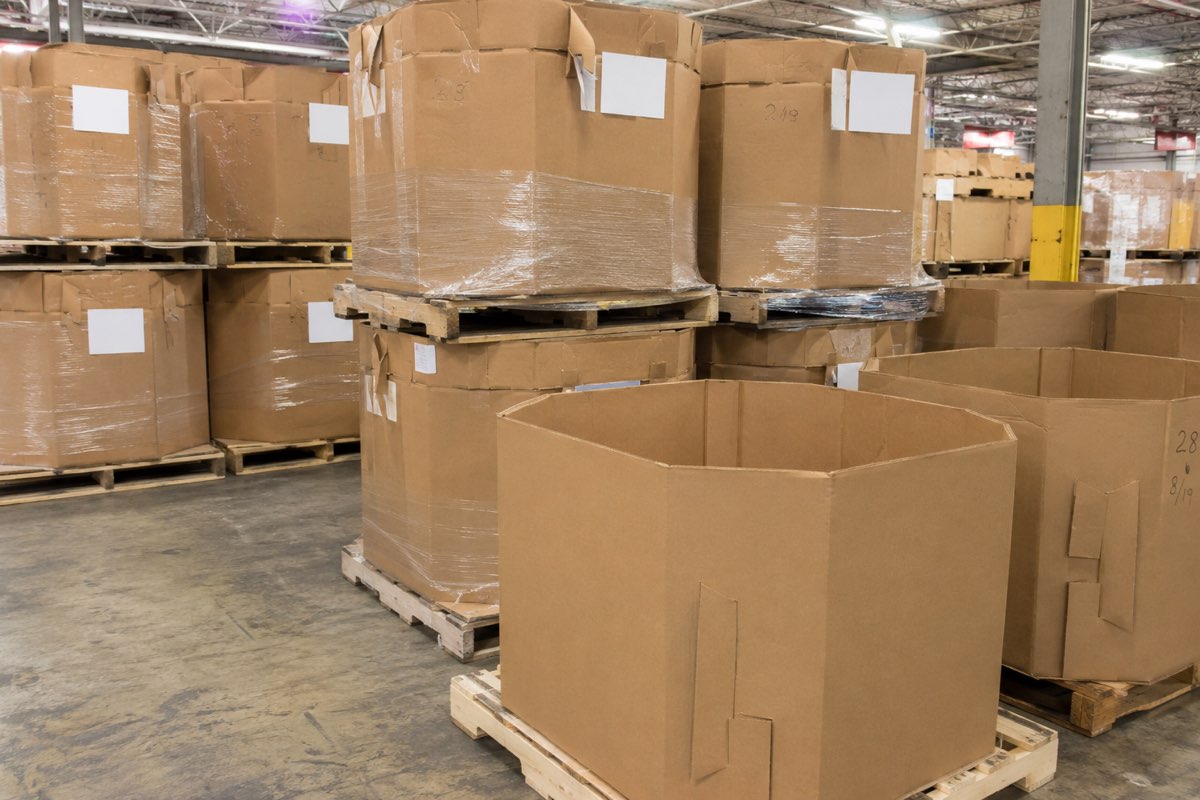
Industrial powders and granules are unforgiving: fine material finds every seam, dense material finds every weak corner, and regulatory packaging requirements make improvisation expensive. This is where octagon bins and 5-wall construction stop being a luxury.
Six questions about your load, storage and audience returns a wall count, grade and footprint — often a cheaper one than the industry default.
Matched from the recommended specification above. Every size links to a full spec page with load calculations and pallet fit.
| Size (ID) | Volume | Capacity | Walls | Per 53′ KD | Why it fits |
|---|---|---|---|---|---|
| 48″ × 48″ × 40″ | 53.3 cu ft | 2,800 – 4,500 lb | 4-wall to 5-wall | 320 | Chemical totes, heavy powders, foundry sand, aggregate blends. |
| 48″ × 40″ × 40″ | 44.4 cu ft | 2,500 – 4,000 lb | Tri-wall octagon | 400 | Free-flowing solids, resin, food-grade dry goods, agriculture. |
| Grade | What it means | Trips left | Price position |
|---|---|---|---|
| 1A | Straight from the corrugator, unused, printed or plain. | 4–6 trips typical | Highest cost per box, lowest cost per trip if you only get one trip |
| A | One fill, clean, no repairs, no cuts. The sweet spot. | 3–5 trips typical | Roughly 35–55% of new, depending on wall count and volume |
Answer these in the message field and the first quote is usually the final one.
Weighed, not estimated. It sets the wall count, and estimates are where over-specification starts.
The bottom box carries everything above it, and corrugated creeps under sustained load.
Climate controlled, dry warehouse, open dock or outdoors. A humid dock costs about 30% of your rating.
Regulated, external customer, internal only, or one-way scrap. This decides grade, not strength.
Drop height, whether it is scooped, tipped or bottom-discharged. This decides liner and closure.
Empties, baled fiber or pallets. A paired trailer takes roughly 40% off each direction.
Octagon 48" × 40" × 40", 48" × 48" × 40" in tri-wall octagon or 5-wall rectangular. That is a starting point rather than a rule — weigh a full box and run the Grade Decoder before committing to a trailer.
Typical grade here is 1A / A. Used stock covers the large majority of the work; new is genuinely required only for direct food contact, regulated packaging, and shipments where the container represents your brand.
Yes, and it is usually the cheapest arrangement available. A trailer delivering to you returns empty otherwise, so pairing an inbound delivery with an outbound buyback takes roughly 40% off each direction.
Same-day pickup from the yard on deep-stock sizes, next-day across most of the Houston metro, and two to four days on scheduled lanes to DFW, Austin, San Antonio and the Golden Triangle.
One pallet for delivery — typically 20 to 40 boxes depending on wall height. No minimum at all for pickup from the yard on E Richey Rd.
Regrind, purge, pellets and film — the biggest single user of bulk corrugated on the Gulf Coast.
Produce, nuts, grain, dry ingredients — where sanitation rules the spec.
Heavy, sharp, valuable and audited to the pound.
| Inside dimensions | Volume | Capacity | Per 53′ KD | Stock |
|---|---|---|---|---|
| 48″ × 40″ × 36″ | 40 cu ft | 1,200 – 2,800 lb | 480 | Deep stock |
| 48″ × 40″ × 30″ | 33.3 cu ft | 1,000 – 2,000 lb | 540 | Deep stock |
| 48″ × 40″ × 24″ | 26.7 cu ft | 900 – 1,800 lb | 600 | Regular stock |
| 48″ × 40″ × 42″ | 46.7 cu ft | 1,800 – 3,000 lb | 420 | Regular stock |
| 48″ × 40″ × 48″ | 53.3 cu ft | 2,500 – 4,000 lb | 360 | Regular stock |
| 40″ × 48″ × 45″ | 50 cu ft | 2,400 – 3,400 lb | 390 | Seasonal |
| 41″ × 28″ × 25″ | 16.6 cu ft | 700 – 1,400 lb | 900 | Regular stock |
| 30″ × 30″ × 30″ | 15.6 cu ft | 500 – 900 lb | 1100 | Regular stock |
| 45″ × 30″ × 45″ | 35.2 cu ft | 1,500 – 2,200 lb | 560 | Seasonal |
| 47″ × 38″ × 44″ | 45.5 cu ft | 2,000 – 3,000 lb | 400 | Seasonal |
| 48″ × 48″ × 40″ | 53.3 cu ft | 2,800 – 4,500 lb | 320 | Made to order |
| 48″ × 40″ × 40″ | 44.4 cu ft | 2,500 – 4,000 lb | 400 | Regular stock |
Inside dimensions. Outside runs ½″ to 1½″ larger per dimension depending on wall count — use OD for racking and trailer clearances. Full size chart →
| Walls | Static load | Stack | Typical ECT |
|---|---|---|---|
| 2-wall | 1,000–1,200 lb | 2 high | 48–61 lb/in |
| 3-wall (tri-wall) | 1,800–2,000 lb | 2–3 high | 71–82 lb/in |
| 4-wall | 2,500–3,000 lb | 3 high | 90–110 lb/in |
| 5-wall | 4,000 lb+ | 3–4 high | 120+ lb/in |
Ratings assume dry, aligned, fully supported, short duration. Derating explained →
| Grade | Condition | Trips left |
|---|---|---|
| 1A | Straight from the corrugator, unused, printed or plain. | 4–6 trips typical |
| A | One fill, clean, no repairs, no cuts. The sweet spot. | 3–5 trips typical |
| B | Two or three uses. Up to two clean repairs. Structurally honest. | 2–3 trips typical |
| C | Working boxes. Cosmetically rough, structurally usable, cheap. | 1–2 trips typical |
| SCRAP | End of life as a container. Beginning of life as fiber. | Reborn as new liner within weeks |
| Condition | Factor | Why |
|---|---|---|
| Storage under a month | ×1.0 | No creep adjustment needed |
| One to six months loaded | ×1.4 | Corrugated creeps under sustained load |
| Over six months loaded | ×1.6 | Long-term storage |
| Dry warehouse | ×1.15 | Mild humidity exposure |
| Open dock, no A/C | ×1.3 | Most of Houston, most of the year |
| Outdoors or cooler | ×1.5 | Needs a lid as well |
Required load = full box weight × (stack − 1) × creep × humidity. Run it automatically →
| Area | Turnaround | Region |
|---|---|---|
| Houston | Same day, most ZIPs | Harris County |
| Pasadena & Deer Park | Same day | Ship Channel East |
| Conroe & The Woodlands | Same day | Montgomery County |
| Beaumont & Port Arthur | Next day, scheduled routes | Golden Triangle |
| Dallas–Fort Worth | Scheduled backhaul lanes | North Texas |
| San Antonio & Austin | Scheduled lanes, 2–4 days | I-35 Corridor |