Food & Agriculture
Produce, nuts, grain, dry ingredients — where sanitation rules the spec.
Regrind, purge, pellets and film — the biggest single user of bulk corrugated on the Gulf Coast.
Tell us what you have or what you need. A real person in Houston reads every one of these — usually within a couple of hours during dock time.
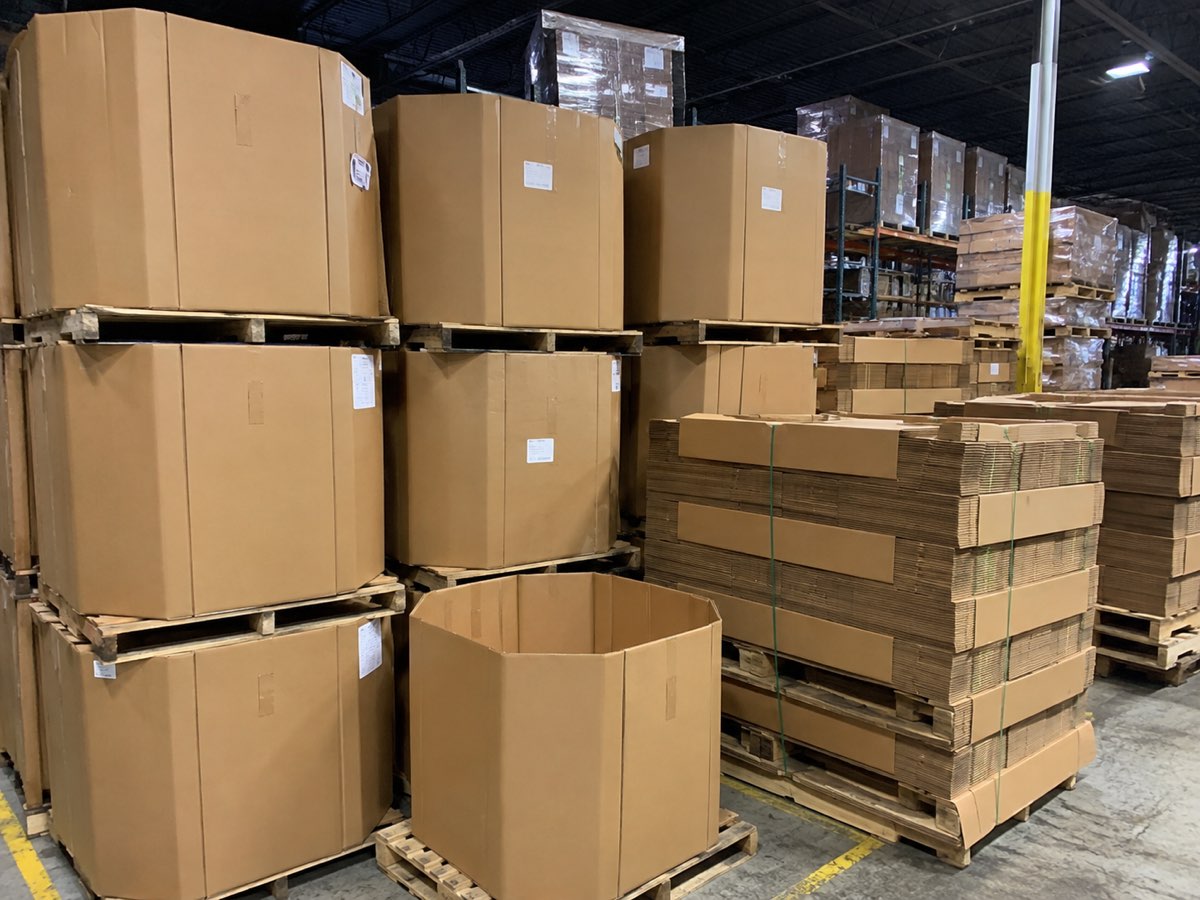
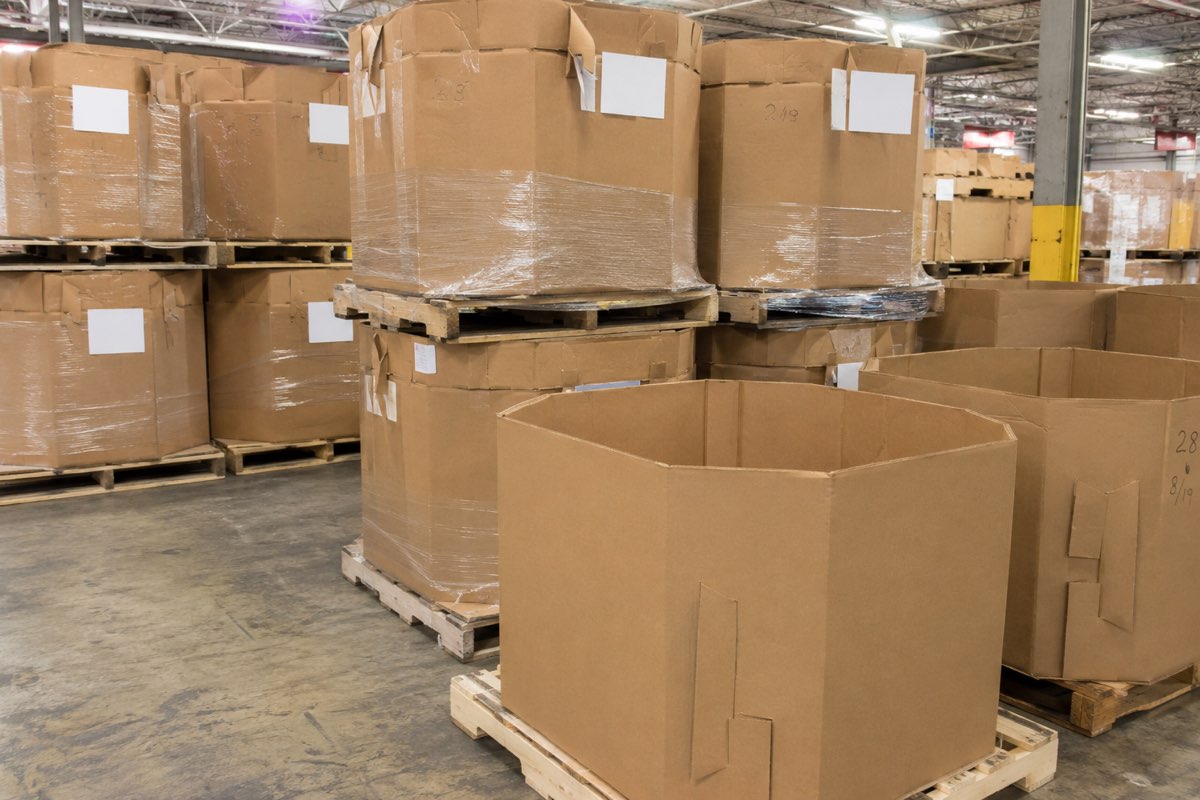
Houston sits on top of the largest petrochemical cluster in the western hemisphere, and almost every pound of resin that gets compounded, coloured, reground or purged along the ship channel spends part of its life in a gaylord box. Processors here burn through boxes faster than anyone: material is dense, the boxes get filled hot, and a single blown bottom on a forklift costs more in cleanup than a pallet of replacements.
Six questions about your load, storage and audience returns a wall count, grade and footprint — often a cheaper one than the industry default.
Matched from the recommended specification above. Every size links to a full spec page with load calculations and pallet fit.
| Size (ID) | Volume | Capacity | Walls | Per 53′ KD | Why it fits |
|---|---|---|---|---|---|
| 48″ × 40″ × 30″ | 33.3 cu ft | 1,000 – 2,000 lb | 2-wall to 3-wall | 540 | Dense material — metal turnings, glass cullet, wet fiber, minerals. |
| Grade | What it means | Trips left | Price position |
|---|---|---|---|
| A | One fill, clean, no repairs, no cuts. The sweet spot. | 3–5 trips typical | Roughly 35–55% of new, depending on wall count and volume |
| B | Two or three uses. Up to two clean repairs. Structurally honest. | 2–3 trips typical | Roughly 20–35% of new |
Answer these in the message field and the first quote is usually the final one.
Weighed, not estimated. It sets the wall count, and estimates are where over-specification starts.
The bottom box carries everything above it, and corrugated creeps under sustained load.
Climate controlled, dry warehouse, open dock or outdoors. A humid dock costs about 30% of your rating.
Regulated, external customer, internal only, or one-way scrap. This decides grade, not strength.
Drop height, whether it is scooped, tipped or bottom-discharged. This decides liner and closure.
Empties, baled fiber or pallets. A paired trailer takes roughly 40% off each direction.
48" × 40" × 30" or × 36" in 3-wall minimum, 4-wall for anything over 1,800 lb. That is a starting point rather than a rule — weigh a full box and run the Grade Decoder before committing to a trailer.
Typical grade here is A / B. Used stock covers the large majority of the work; new is genuinely required only for direct food contact, regulated packaging, and shipments where the container represents your brand.
Yes, and it is usually the cheapest arrangement available. A trailer delivering to you returns empty otherwise, so pairing an inbound delivery with an outbound buyback takes roughly 40% off each direction.
Same-day pickup from the yard on deep-stock sizes, next-day across most of the Houston metro, and two to four days on scheduled lanes to DFW, Austin, San Antonio and the Golden Triangle.
One pallet for delivery — typically 20 to 40 boxes depending on wall height. No minimum at all for pickup from the yard on E Richey Rd.
Produce, nuts, grain, dry ingredients — where sanitation rules the spec.
Heavy, sharp, valuable and audited to the pound.
Light, bulky, and priced by the cubic foot rather than the pound.
| Inside dimensions | Volume | Capacity | Per 53′ KD | Stock |
|---|---|---|---|---|
| 48″ × 40″ × 36″ | 40 cu ft | 1,200 – 2,800 lb | 480 | Deep stock |
| 48″ × 40″ × 30″ | 33.3 cu ft | 1,000 – 2,000 lb | 540 | Deep stock |
| 48″ × 40″ × 24″ | 26.7 cu ft | 900 – 1,800 lb | 600 | Regular stock |
| 48″ × 40″ × 42″ | 46.7 cu ft | 1,800 – 3,000 lb | 420 | Regular stock |
| 48″ × 40″ × 48″ | 53.3 cu ft | 2,500 – 4,000 lb | 360 | Regular stock |
| 40″ × 48″ × 45″ | 50 cu ft | 2,400 – 3,400 lb | 390 | Seasonal |
| 41″ × 28″ × 25″ | 16.6 cu ft | 700 – 1,400 lb | 900 | Regular stock |
| 30″ × 30″ × 30″ | 15.6 cu ft | 500 – 900 lb | 1100 | Regular stock |
| 45″ × 30″ × 45″ | 35.2 cu ft | 1,500 – 2,200 lb | 560 | Seasonal |
| 47″ × 38″ × 44″ | 45.5 cu ft | 2,000 – 3,000 lb | 400 | Seasonal |
| 48″ × 48″ × 40″ | 53.3 cu ft | 2,800 – 4,500 lb | 320 | Made to order |
| 48″ × 40″ × 40″ | 44.4 cu ft | 2,500 – 4,000 lb | 400 | Regular stock |
Inside dimensions. Outside runs ½″ to 1½″ larger per dimension depending on wall count — use OD for racking and trailer clearances. Full size chart →
| Walls | Static load | Stack | Typical ECT |
|---|---|---|---|
| 2-wall | 1,000–1,200 lb | 2 high | 48–61 lb/in |
| 3-wall (tri-wall) | 1,800–2,000 lb | 2–3 high | 71–82 lb/in |
| 4-wall | 2,500–3,000 lb | 3 high | 90–110 lb/in |
| 5-wall | 4,000 lb+ | 3–4 high | 120+ lb/in |
Ratings assume dry, aligned, fully supported, short duration. Derating explained →
| Grade | Condition | Trips left |
|---|---|---|
| 1A | Straight from the corrugator, unused, printed or plain. | 4–6 trips typical |
| A | One fill, clean, no repairs, no cuts. The sweet spot. | 3–5 trips typical |
| B | Two or three uses. Up to two clean repairs. Structurally honest. | 2–3 trips typical |
| C | Working boxes. Cosmetically rough, structurally usable, cheap. | 1–2 trips typical |
| SCRAP | End of life as a container. Beginning of life as fiber. | Reborn as new liner within weeks |
| Condition | Factor | Why |
|---|---|---|
| Storage under a month | ×1.0 | No creep adjustment needed |
| One to six months loaded | ×1.4 | Corrugated creeps under sustained load |
| Over six months loaded | ×1.6 | Long-term storage |
| Dry warehouse | ×1.15 | Mild humidity exposure |
| Open dock, no A/C | ×1.3 | Most of Houston, most of the year |
| Outdoors or cooler | ×1.5 | Needs a lid as well |
Required load = full box weight × (stack − 1) × creep × humidity. Run it automatically →
| Area | Turnaround | Region |
|---|---|---|
| Houston | Same day, most ZIPs | Harris County |
| Pasadena & Deer Park | Same day | Ship Channel East |
| Conroe & The Woodlands | Same day | Montgomery County |
| Beaumont & Port Arthur | Next day, scheduled routes | Golden Triangle |
| Dallas–Fort Worth | Scheduled backhaul lanes | North Texas |
| San Antonio & Austin | Scheduled lanes, 2–4 days | I-35 Corridor |