Recycling is the last resort here, not the headline
Everyone in this industry advertises recycling. We do it too — properly, with certified weights and regional mill outlets — but only after a box has failed a grading line that tries very hard to keep it in service.
Request a recycling & baling quote
Tell us what you have or what you need. A real person in Houston reads every one of these — usually within a couple of hours during dock time.
The order of operations matters
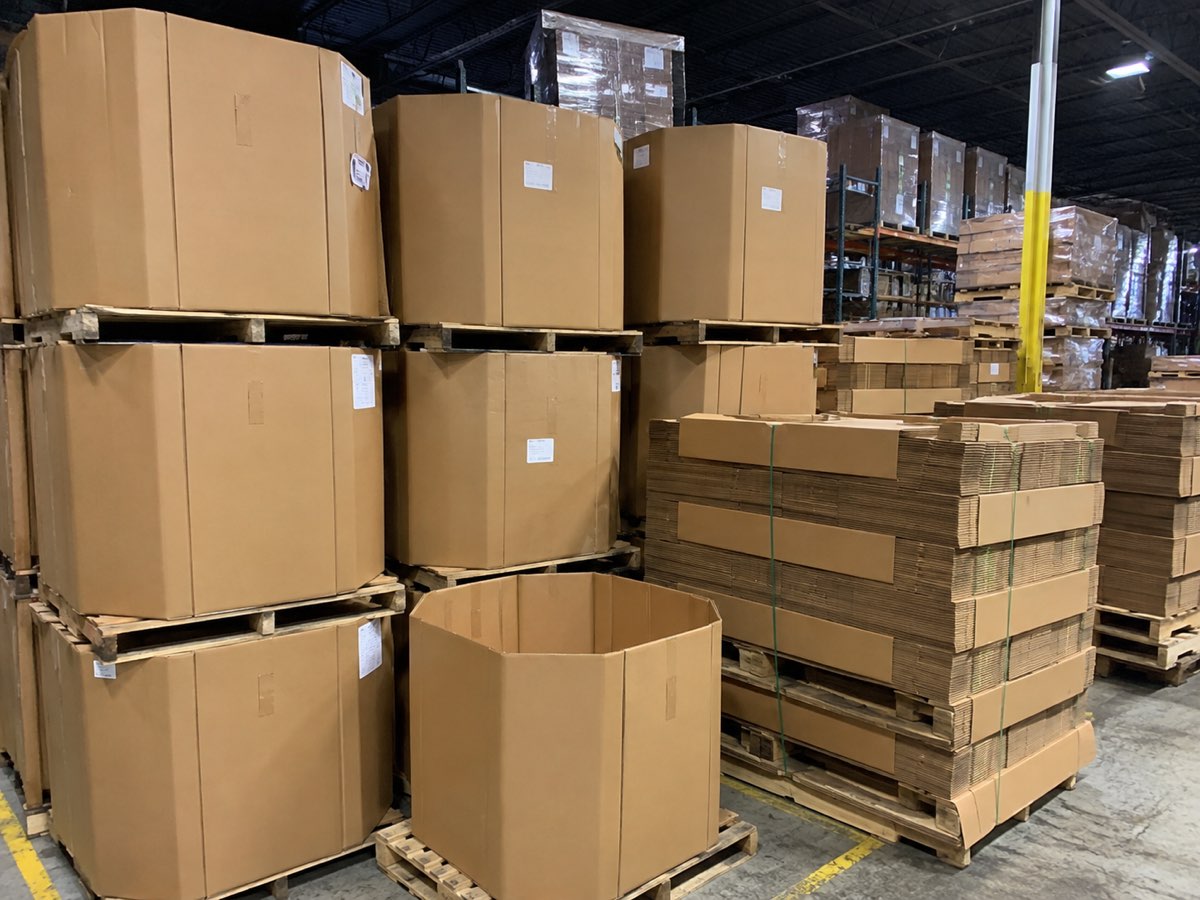
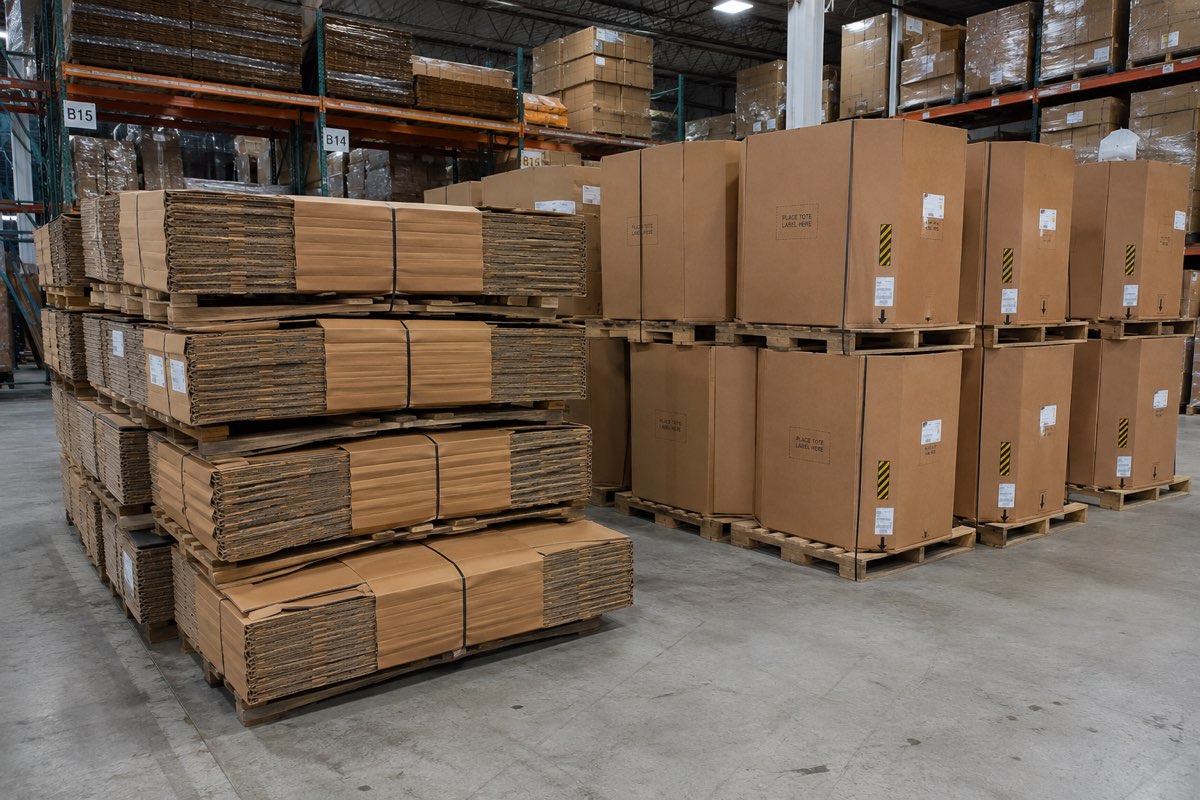
Recycling a box is the second-best outcome. Reusing it is the best one, by roughly an order of magnitude in both cost and carbon. That is why every load that arrives for recycling goes across a grading line first.
Roughly 30–40% of what customers send us as 'scrap' is still a working container. Pulling those out costs us labour and earns you a better settlement, which is a rare case of the right thing and the profitable thing being identical.
How the baling line runs
- Grading — anything structurally viable is pulled and re-enters inventory at its grade.
- Prep — staples, banding and box cutters removed. Metal in a bale is a mill rejection and a hydrapulper hazard.
- Separation — plastic liners stripped and sorted to their own market. Wax-coated board pulled entirely.
- Baling — horizontal baler, 1,100–1,400 lb mill-size bales, wire banded.
- Weighing — certified scale, ticket issued same day, no 'we'll settle at month end'.
- Shipment — to regional containerboard mills, most within trucking distance of Houston.
Grades of recovered fiber
| Grade | Spec | Relative value |
|---|---|---|
| #11 OCC | Baled corrugated, ≤5% prohibitives | Baseline market |
| #12 Double-sorted OCC | Clean, sorted, ≤2% prohibitives, no other fiber | Premium over #11 |
| Mixed paper | Office paper, boxboard, magazines | Well below OCC |
| Rejected | Wet, waxy, food-contaminated, metal-laden | A disposal cost, not revenue |
Programs for generators
If you produce corrugated waste every week and currently pay someone to haul it, there is almost certainly a better arrangement. Depending on your volume that can look like:
- Scheduled bale pickup — you bale, we collect and pay by the ton on a certified ticket.
- Baler placement — for generators above roughly 20 tons a month, we can put equipment on site.
- Loose collection — we supply collection boxes, you fill them, we bale at our yard. Lower rate, zero equipment.
- Paired routes — recycling collection on the same truck that delivers your graded boxes.
Reporting your ESG team can actually audit
Monthly statements show tons diverted, grade mix, avoided landfill volume and estimated CO₂e, with the calculation methodology attached. We publish the assumptions rather than the conclusions, because a number without a method is a marketing claim.
How it runs, start to finish
Baseline your stream
Two weeks of counting: what you generate, what condition it is in, what you currently pay to remove it.
Pick the model
Baled pickup, on-site equipment, loose collection, or paired with your box deliveries.
Set the route
Weekly, biweekly or on-call. Volume-triggered pickups work well for irregular generators.
Grade, bale, weigh
Reusable boxes pulled first, fiber baled, certified weight ticket same day.
Settle and report
Payment against the ticket plus a monthly diversion and CO₂e statement.
Recycling & Baling — common questions
Do you pay for cardboard?
Yes, baled OCC is bought by the ton at the prevailing regional index. Loose corrugated we will take but it is worth meaningfully less because handling costs are higher.
What gets a bale rejected?
Four things: moisture above mill spec (usually 12–14%), wax coating, food residue or grease, and metal left in the box. Metal is the one that generates a phone call.
Do you landfill anything?
No structurally or fiber-recoverable material. Contaminated and wax-coated board that no mill will accept goes to appropriate disposal, and we document it rather than quietly mixing it in.
Can you supply the collection containers?
Yes — usually Grade B or C boxes, which is a pleasing loop: the container collecting your fiber is itself on its last trip.