What happens to a gaylord box after its last trip
Follow a retired gaylord box from the grading line through baling, the OCC market and the mill — plus the four things that get a bale rejected.
Have a question this raised?
Tell us what you have or what you need. A real person in Houston reads every one of these — usually within a couple of hours during dock time.
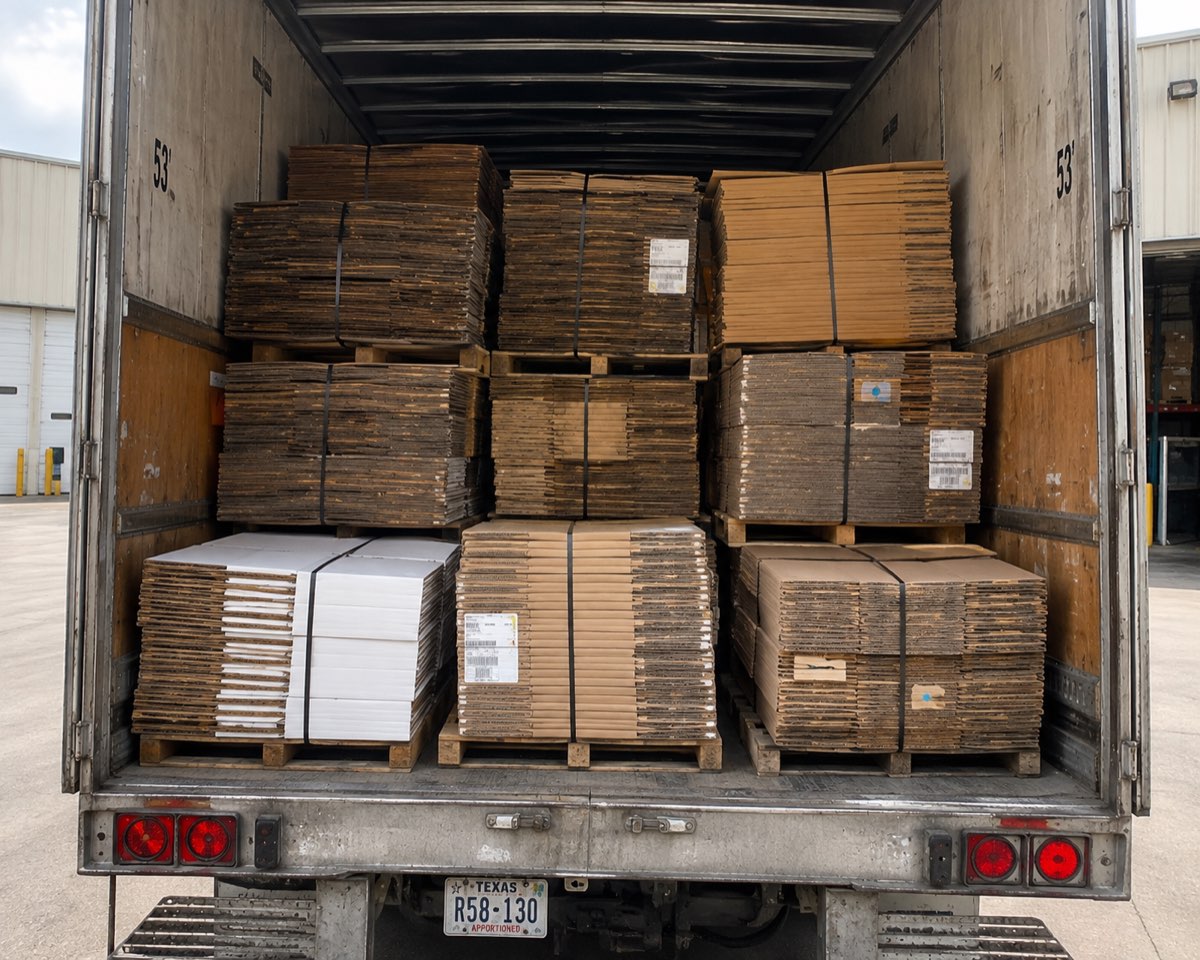
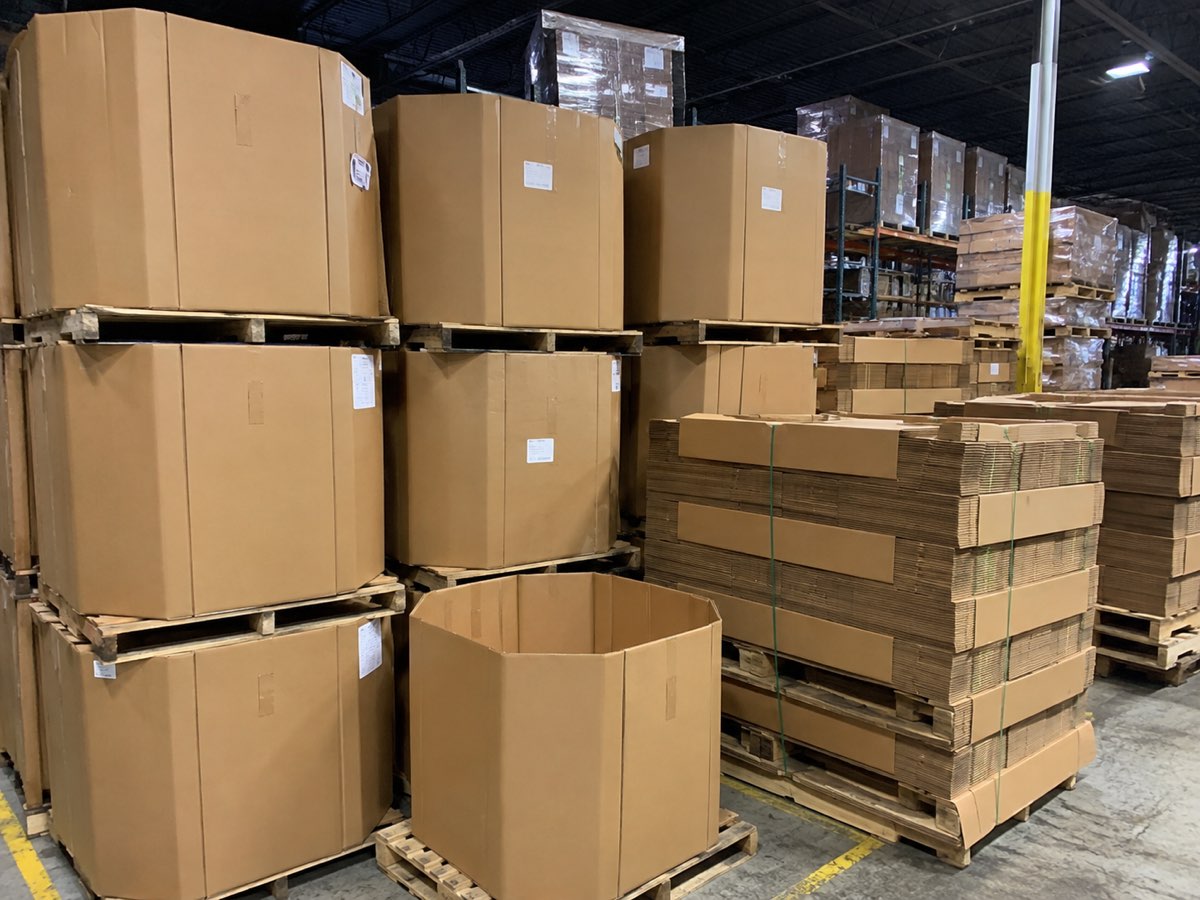
There is a version of this story where the box gets thrown in a compactor and disappears. That version is worth about $30 a ton at the gate and costs you a haul fee. The version below is worth several times that, and it is not meaningfully more work.
Step one: the grading line
Every box that comes back to our yard gets looked at before anything else happens, because the difference between a Grade C box and a bale is about eight dollars. Roughly 30–40% of what arrives as 'scrap' from a customer dock is actually still a working box that somebody downgraded because it looked bad.
This is the single largest source of value recovery in the whole operation, and it is entirely a labour question: someone has to look.
Step two: prep
- Staples and banding pulled — metal in a bale is a mill rejection and a hydrapulper hazard.
- Plastic liners stripped and sorted separately. Film has its own market.
- Wax-coated board pulled out entirely. Wax will not repulp in a standard mill and contaminates the whole batch.
- Wet or mouldy board segregated. Mould spores are a worker-safety issue before they are a quality issue.
Step three: baling
Clean corrugated goes into a horizontal baler and comes out as a mill-size bale, typically 1,100–1,400 lb, banded with wire. Bale density matters commercially: a loose bale wastes trailer space and mills pay less for it, because their handling cost per ton is higher.
| OCC grade | What it is | Relative value |
|---|---|---|
| #11 OCC | Baled corrugated, standard grade, ≤5% prohibitives | Baseline market price |
| #12 Double-sorted OCC | Clean, sorted, ≤2% prohibitives, no other fiber | Premium over #11 |
| Mixed paper | Everything else — office paper, boxboard, magazines | Well below OCC |
| Rejected | Wet, waxy, food-contaminated, metal-laden | Disposal cost, not revenue |
Step four: the mill
Bales go to a regional containerboard mill — Texas and the Gulf states have several within trucking distance, which is why OCC recovered in Houston generally stays in Houston's fiber economy rather than being exported. At the mill, the bale is broken, pulped in water, screened for contaminants, cleaned and re-formed into new liner or medium.
Corrugated fiber survives roughly 5–7 pulping cycles before the fibers become too short to bond well. Every cycle needs a small percentage of virgin fiber blended in to maintain strength — which is why recycling reduces virgin demand dramatically but never eliminates it.
Step five: back on a truck
New liner leaves the mill, goes to a corrugator, becomes new board, gets converted into a new bulk box, and shows up on somebody's dock. Typical cycle time from bale to new box on the Gulf Coast is around three to five weeks.
The four things that get a bale rejected
- Moisture above mill spec — usually 12–14%. Rain on an outdoor bale is the most common cause.
- Wax coating. It does not repulp, and one waxed box can downgrade a whole bale.
- Food residue and grease. Oil interferes with fiber bonding.
- Metal — staples, banding, box cutters left in the box. This is the one that gets you a phone call.
If you generate corrugated waste and are currently paying to have it hauled, that is a conversation worth having. In most cases we can put a baler-fed program in place where the fiber pays for its own freight and then some.
Common questions on this topic
What is the short version of "What happens to a gaylord box after its last trip"?
A retired gaylord box is graded, stripped of tape and staples, baled as OCC grade #11 or #12, weighed, and sold to a regional mill where it becomes new liner within about three weeks. Contamination — wax, plastic, food residue and moisture — is what gets bales rejected.
Are these numbers specific to Houston and the Gulf Coast?
Several of them are, and we flag it where it matters. Corrugated loses roughly half its compression strength at 90% relative humidity, which is most of the year here, so a board rating buys you less on the Gulf Coast than the same rating buys inland.
Where do I go for a shorter answer?
The FAQ collects the questions that actually arrive in our inbox, the glossary defines every term used above, and the size chart has the raw capacities if that is all you came for.
Can you just specify a box for my situation instead?
Yes. The Grade Decoder turns six questions about your load, storage and audience into a wall count, grade and footprint, and the quote desk will sanity-check it against what is on the yard.
Do you cover this in more depth anywhere?
The Gaylord Box Guide is the long read that puts all of this in order, and the related field notes below go deeper on the adjacent topics.