Closed-loop container programs: what actually makes them work
Reusable gaylord box pools cut packaging spend 40–60% when designed right. The four things that decide whether a closed loop actually works.
Have a question this raised?
Tell us what you have or what you need. A real person in Houston reads every one of these — usually within a couple of hours during dock time.
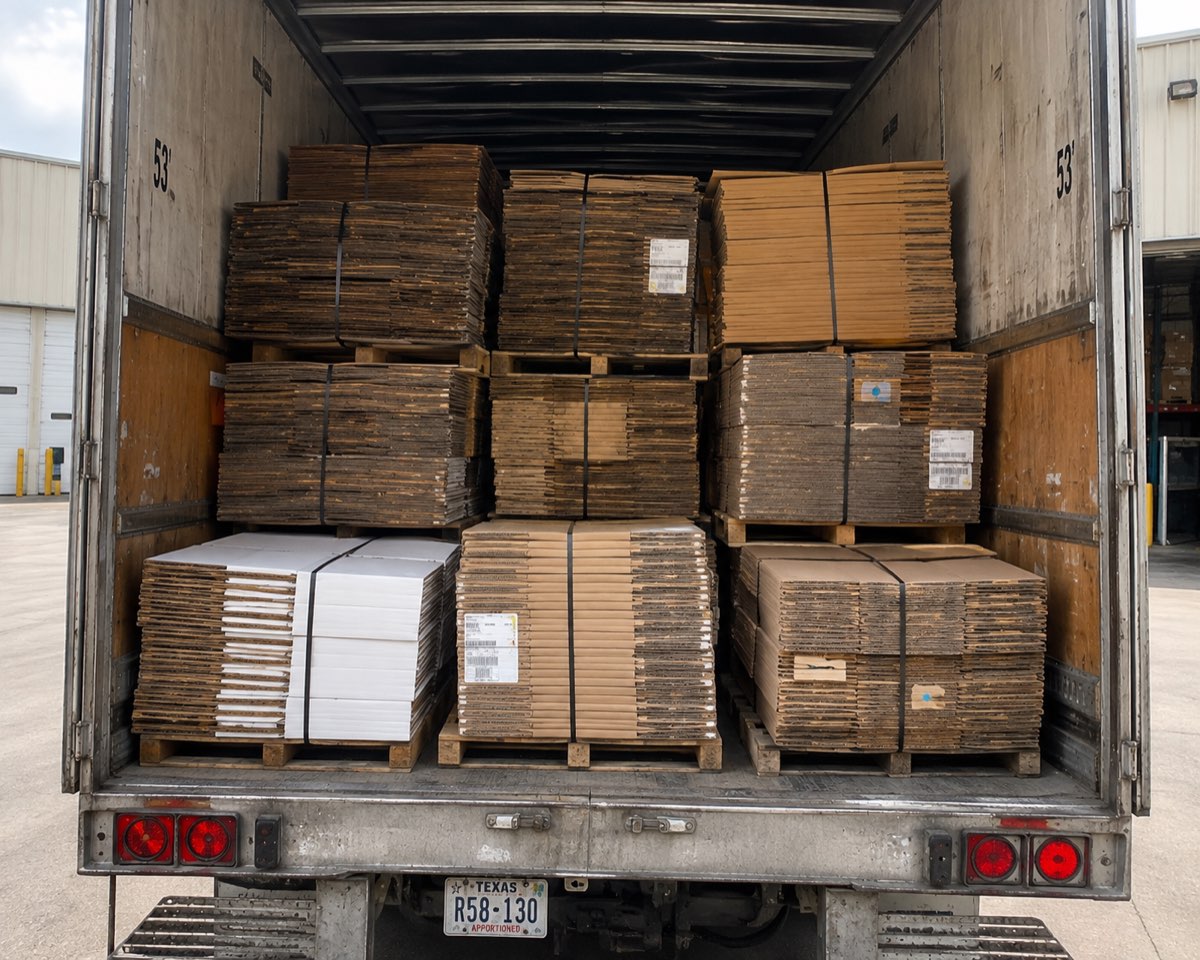
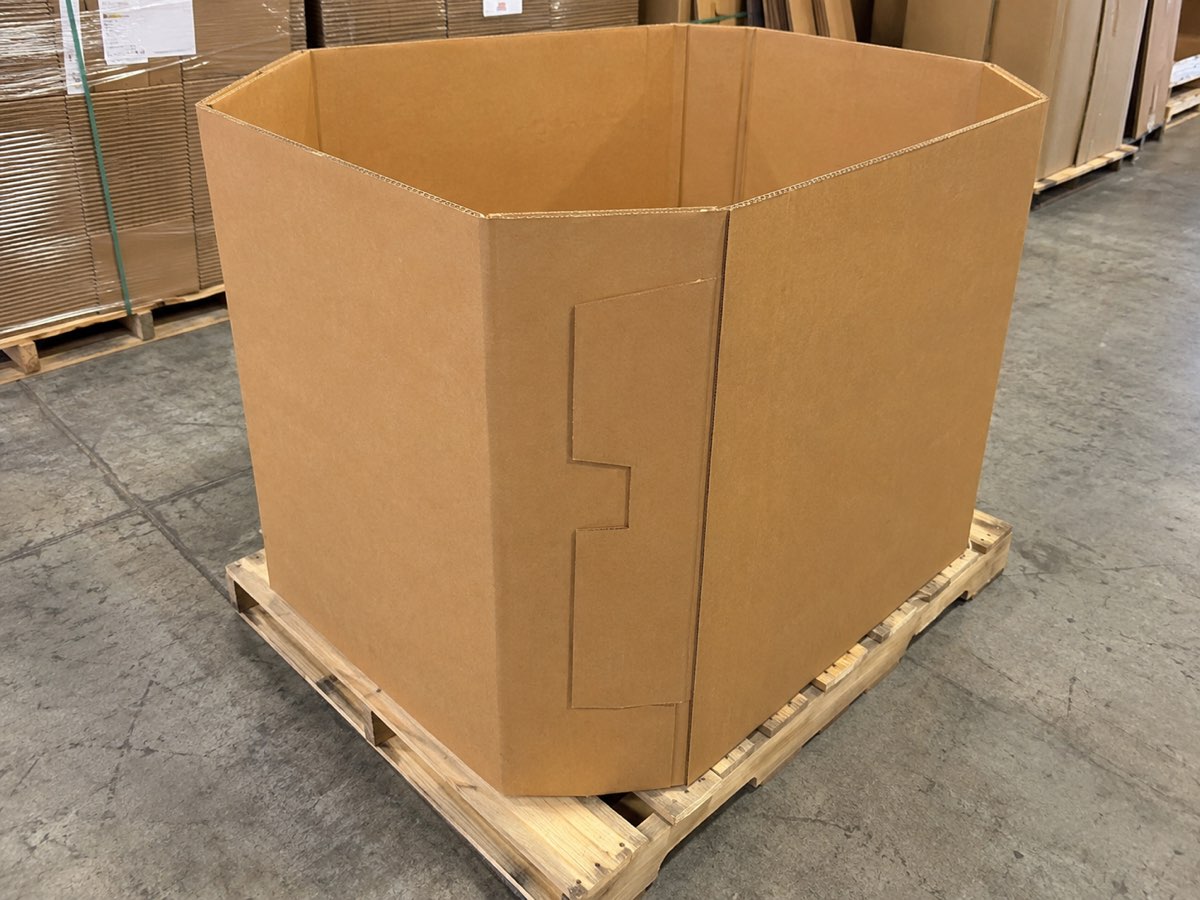
Everybody wants a reusable program. About half of the ones that get launched quietly die within a year, and the failures follow the same pattern every time: nobody planned the return leg, the boxes got wet, and after three months the pool had shrunk to the point where the accountant could not tell the difference from just buying new.
Here is what separates the programs that survive.
1. Density: can you fill a return trailer?
The single biggest cost in a closed loop is the empty return. If you cannot accumulate roughly 400 knocked-down boxes before the return truck leaves, the freight per box swallows the savings.
The fix is usually consolidation rather than volume: three plants on the same lane returning to one collection point beats each of them running half-empty trailers. We operate collection points across the Houston metro precisely for this reason.
2. Distance: how far is the loop?
| Loop radius | Viability | Notes |
|---|---|---|
| Under 50 mi | Excellent | Daily or weekly swaps, minimal freight cost |
| 50–150 mi | Strong | Weekly routes, backhaul pairing essential |
| 150–250 mi | Workable | Needs full trailers both directions |
| Over 250 mi | Rarely worth it | Freight usually exceeds box value — recycle locally instead |
Past about 250 miles the arithmetic flips: it costs less to recycle the box where it landed and buy a graded used box near the destination. That is not a failure of the circular model — it is the circular model routed correctly.
3. Discipline: four habits that decide box life
- Boxes never touch the ground. Concrete wicks moisture straight into the bottom board. Always on a pallet, always.
- Knock down within 48 hours of emptying. Standing empties get crushed, get used as trash cans, and disappear.
- No box knives near seams. Train the cut line: across the top flap, never down the corner.
- Segregate on emptying. Two piles — reusable and scrap — decided at the moment of emptying, by the person who just saw inside the box.
“The single highest-return training we ever deliver is fifteen minutes on where to put a box knife. It adds about a trip and a half to average box life.”
4. A repair path that somebody owns
Roughly 15–25% of returned boxes need something: a patch, a re-taped seam, a replacement flap. If nobody owns that step, damaged boxes get mixed back into the pool, fail in service, and everybody concludes the program does not work.
In our programs the repair path is ours: boxes come back to the Houston yard, get graded, get patched or baled, and re-enter your pool at their new grade. You get a monthly statement showing pool size, attrition rate and how many trips your average box is achieving.
What the numbers usually look like
A typical mid-size processor running 1,200 boxes a month at $12 landed spends about $172,000 a year on packaging. Moving to a closed loop with an average of 3.4 trips per box and a 15% attrition rate typically lands between $68,000 and $95,000 — plus a materially smaller waste haul bill, because the boxes that used to go into a compactor now go back on a trailer.
How we set one up
- Two-week baseline: we count what you buy, what you throw away and what condition your empties are in.
- Pool sizing: total boxes in circulation = weekly consumption × loop time in weeks × 1.25 safety factor.
- Route design: swap frequency, collection points, backhaul pairing.
- Dock training: the four habits above, delivered on your floor, in English and Spanish.
- Monthly reporting: pool size, trips per box, attrition, avoided CO₂e and fiber.
Programs start at around 300 boxes in circulation. Below that, standing orders with buyback usually beat a formal pool on paperwork alone.
Common questions on this topic
What is the short version of "Closed-loop container programs: what actually makes them work"?
A closed-loop gaylord box program works when your route density is high enough to fill a return trailer, your loop distance is under about 250 miles, your team keeps boxes off the ground, and someone owns the repair path. Get those four right and packaging spend typically falls 40–60% within two cycles.
Are these numbers specific to Houston and the Gulf Coast?
Several of them are, and we flag it where it matters. Corrugated loses roughly half its compression strength at 90% relative humidity, which is most of the year here, so a board rating buys you less on the Gulf Coast than the same rating buys inland.
Where do I go for a shorter answer?
The FAQ collects the questions that actually arrive in our inbox, the glossary defines every term used above, and the size chart has the raw capacities if that is all you came for.
Can you just specify a box for my situation instead?
Yes. The Grade Decoder turns six questions about your load, storage and audience into a wall count, grade and footprint, and the quote desk will sanity-check it against what is on the yard.
Do you cover this in more depth anywhere?
The Gaylord Box Guide is the long read that puts all of this in order, and the related field notes below go deeper on the adjacent topics.