Lead time beats unit price more often than buyers expect
A four-week corrugator queue and a yard with stock on the floor are different products. What a stockout actually costs your operation.
By Tom Brennan, Founder · 6 min read · Published April 15, 2025
Have a question this raised?
Tell us what you have or what you need. A real person in Houston reads every one of these — usually within a couple of hours during dock time.
- The two products
- What a stockout actually costs
- Where buyers get caught
- How to price availability into a decision
- The hybrid that works
- One thing to ask on every quote
New bulk boxes are a manufacturing run with a two-to-four-week queue; graded used stock ships the same day. When a stockout stops a line or delays a shipment, the cost is measured in hours of production, not in dollars per box — which is why availability usually outranks unit price in a packaging decision.
- Category
- Buying
- Published
- April 15, 2025
- Written by
- Tom Brennan, founder
Purchasing systems are built to compare prices. They are not built to compare availability, so availability tends to get discussed once, at the start of a relationship, and never quantified. It should be.
The two products
A new box order is a manufacturing run. Your order joins a corrugator schedule behind whoever ordered before you, and the plant's schedule does not care about your production date. Two to four weeks is normal, and it stretches when the market is busy.
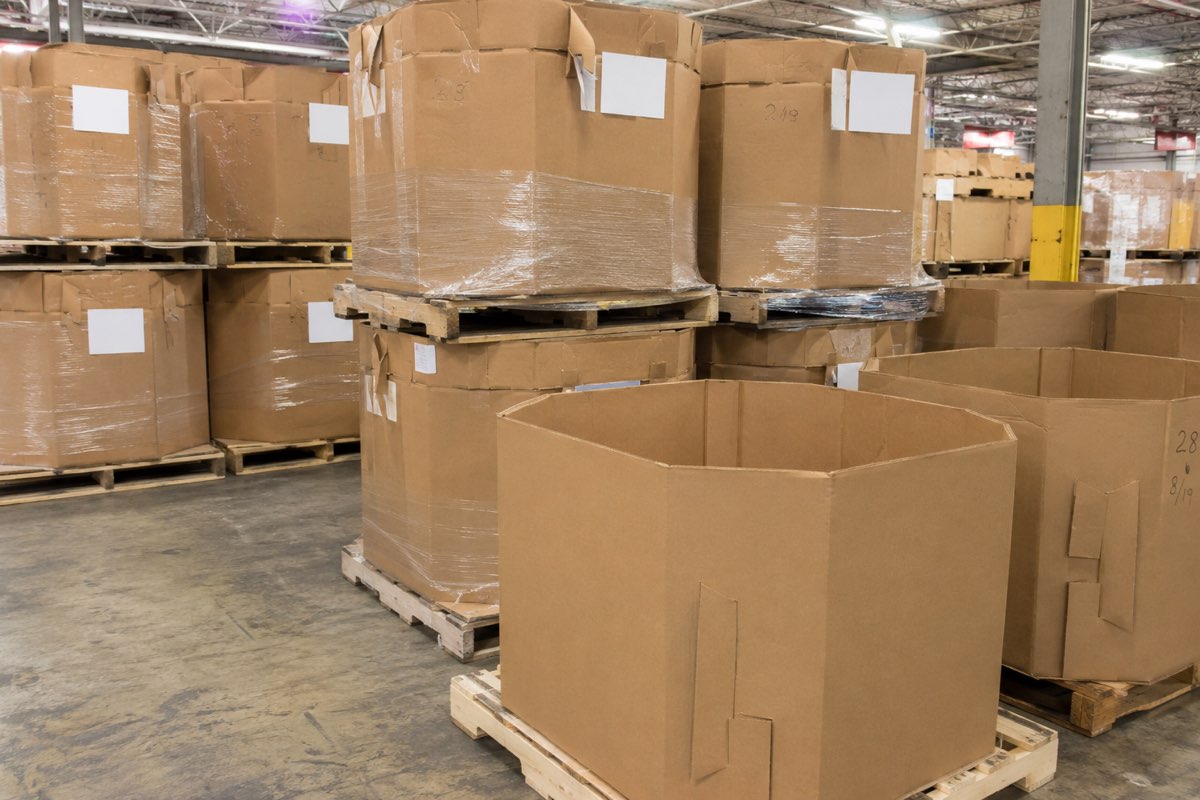
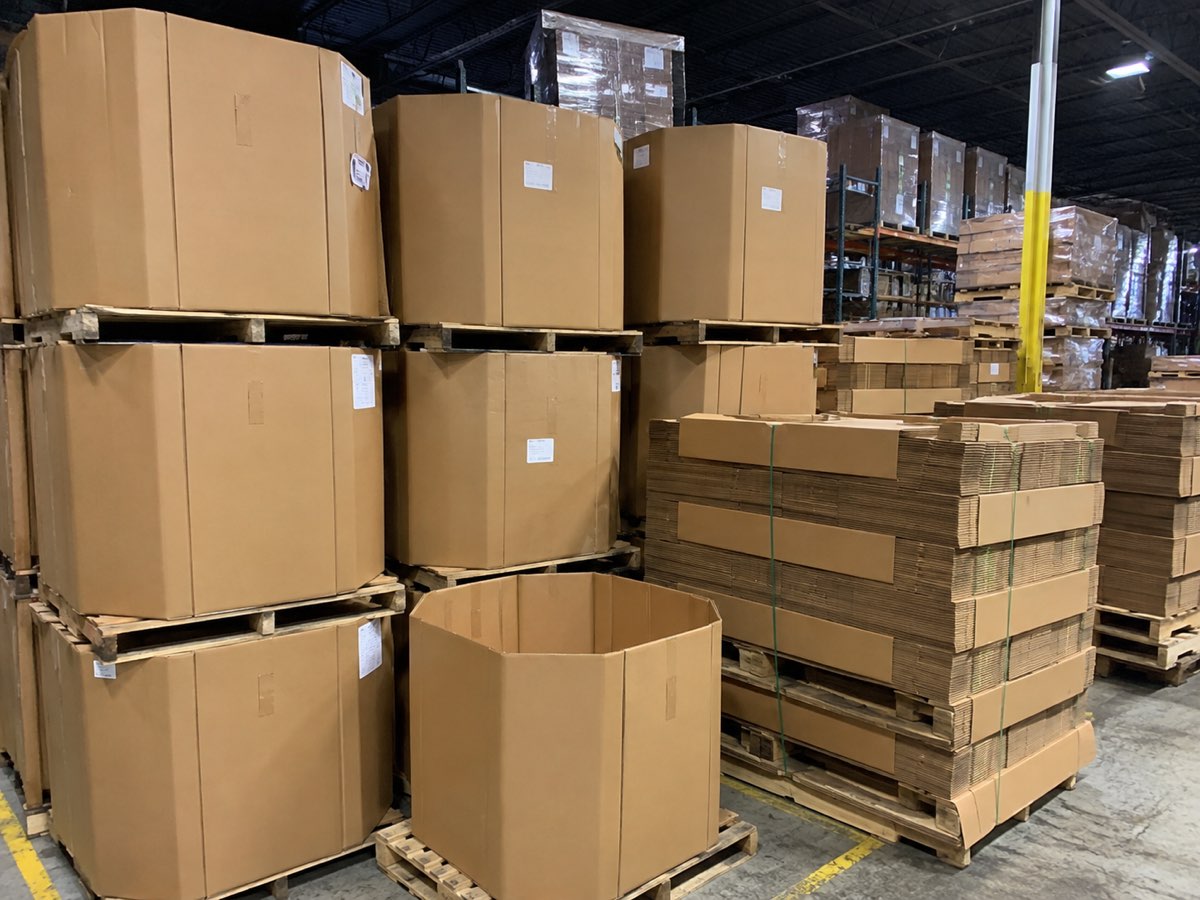
Graded used stock sits on a yard. When a customer calls on Tuesday needing three hundred boxes for a Thursday load, used is not the cheaper option — it is the only option. Those are genuinely different products and they deserve different prices.
What a stockout actually costs
Work it out for your own operation once and keep the number. For a mid-size processor it usually looks something like this:
| Consequence | Typical cost |
|---|---|
| Production line idle | Hundreds to thousands of dollars per hour |
| Expedited freight to recover | $400–$1,200 per emergency load |
| Emergency spot purchase premium | 20–60% over contract price |
| Late shipment to a customer | Chargebacks, and a relationship cost with no invoice |
| Material stored improperly while waiting | Degraded product, and sometimes a write-off |
Set that against a per-box difference measured in cents and the arithmetic stops being close.
Where buyers get caught
- Switching to a distant supplier for a modest unit saving, and discovering the lead time is now five days plus a lane that runs twice a week.
- Ordering exactly what is needed with no buffer, because carrying inventory is discouraged.
- Specifying a size nobody stocks. Custom is fine until you need it in three days.
- Assuming a supplier's catalogue figure is a stock count. It is not — ask what is on the floor today.
- Peak season. Everybody in the metro wants boxes in the same two weeks, and it is not a secret when those weeks are.
How to price availability into a decision
- Estimate the hourly cost of not having boxes. Even roughly.
- Estimate stockout frequency at each supplier's lead time, honestly. A four-week lead time with a monthly reorder cycle has no margin for a supplier delay.
- Multiply. Add it to landed cost.
- Now compare the numbers. Frequently the local supplier with stock on the floor is cheaper on this basis even at a higher unit price.
The hybrid that works
Most operations that get this right end up with two suppliers and two roles. A planned baseline — often new boxes, or a scheduled standing order — covering predictable volume with long lead time and the best price. And a local source with stock on the floor covering variance, peaks and everything that was not in the forecast.
That is not inefficiency. It is buying insurance from someone who happens to also sell boxes, and it costs less than the premium on the first emergency load.
One thing to ask on every quote
'What is on your floor today, and what happens if it sells before I approve?' The honest answer is a real count and a commitment to tell you rather than substitute quietly. Anyone who cannot answer that is selling you a catalogue, not inventory.
- Corrugator
- The machine — and by extension the plant — that glues fluted medium between liners to make corrugated board.
- Grade (box)
- A condition classification for used boxes. 1A new, A one clean use, B up to two repairs, C multiple repairs, then scrap.
Tom Brennan — Founder
Written on the yard at 1050 E Richey Rd, Houston. Everyone who writes here works the grading line, the baler, the routes or the quote desk — there are no guest posts and nothing on this blog is syndicated.