How to run a packaging RFQ that gets you honest numbers
Most bulk packaging RFQs invite vague answers. The eight things to specify so quotes are comparable, and three questions that expose brokers.
By Priya Raman, Quote desk · 7 min read · Published December 5, 2023
Have a question this raised?
Tell us what you have or what you need. A real person in Houston reads every one of these — usually within a couple of hours during dock time.
- The eight things to specify
- Ask for landed cost, not unit price
- Three questions that sort the field
- What not to do
- A workable template
A comparable bulk-box RFQ specifies inside dimensions, wall count, grade with a defined standard, quantity and cadence, delivery form (knocked down or assembled), destination dock capability, accessories, and asks for landed cost rather than unit price. Without those, every quote you receive is answering a slightly different question.
- Category
- Buying
- Published
- December 5, 2023
- Written by
- Priya Raman, quote desk
We answer a lot of RFQs, and the majority of them are impossible to answer precisely. Not because the buyer is careless — because nobody ever showed them what a bulk packaging spec needs to contain. Here is what to put in, from the side of the desk that has to price it.
The eight things to specify
- Inside dimensions, length × width × height. Say 'ID' explicitly. Outside dimensions vary by wall count and quoting them as ID gives you boxes an inch small inside.
- Wall count, or the data to derive it: the weight of one full box, your stack height, how long it sits loaded and whether storage is climate controlled.
- Grade, with a standard attached. 'Good used boxes' is not a specification. 'Grade A per your published inspection criteria' is.
- Quantity and cadence. One-off or repeating changes the price more than volume does, because a standing schedule lets a supplier plan trailers instead of chasing them.
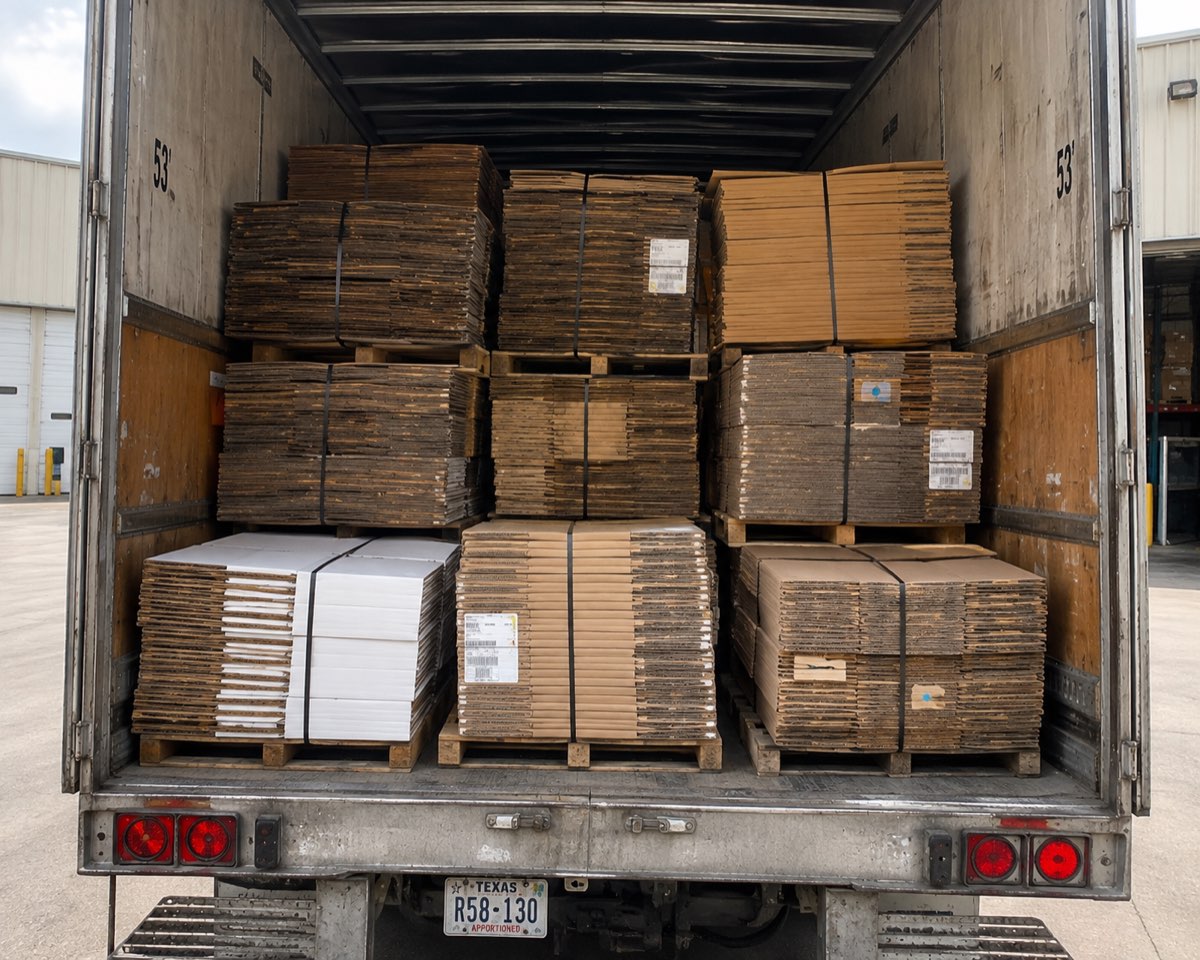
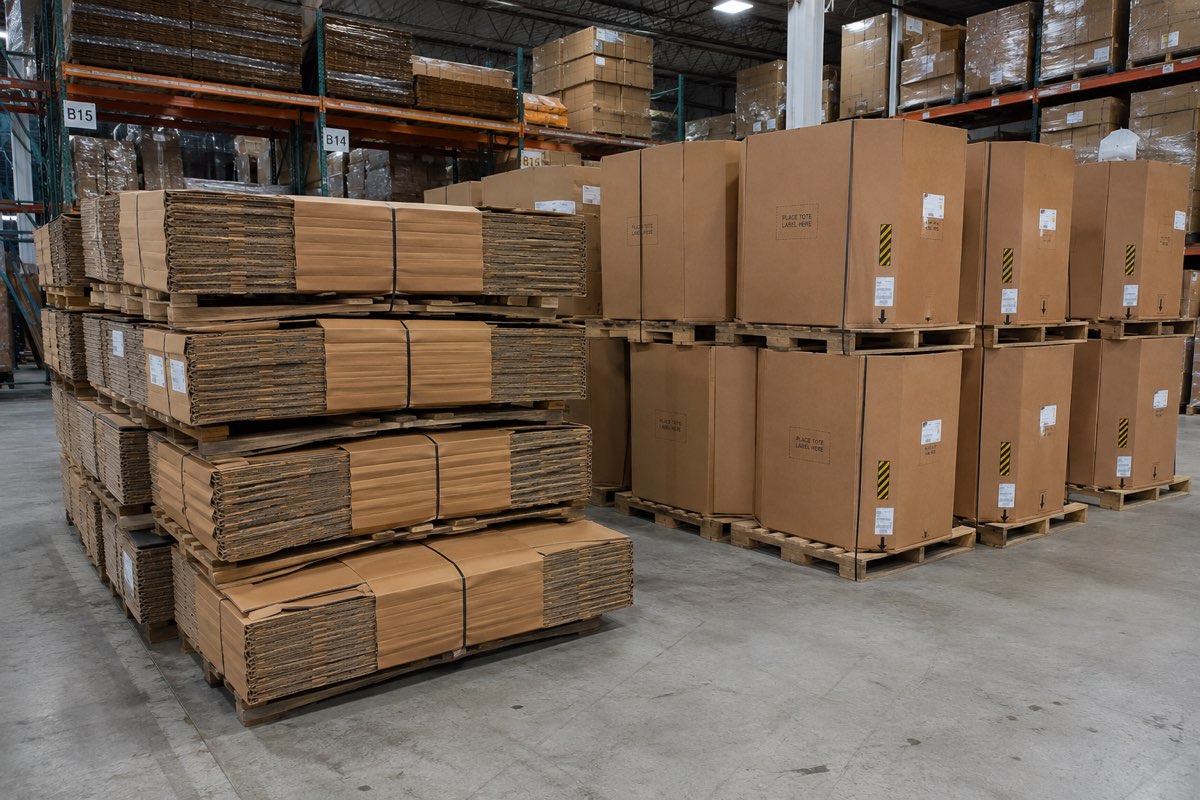
- Knocked down or assembled. Flat ships roughly four times as many per trailer. If you do not say, assume the quote is for whichever is cheaper for the supplier.
- Destination dock capability. Can it take a 53-footer? Is there a forklift? Is there a liftgate requirement? These are line items, and they belong in the RFQ rather than in a surprise invoice.
- Accessories in scope: lids, liners, pallets, corner boards, banding. Sourcing these separately from three vendors is how loads arrive incomplete.
- The delivery window, including your dock hours and any gate procedure.
Ask for landed cost, not unit price
This is the single most useful change you can make. Unit price is a marketing number. Landed cost is box price plus linehaul plus fuel surcharge plus accessorials, divided by quantity — and in bulk corrugated freight regularly exceeds the value of the boxes.
A supplier four hundred miles away quoting fifteen percent under local is frequently more expensive delivered, and always worse on lead time and flexibility. You will not see that unless you ask the question in a form that forces the answer.
Three questions that sort the field
'What is your grading standard, and can I see it?'
Anyone selling used boxes should have written criteria and be willing to publish them. If the answer is a verbal description that changes each time you ask, you are buying a surprise.
'What is on your floor today, and what happens if it sells before I approve?'
Used inventory moves. The honest answer is a real count and a commitment to tell you rather than substitute quietly. The dishonest answer is an unlimited catalogue figure.
'Do you buy them back?'
A supplier who will take the empties is a supplier whose truck is paying in both directions, which makes both directions cheaper. It also means they have a commercial interest in the boxes lasting, which changes the grading conversation in your favour.
What not to do
- Do not send the same RFQ to twelve suppliers and take the lowest number. In used goods that reliably selects for the loosest grading standard.
- Do not specify a wall count you inherited without re-deriving it. Over-specification is the most common expensive habit in this category.
- Do not leave grade out and expect the market to settle it. It will settle it downward.
- Do not schedule delivery for the same week you need it. Used stock is fast, but freight is freight.
A workable template
Material and full-box weight. Inside dimensions. Wall count or the derivation data. Grade and standard. Quantity and cadence. KD or assembled. Dock capability and hours. Accessories. Delivery window. Request: landed cost per unit, itemised, plus current stock count and lead time. That fits on one page and it will get you quotes you can actually put side by side.
- Corner board
- An L-shaped fiber or plastic profile placed on a box corner under banding to spread strap pressure and protect the corner.
- ECT
- Edge Crush Test. Pounds per linear inch a board edge withstands before buckling. The best single predictor of stacking performance.
- Grade (box)
- A condition classification for used boxes. 1A new, A one clean use, B up to two repairs, C multiple repairs, then scrap.
- Knocked down (KD)
- Shipped flat rather than assembled. Roughly four times more boxes per trailer, which is why almost all used inventory ships this way.
- Liner
- The flat facing sheets on either side of the fluted medium.
- Wall count
- The number of fluted layers. 2-wall through 5-wall in common use.
Priya Raman — Quote desk
Written on the yard at 1050 E Richey Rd, Houston. Everyone who writes here works the grading line, the baler, the routes or the quote desk — there are no guest posts and nothing on this blog is syndicated.