Six forklift habits that quietly kill a third of your boxes
Most bulk box damage comes from handling, not load weight. The six operator habits that cost the most box life, and how to change them.
By Luis Barrera, Yard supervisor · 7 min read · Published November 14, 2023
Have a question this raised?
Tell us what you have or what you need. A real person in Houston reads every one of these — usually within a couple of hours during dock time.
- 1. Tine strikes on the wall
- 2. Dragging
- 3. Lifting a box that is not on a pallet
- 4. Banding without corner boards
- 5. Misaligned stacking
- 6. Cutting boxes open down the corner
- The fifteen-minute version
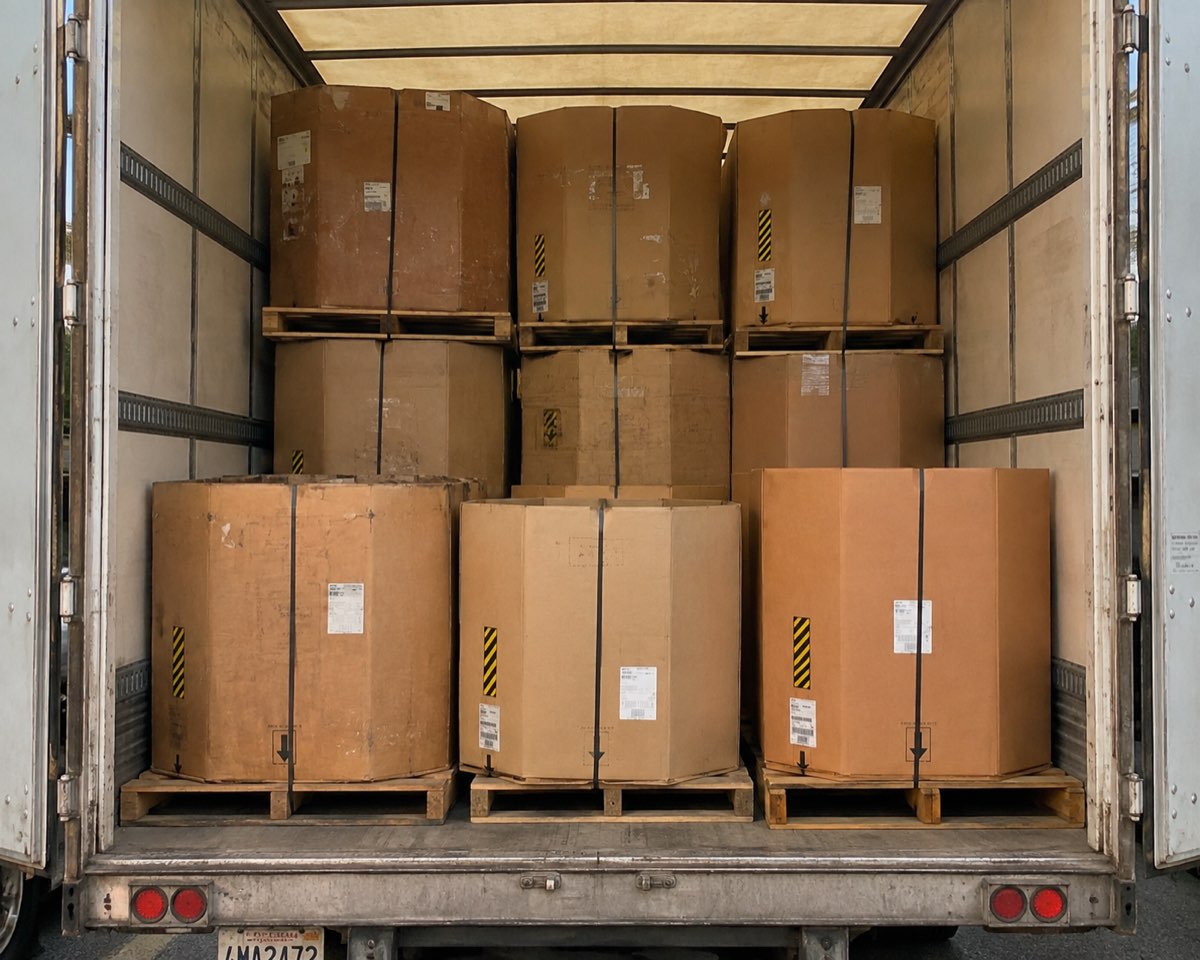
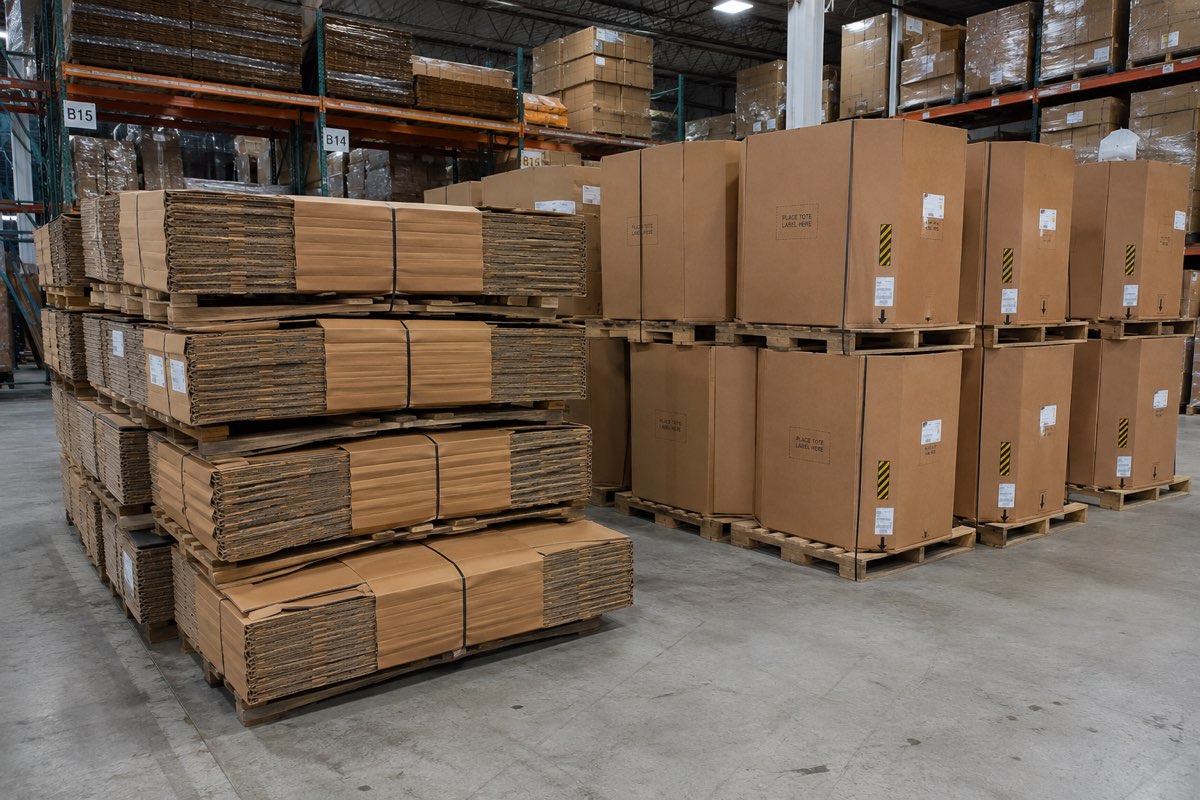
Most bulk box damage comes from handling, not from load. The six costly habits are tine strikes on the wall, dragging boxes across concrete, lifting an unpalletised box, over-tightened banding without corner boards, stacking misaligned, and cutting boxes open down a corner instead of across the top flap.
- Category
- Operations
- Published
- November 14, 2023
- Written by
- Luis Barrera, yard supervisor
When a customer tells us their boxes only last one trip, our first question is never about the boxes. It is about who moves them and how. In fifteen years of grading returns, handling damage outnumbers load failure by a wide margin.
1. Tine strikes on the wall
A forklift tine entering at an angle or too high punches straight through a wall. It is a small hole and a large problem: the flutes around it are crushed for several inches in every direction, and that is a load-bearing area gone.
The fix is entirely about approach angle and pallet entry. Square up, enter the pallet, do not steer with the tines inside.
2. Dragging
Pushing a partially filled box across a slab to reposition it takes ten seconds and abrades the bottom board. Do it twice a week for a month and the bottom is fuzzy, thin and one lift away from failing.
Dragging is also how a box picks up whatever moisture is on the floor. Both problems, one habit.
3. Lifting a box that is not on a pallet
Tines under a loaded bulk box, no pallet. It works, right up until it does not. The bottom board is not designed as a load-bearing beam across a two-tine span — it is designed to sit on a flat deck. Lifting without a pallet concentrates the whole load on two narrow strips and starts a bulge that never comes out.
4. Banding without corner boards
Strapping a box down concentrates the whole strap tension on four corners — the exact structural element that carries most of a stacked load. An L-profile corner board spreads that tension across several inches of wall and costs very little.
If you band boxes and do not buy corner boards, you are trading a cheap consumable for expensive containers.
5. Misaligned stacking
Published compression ratings assume corner-to-corner alignment. Stack a box two inches off centre and the corners of the lower box are supported by the flat wall of the upper one, which carries almost nothing. The bottom box in a misaligned three-high stack can be doing worse than it would with one more box stacked correctly on top.
This is not an operator skill problem — it is a floor marking problem. Painted footprints fix it faster than training does.
6. Cutting boxes open down the corner
This is the single highest-return thing on the list. When somebody opens a box with a knife, they either cut across the top flap or they run the blade down a vertical corner. The first costs nothing. The second destroys the strongest part of the box and turns a five-trip container into a two-trip one.
“Fifteen minutes on where to put a box knife adds about a trip and a half to average box life. Nothing else we teach comes close to that return.”
The fifteen-minute version
We deliver this on customer floors, in English and Spanish, and it fits in a shift handover:
- Square up before you enter a pallet. Never steer with tines in.
- Nothing gets dragged. If it needs to move, it gets lifted on a pallet.
- Nothing gets lifted without a pallet under it.
- Bands get corner boards. Every time.
- Stack inside the painted lines.
- Cut across the top flap. Never down a corner.
Print it, laminate it, put it by the knife box. The operations that do this see it in their return grades within a month, and they see it in their purchasing within a quarter.
- Corner board
- An L-shaped fiber or plastic profile placed on a box corner under banding to spread strap pressure and protect the corner.
- ECT
- Edge Crush Test. Pounds per linear inch a board edge withstands before buckling. The best single predictor of stacking performance.
- Flute
- The wavy medium between liners. Its arch geometry is what gives corrugated its strength-to-weight ratio.
- Grade (box)
- A condition classification for used boxes. 1A new, A one clean use, B up to two repairs, C multiple repairs, then scrap.
- Scrap
- A box that is no longer viable as a container. Still valuable — as fiber, by the ton.
Luis Barrera — Yard supervisor
Written on the yard at 1050 E Richey Rd, Houston. Everyone who writes here works the grading line, the baler, the routes or the quote desk — there are no guest posts and nothing on this blog is syndicated.