Gaylord box vs. plastic bulk bin vs. IBC tote: choosing the right container
A direct comparison of corrugated gaylord boxes, plastic bulk bins and IBC totes across cost, capacity, lifespan, freight and end of life.
Have a question this raised?
Tell us what you have or what you need. A real person in Houston reads every one of these — usually within a couple of hours during dock time.
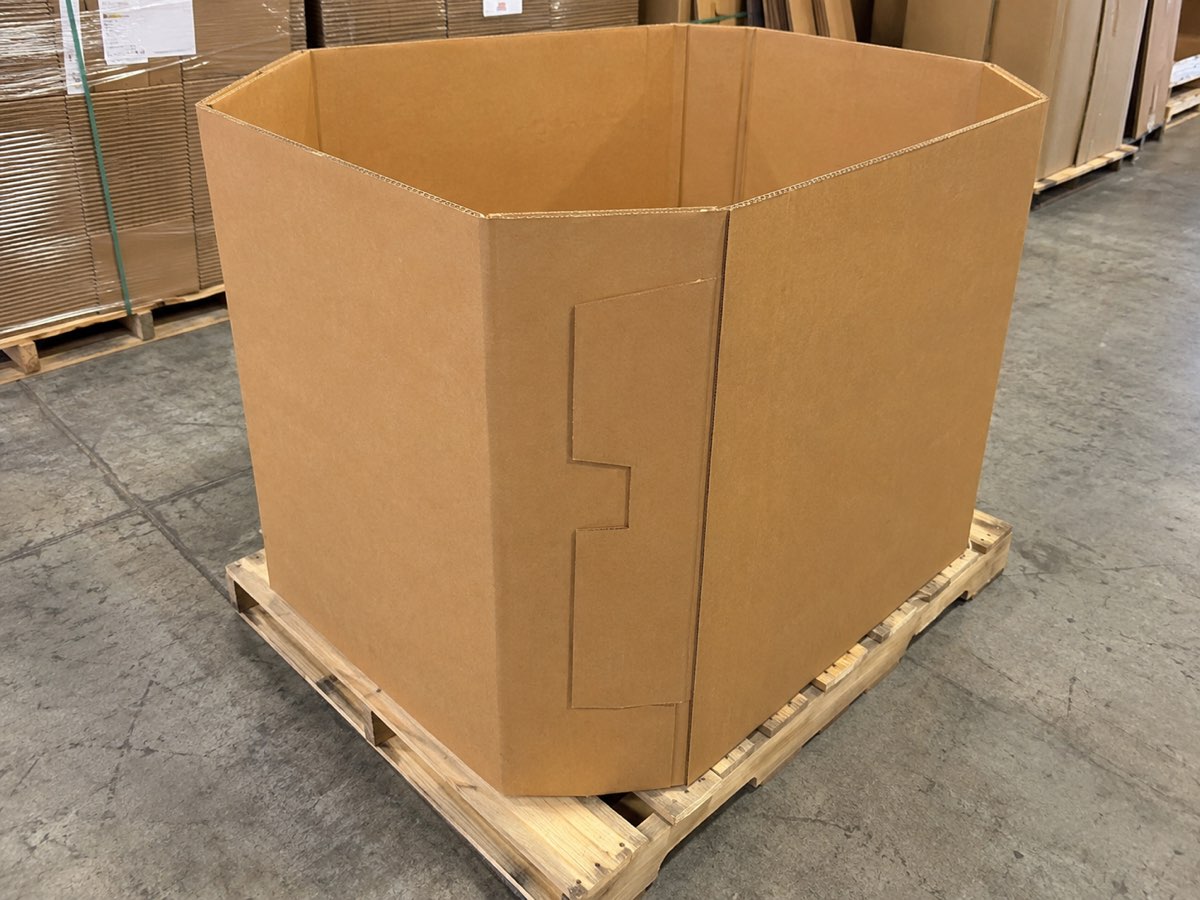
These three containers get compared constantly and they are not really competitors — they solve different problems. The confusion costs money in both directions: people buy plastic bins for one-way shipments and corrugated for wash-down food loops, and both are wrong.
The comparison table
| Gaylord box | Plastic bulk bin | IBC tote | |
|---|---|---|---|
| Typical unit cost | $8–$45 | $180–$550 | $180–$900 |
| Weight capacity | 1,000–4,500 lb | 1,500–2,500 lb | ~2,600 lb (275 gal) |
| Tare weight | 20–45 lb | 60–130 lb | 120–160 lb |
| Lifespan | 1–6 trips | 50–250 trips | 5–20 trips (reconditioned) |
| Handles liquids | No (lined: limited) | With liner | Yes — this is the point |
| Wash-down | No | Yes | Yes |
| Collapsible empty | Yes, flat | Some models | No |
| Empty return cost | Very low | High | High |
| End of life | Recycled as OCC | Recycled as HDPE | Reconditioned or recycled |
| Lead time | Same day used | Weeks | Days to weeks |
The decision that actually matters: return freight
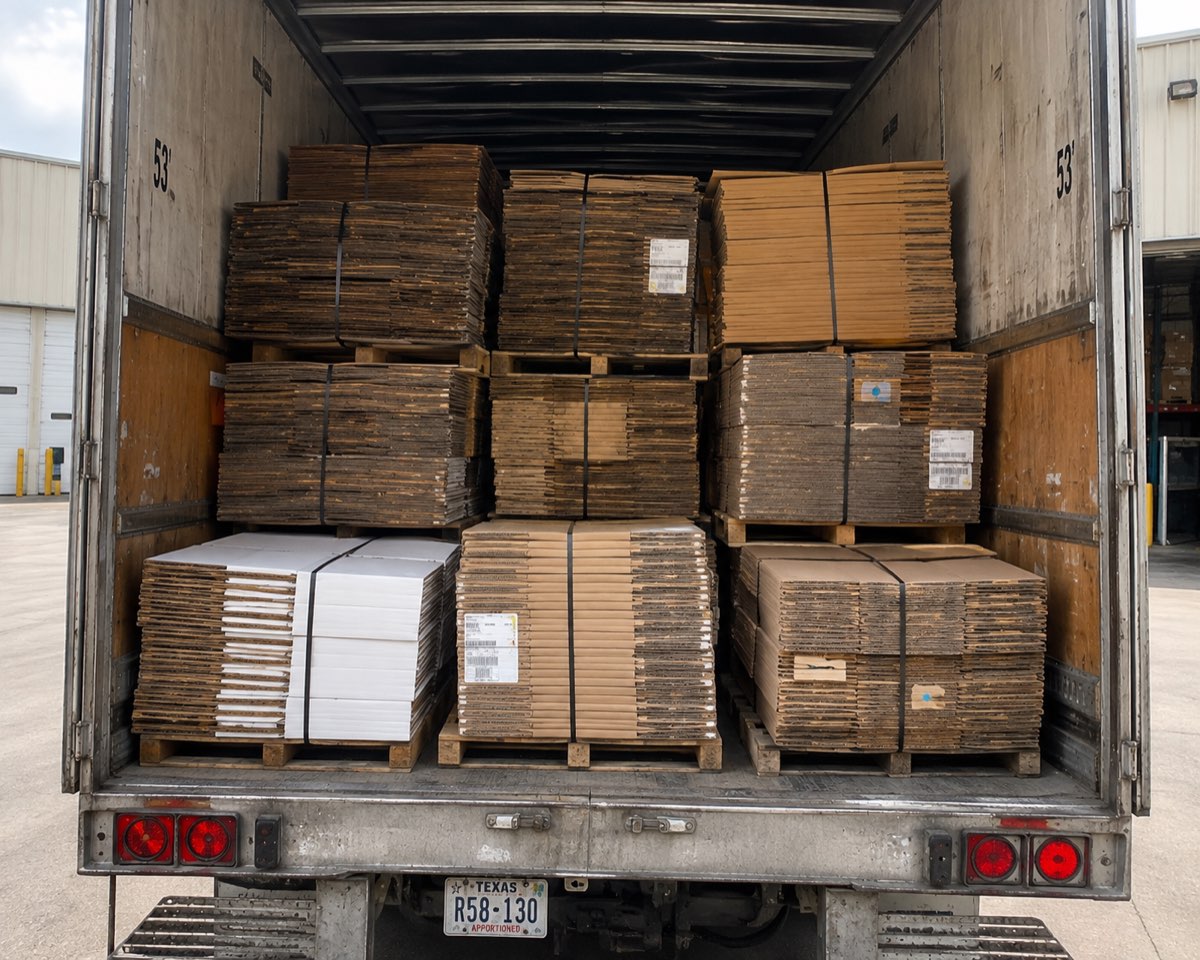
Everything else is secondary to this. A knocked-down gaylord box occupies about a quarter of the trailer space of an assembled one, and a fraction of a plastic bin's. If your material goes one direction and nothing comes back, corrugated wins by an enormous margin — you are not paying to ship air home.
Flip it: if you run a tight loop between two facilities 30 miles apart, 40 times a year, the plastic bin amortises to under a dollar a trip and never needs replacing. Corrugated cannot touch that.
Where each one genuinely belongs
Gaylord box
- Dry solids: regrind, pellets, textiles, e-scrap, components, produce
- Variable or seasonal volume — you can buy 40 or 4,000 with no capital commitment
- One-way shipments to customers who will not return anything
- Any operation where dock space for empties is scarce
- Anywhere lead time is measured in days, not weeks
Plastic bulk bin
- High-cycle closed loops, ideally under 100 miles
- Wash-down requirements — food, pharma, anything audited for sanitation
- Outdoor storage or wet environments
- Automated handling where dimensional consistency matters to a robot
IBC tote
- Liquids. That is the list. If your material pours, this is your container.
The hybrid most people should be running
In practice the best-run operations we see use both: plastic bins for the internal loop where boxes never leave the building, and graded used gaylord boxes for everything that goes out the door. The bins are a capital asset with a maintenance schedule; the boxes are a consumable with a supplier.
The mistake is treating that as an either/or procurement decision made once. It is a routing decision, made per material stream.
What about wooden crates and steel bins?
Both are still around for specific loads. Wooden crates make sense for irregular heavy parts and for export where ISPM-15 heat treatment is already in the workflow. Steel bins belong in foundries and anywhere with sustained heat or sharp scrap. Neither competes with corrugated on cost per trip for ordinary dry solids, and both cost significantly more to return empty.
Common questions on this topic
What is the short version of "Gaylord box vs. plastic bulk bin vs. IBC tote: choosing the right container"?
Choose a corrugated gaylord box for dry solids, variable volume and one-way or short-loop moves — it is 10–40× cheaper up front and fully recyclable. Choose a plastic bulk bin for high-cycle closed loops over 25 trips. Choose an IBC tote only for liquids.
Are these numbers specific to Houston and the Gulf Coast?
Several of them are, and we flag it where it matters. Corrugated loses roughly half its compression strength at 90% relative humidity, which is most of the year here, so a board rating buys you less on the Gulf Coast than the same rating buys inland.
Where do I go for a shorter answer?
The FAQ collects the questions that actually arrive in our inbox, the glossary defines every term used above, and the size chart has the raw capacities if that is all you came for.
Can you just specify a box for my situation instead?
Yes. The Grade Decoder turns six questions about your load, storage and audience into a wall count, grade and footprint, and the quote desk will sanity-check it against what is on the yard.
Do you cover this in more depth anywhere?
The Gaylord Box Guide is the long read that puts all of this in order, and the related field notes below go deeper on the adjacent topics.