Setting up a corrugated waste stream that pays for itself
Most operations pay to remove cardboard that has value. A staged plan from loose collection to baled fiber, with the volume thresholds.
By Luis Barrera, Yard supervisor · 7 min read · Published October 14, 2025
Have a question this raised?
Tell us what you have or what you need. A real person in Houston reads every one of these — usually within a couple of hours during dock time.
- Step zero, which is not optional
- Under 5 tons a month: loose collection
- 5 to 20 tons a month: a vertical baler
- Above 20 tons a month: horizontal baling and direct mill relationships
- What to negotiate, whatever the scale
- The number people forget
Below roughly 5 tons a month, loose collection with a supplier pickup is the right answer. From 5 to 20 tons, a vertical baler pays back within a year. Above 20 tons, a horizontal baler and direct mill relationships become viable. At every level, grading out reusable boxes first is worth more than the fiber.
- Category
- Sustainability
- Published
- October 14, 2025
- Written by
- Luis Barrera, yard supervisor
A remarkable number of operations pay a hauler to remove material that a mill would pay them for. The transition is not complicated, but the right step depends on volume, and doing the wrong step is how people conclude recycling does not pay.
Step zero, which is not optional
Before any of this: grade out the boxes that still work. Roughly a third of what arrives at our yard labelled scrap is a working container worth several times its fiber value. No baler, contract or market price will ever match the value of not baling a good box.
Practically: two piles at the point of emptying, decided by the person who just looked inside. That is the whole intervention and it outperforms everything below it.
Under 5 tons a month: loose collection
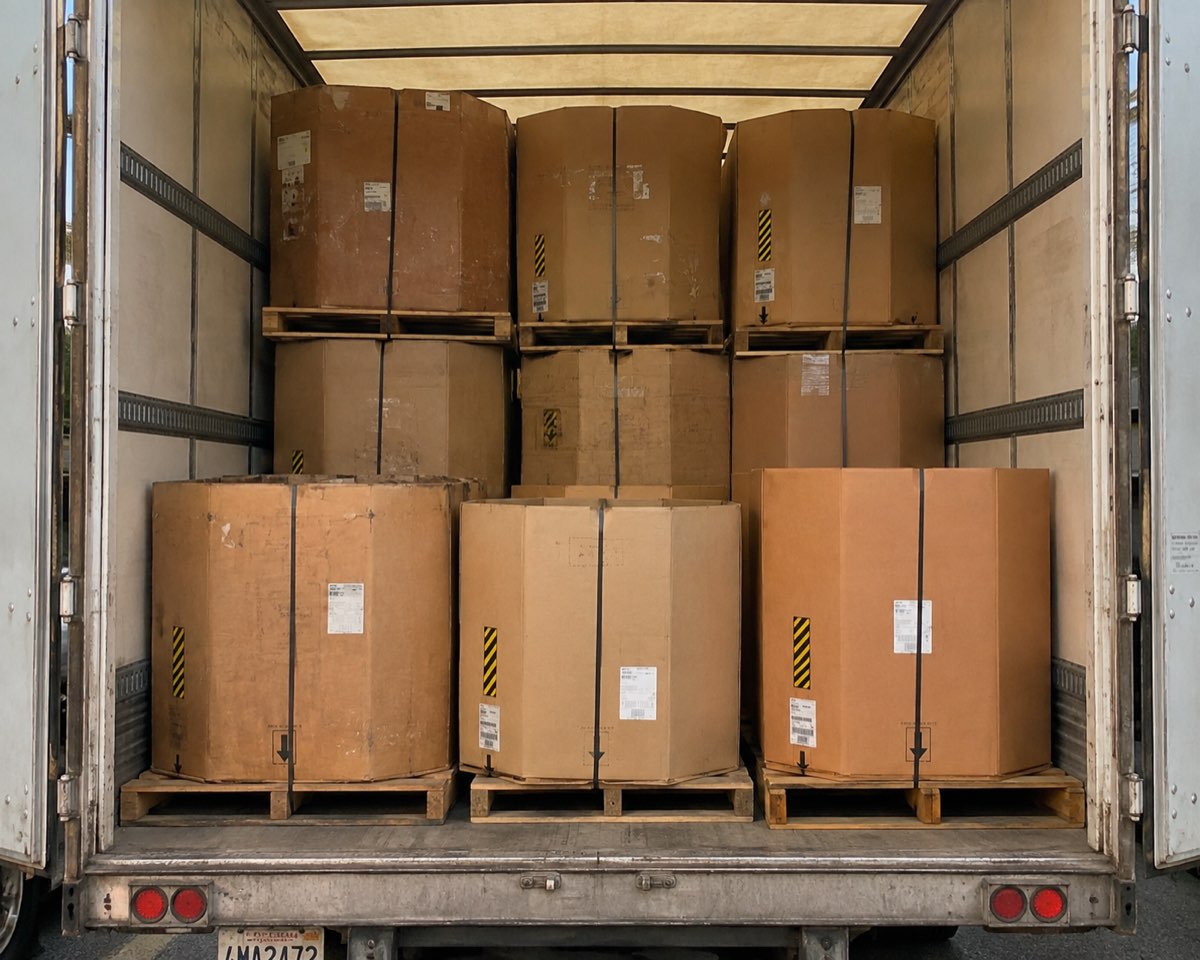
At this volume, equipment does not pay back. What works is collection containers — often Grade B or C boxes, which is a pleasing loop — filled with flattened corrugated and collected on a schedule or on call.
- Flatten everything. Loose unflattened board is mostly air and the freight eats the value.
- Keep it dry and under a roof. Wet fiber has no market value.
- Keep it clean: no plastic, no wax, no food-soaked board.
- Expect a modest credit rather than a revenue line. The win here is avoiding the haul cost, not getting rich.
5 to 20 tons a month: a vertical baler
This is where equipment starts to make sense. A vertical baler is a modest capital item with a small footprint, and it produces bales in the several-hundred-pound range.
| Consideration | Detail |
|---|---|
| Footprint | Roughly a parking space, plus room to work |
| Power | Single or three phase depending on model |
| Labour | A few minutes per bale, plus tie-off |
| Bale weight | Typically 300–700 lb |
| Payback | Commonly 8–18 months at this volume |
The economics come from two directions at once: you stop paying to haul air, and baled fiber is worth meaningfully more per ton than loose because it costs the buyer far less to handle.
Above 20 tons a month: horizontal baling and direct mill relationships
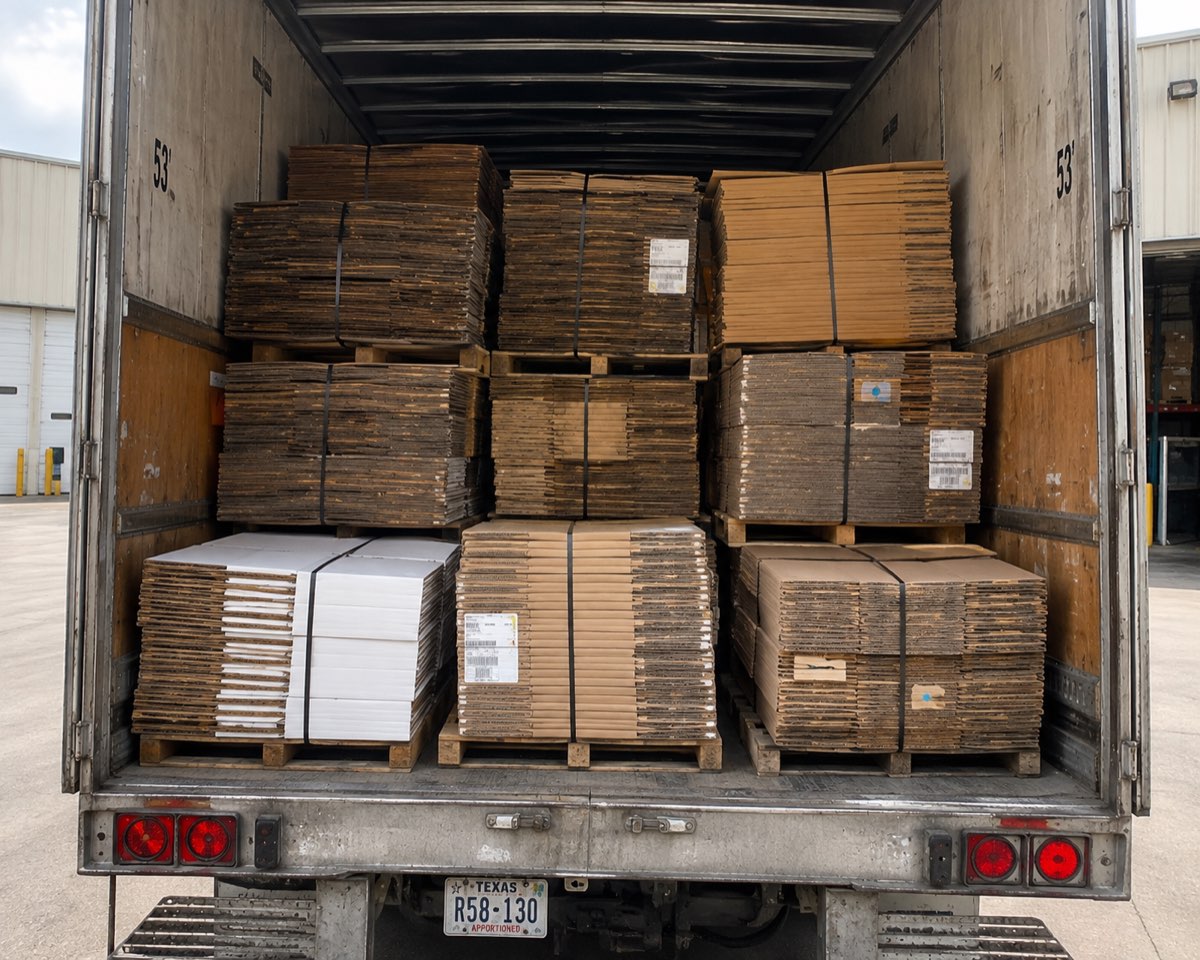
At this scale a horizontal baler producing mill-size bales — 1,100 to 1,400 lb — changes what you can sell and to whom. You are now producing a product a mill wants rather than a quantity a broker will tolerate.
- Mill-size bales open direct relationships and better pricing.
- Double-sorted #12 OCC becomes achievable if you sort, and it carries a premium.
- A full trailer of about 20 tons becomes a regular event, which simplifies freight.
- You need somewhere to store bales under a roof, which people underestimate.
What to negotiate, whatever the scale
- Index-linked pricing against a named regional OCC index, not a fixed rate that only ever moves one way.
- Certified scale tickets issued the same day. Not month-end statements.
- Grade defined explicitly with the prohibitives threshold written down.
- A quality mechanism in both directions: a premium for clean sorted fiber, not only penalties.
- Freight shown separately, so you can see whether you are being paid for the material or for the convenience.
The number people forget
Avoided disposal cost is usually larger than fiber revenue, particularly at lower volumes. If you were paying for a compactor pull twice a week and now you are not, that is the line that moved. Fiber revenue is the bonus, and treating it as the headline number is how these projects get judged as disappointing when they were actually successful.
- Bale
- A compressed, banded block of recovered corrugated, typically 1,100–1,400 lb. Mills buy fiber by the bale-load; density affects the price they pay.
- ECT
- Edge Crush Test. Pounds per linear inch a board edge withstands before buckling. The best single predictor of stacking performance.
- Grade (box)
- A condition classification for used boxes. 1A new, A one clean use, B up to two repairs, C multiple repairs, then scrap.
- OCC
- Old Corrugated Containers. The recovered-fiber commodity grade that used boxes become at end of life.
- Prohibitives
- Non-fiber contaminants in a bale — plastic, metal, wax, food residue. Mills specify maximum percentages by grade.
- Scrap
- A box that is no longer viable as a container. Still valuable — as fiber, by the ton.
Luis Barrera — Yard supervisor
Written on the yard at 1050 E Richey Rd, Houston. Everyone who writes here works the grading line, the baler, the routes or the quote desk — there are no guest posts and nothing on this blog is syndicated.