Layer pads, dividers and inserts: cheap cardboard in the right place
Most in-box product damage is fixed by a flat piece of board somewhere specific. Five inserts that solve the most common problems.
By Ray Castellanos, Fabrication · 6 min read · Published January 13, 2026
Have a question this raised?
Tell us what you have or what you need. A real person in Houston reads every one of these — usually within a couple of hours during dock time.
- 1. The bottom pad
- 2. Layer pads
- 3. Vertical dividers and cells
- 4. Corner inserts
- 5. Top pad or pallet cap
- Why recovered board is the right material here
- The honest limitation
- How to work out what you need
Five inserts solve most in-box damage: a bottom pad against abrasion and puncture, layer pads to distribute weight between courses, vertical dividers to stop product-on-product contact, corner inserts to protect the box's structural corners, and a top pad to enable stacking. All can be cut from recovered board at a fraction of new-board cost.
- Category
- Sustainability
- Published
- January 13, 2026
- Written by
- Ray Castellanos, fabrication
The fabrication table exists because of a pattern we kept seeing: customers buying heavier boxes to solve problems that a flat piece of board in the right place would have solved for a fraction of the money.
1. The bottom pad
A single sheet of board on the floor of the box, cut to the internal footprint. It takes the abrasion of material dropped in, the puncture risk from sharp edges, and the wear of a scoop dragged across the bottom.
The bottom is the highest-wear surface in a bulk container and the least visible one. On sharp-material streams — e-scrap, glass, metal — a bottom pad routinely adds a trip per box. It is the highest-return insert on this list.
2. Layer pads
Sheets between courses of product. Two jobs: distributing the weight of the layer above so it does not point-load the layer below, and stopping product-on-product contact.
Common in food, glass, ceramics and anything with a finish that can scratch. The failure mode without them is a top layer that arrives perfect and a bottom layer that arrives crushed, which is a distribution pattern people misdiagnose as a box problem for a long time.
3. Vertical dividers and cells
Slotted board assembled into a grid. Each cell holds one item, nothing touches anything else, and the divider walls carry some vertical load as a bonus.
Worth it whenever product damages product: bottles, glass, machined parts with finished surfaces, anything with a protruding feature that can catch. Custom grids are straightforward to cut from recovered board and the tooling cost is essentially zero, which is why short runs make sense here in a way they do not with new board.
4. Corner inserts
L-profile board inside the corners of the box. Two effects: it protects the box's own corners — which carry 60 to 70 percent of a stacked load — from being abraded by the contents, and it adds vertical stiffness exactly where compression strength lives.
For anything abrasive or angular, this is a substantial extension of box life for very little money. It is also the insert customers are most surprised by, because it protects the container rather than the contents.
5. Top pad or pallet cap
A sheet over the top of the load. It keeps dust and drips off, gives a flat surface for the next pallet to stack on, and protects the top edge of the box, which is the part that crushes first in normal handling.
Why recovered board is the right material here
New-board inserts require a corrugator run, a die and a minimum order. Recovered-board inserts require a cutting table and a stack of panels we already own. For short runs — fifty to five hundred pieces — the difference is not marginal, it is a different order of magnitude.
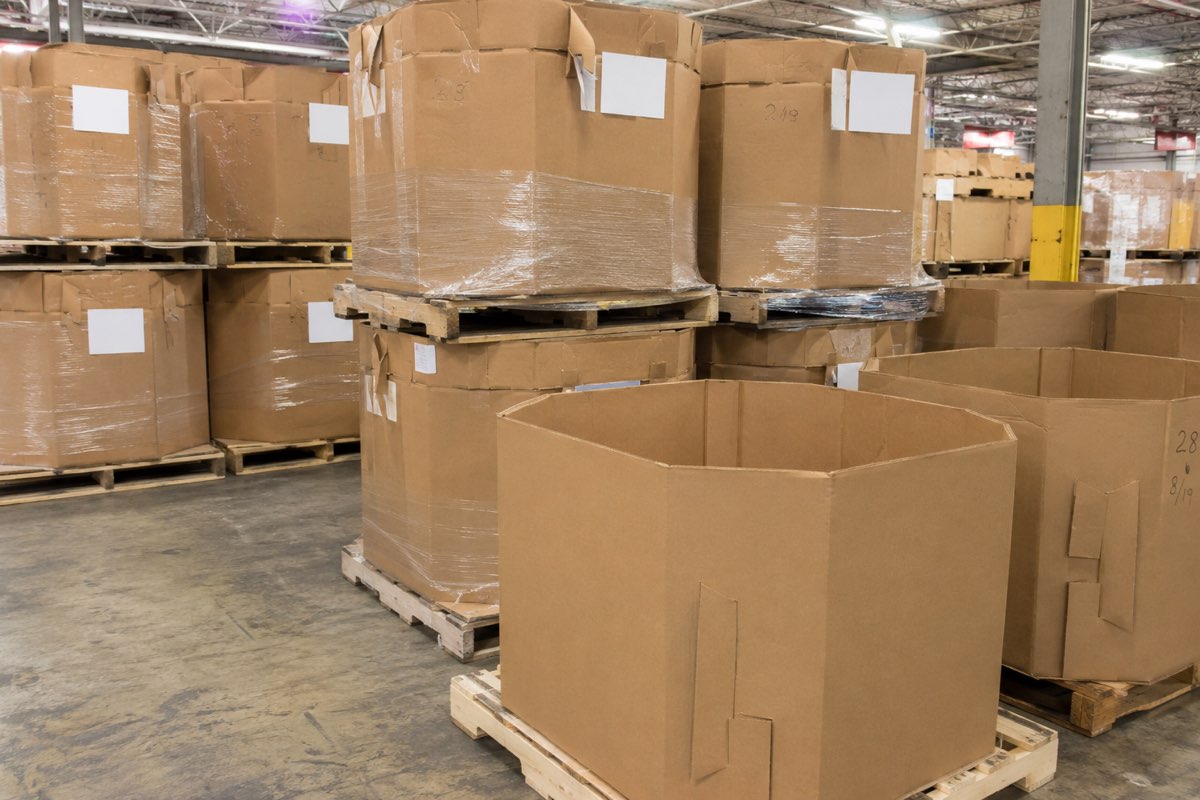
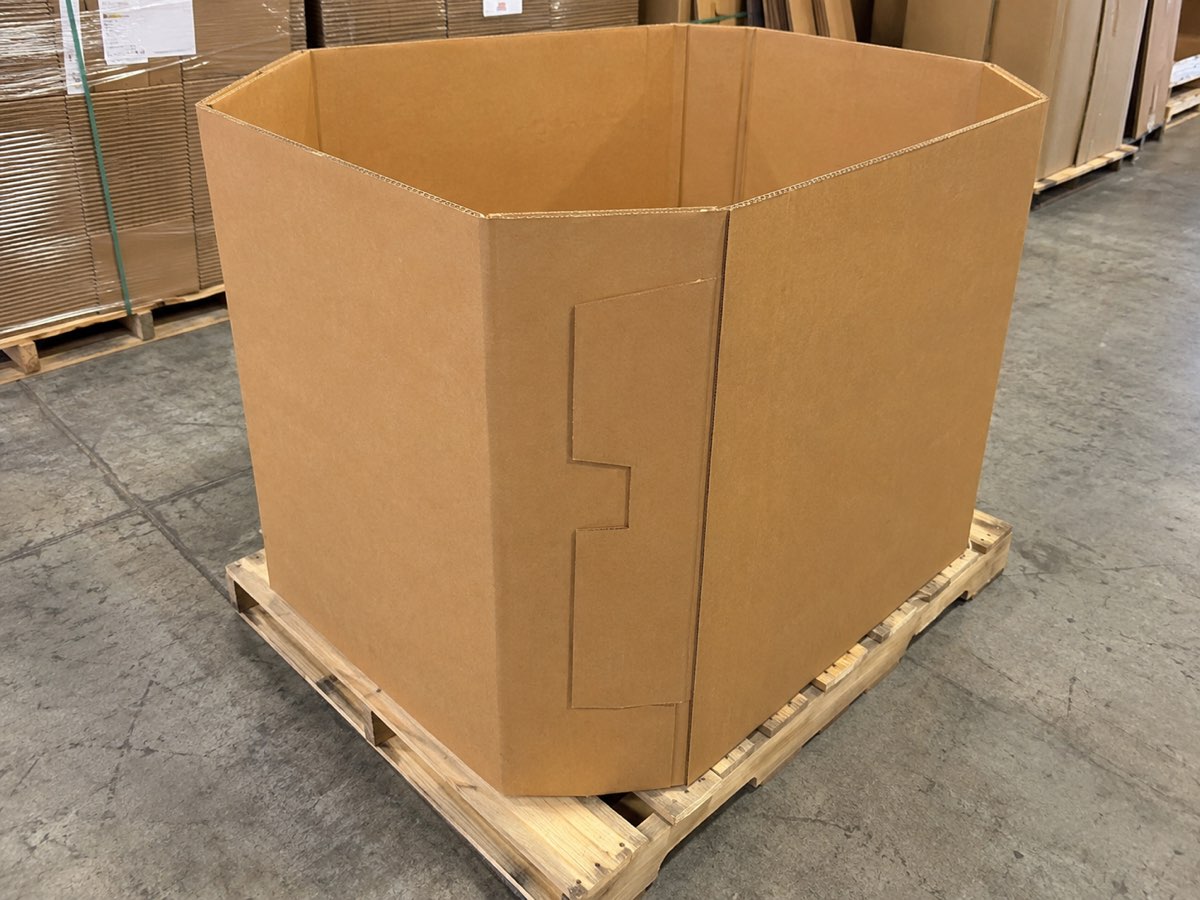
And the source material is genuinely good. A box with a blown bottom still has four intact walls: twelve square feet of tri-wall board with its original flute geometry, already made and already paid for. Baling that is a waste; cutting it into layer pads is not.
The honest limitation
Recovered board comes in the sizes it comes in. If your part needs a 46-inch divider and our recovered panels are 40, we either laminate a seam or quote new board. We will not put a seam where a seam does not belong and hope nobody notices, because that is exactly the kind of thing that makes people distrust used packaging generally.
How to work out what you need
- Open a damaged shipment and look at where the damage is, not at what is damaged.
- Bottom layer crushed? Layer pads.
- Product scratched or chipped against product? Dividers.
- Box worn through at the bottom? Bottom pad.
- Box corners abraded from inside? Corner inserts.
- Top course crushed or wet? Top pad or a proper lid.
Send us a photograph of the damage and the dimensions. For anything unusual we will make one, photograph it with a tape measure in the frame, and adjust before cutting a run.
- Corrugator
- The machine — and by extension the plant — that glues fluted medium between liners to make corrugated board.
- ECT
- Edge Crush Test. Pounds per linear inch a board edge withstands before buckling. The best single predictor of stacking performance.
- Flute
- The wavy medium between liners. Its arch geometry is what gives corrugated its strength-to-weight ratio.
- Pallet cap
- A corrugated cover placed over a loaded pallet or box to protect the top and enable stacking.
- Scrap
- A box that is no longer viable as a container. Still valuable — as fiber, by the ton.
- Tri-wall
- Three-ply corrugated board. The most common construction for bulk boxes and the default for most industrial applications.
Ray Castellanos — Fabrication
Written on the yard at 1050 E Richey Rd, Houston. Everyone who writes here works the grading line, the baler, the routes or the quote desk — there are no guest posts and nothing on this blog is syndicated.