What a plant closure does to the local box market
When a large facility clears out, hundreds of pallets of bulk boxes hit the regional market at once. What happens to price and quality.
By Tom Brennan, Founder · 6 min read · Published December 9, 2025
Have a question this raised?
Tell us what you have or what you need. A real person in Houston reads every one of these — usually within a couple of hours during dock time.
- What actually comes out of a closing facility
- The timeline
- If you are buying
- If you are the one closing
- The Houston pattern specifically
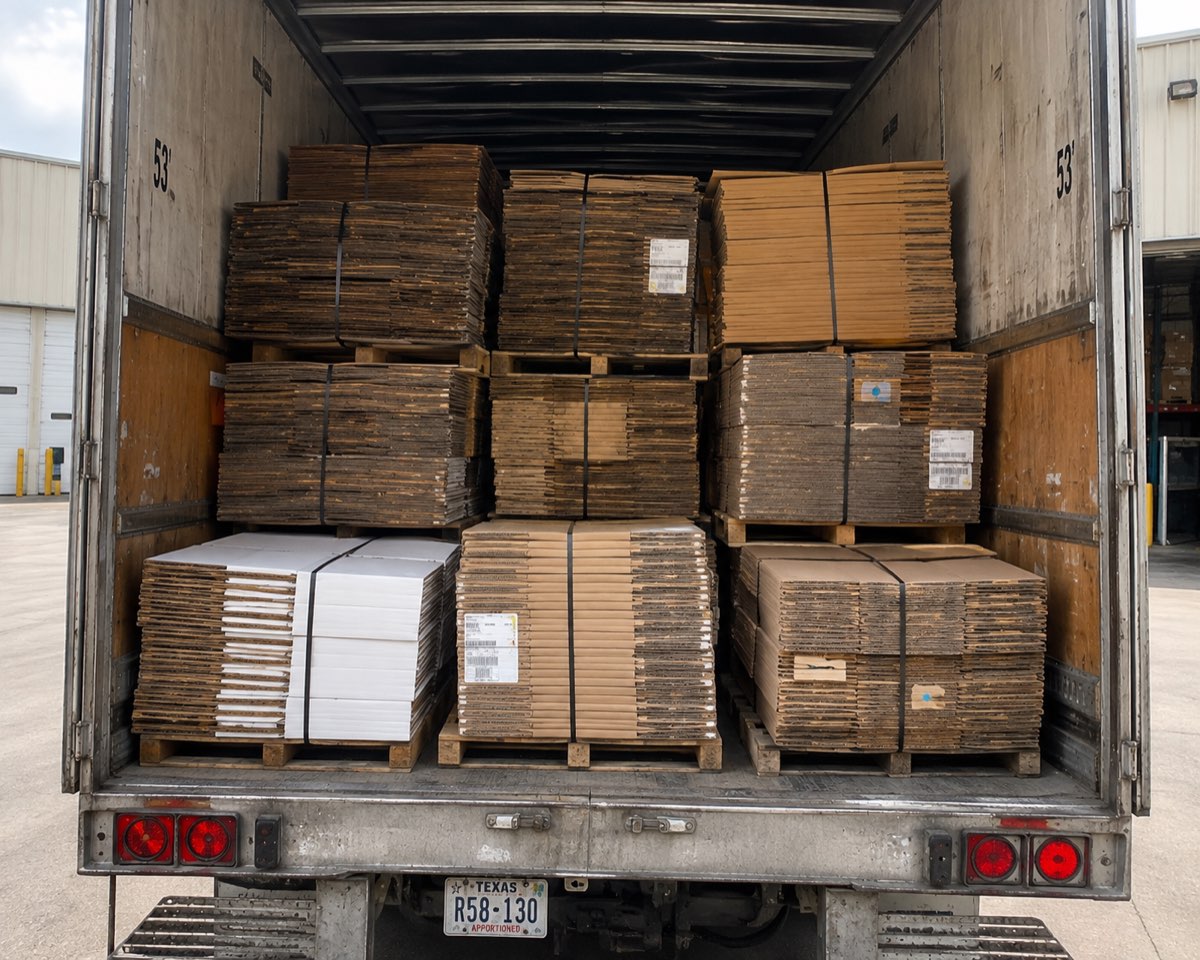
A large plant closure releases hundreds of pallets of used boxes into a regional market at once, softening local prices for a few weeks and creating a short window of unusually good availability. The quality is bimodal — either excellent or worthless — because closures dump warehouse-stored stock and yard-stored stock together.
- Category
- Selling
- Published
- December 9, 2025
- Written by
- Tom Brennan, founder
We started this business in 2009 buying boxes out of facilities that were shutting down, so we have watched this cycle for a long time. It has a shape, and knowing the shape is useful whether you are buying or selling.
What actually comes out of a closing facility
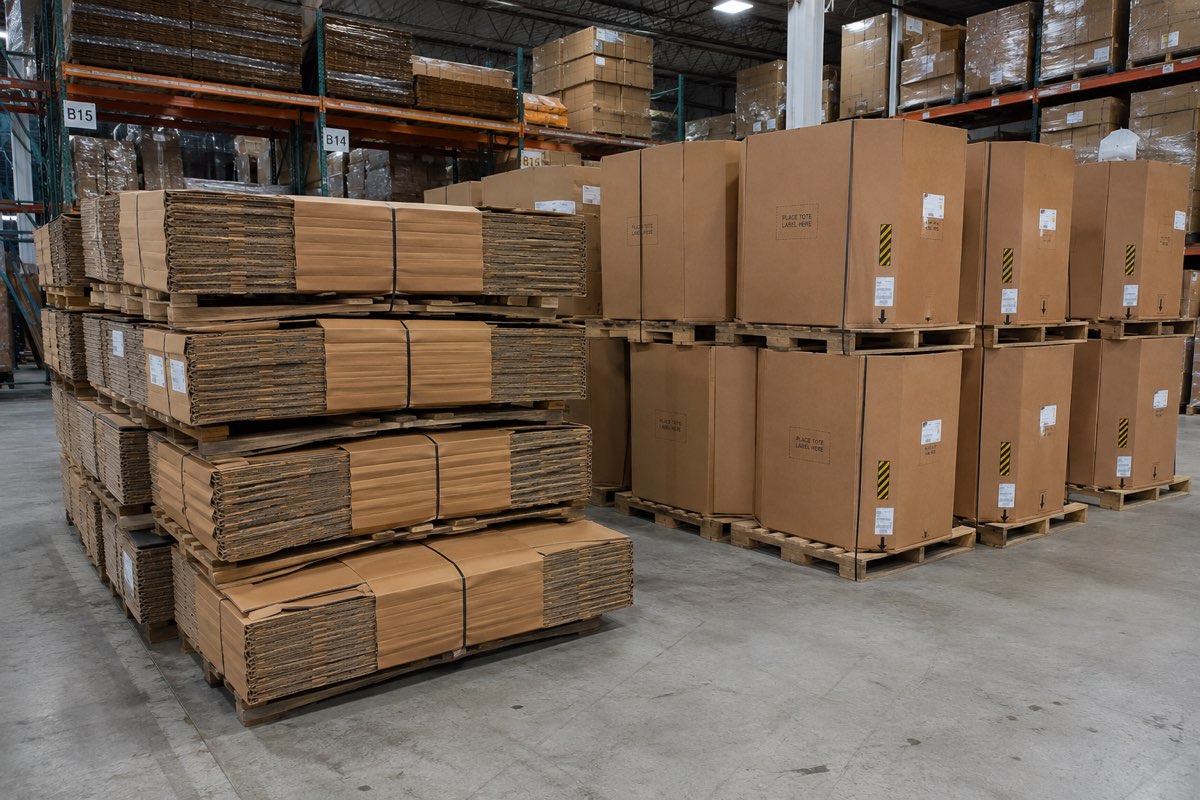
More than people expect, and in a wider range of condition than any normal supply. A working plant has boxes in three places: the active stock near the line, the buffer stock in the racks, and the accumulated pile in the corner that nobody has dealt with since the last inventory.
The first two are usually excellent — dry, stored indoors, often Grade A. The third is frequently worthless. A closure dumps all three onto the market at once and the average tells you nothing useful.
The timeline
| Phase | Timing | What happens |
|---|---|---|
| Announcement | Month 0 | Nothing moves. Everyone is dealing with people. |
| Wind-down | Months 1–3 | Production stops, boxes accumulate, nobody is buying more |
| Clearance | Months 3–5 | Everything goes at once, usually against a lease deadline |
| Absorption | Months 5–8 | Regional market digests it; local prices soften |
| Normalisation | Month 8+ | Back to baseline, occasionally tighter than before |
That last row surprises people. A closure removes a generator from the market as well as releasing a stock. If the facility was a regular source of good used boxes to the local ecosystem, the market can end up tighter a year later than it was before.
If you are buying
- The clearance window is short and deadline-driven. Lease-end pressure produces the best pricing in this business and it lasts about three weeks.
- Insist on inspecting or on photographs of the actual pallets, including the worst ones. Averages are meaningless here.
- Buy the indoor stock. Walk away from the corner pile unless it is priced as fiber, because that is what it is.
- Have somewhere to put it. A closure clearance is a volume event and the seller cannot phase deliveries.
- Check sizes carefully. Closures produce whatever that plant ran, which may not be what you run.
If you are the one closing
- Start earlier than feels necessary. The value is highest three months before the deadline and lowest in the final week, when everyone knows you have no options.
- Segregate before anyone quotes. Indoor stock and yard stock priced together always gets priced at the yard stock rate.
- Get the fiber weighed on a certified scale with same-day tickets. Closure settlements move fast and month-end reconciliation may not happen at all.
- Include the pallets. They have value, they take space, and disposal costs money.
- Expect a single settlement rather than separate transactions. One counterparty handling boxes, fiber and pallets is faster and usually nets more than three.
The Houston pattern specifically
Along the ship channel, closures and idlings cluster with the petrochemical cycle rather than arriving randomly. When margins compress, several facilities wind down within a few months of each other, and the used box market here goes from tight to loose in a quarter.
That is one reason we hold deeper inventory than a pure broker would. When the market is loose we buy; when it tightens, our customers do not discover that their supplier is now competing with them for the same pallets.
- ECT
- Edge Crush Test. Pounds per linear inch a board edge withstands before buckling. The best single predictor of stacking performance.
- Grade (box)
- A condition classification for used boxes. 1A new, A one clean use, B up to two repairs, C multiple repairs, then scrap.
- OCC
- Old Corrugated Containers. The recovered-fiber commodity grade that used boxes become at end of life.
Tom Brennan — Founder
Written on the yard at 1050 E Richey Rd, Houston. Everyone who writes here works the grading line, the baler, the routes or the quote desk — there are no guest posts and nothing on this blog is syndicated.