Why 48 × 40 became the default, and what it cost everyone else
The standard gaylord box footprint is 48 by 40 inches because a grocery trade group standardised a pallet in the 1960s. Why that still matters.
By Tom Brennan, Founder · 6 min read · Published August 15, 2023
Have a question this raised?
Tell us what you have or what you need. A real person in Houston reads every one of these — usually within a couple of hours during dock time.
- The pallet came first
- Then the box had to match
- What that cost the rest of the world
- The heights were never standardised the same way
- The practical lesson
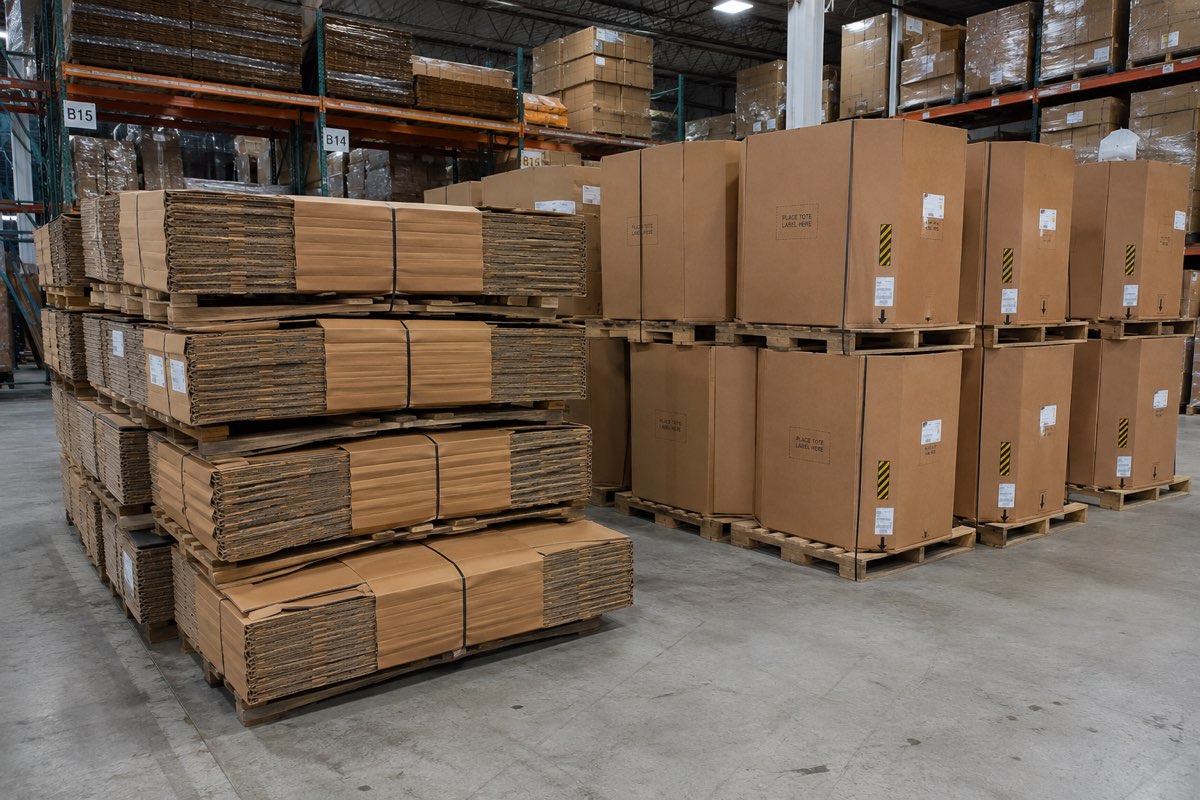
Gaylord boxes are 48″ × 40″ because that is the Grocery Manufacturers Association pallet footprint, standardised in the 1960s and later adopted as the dominant North American pallet. The box did not choose its dimensions — the pallet did, and everything downstream, from trailer loading patterns to rack beam spacing, was built around it.
- Category
- Industry
- Published
- August 15, 2023
- Written by
- Tom Brennan, founder
Newcomers to bulk packaging almost always ask the same question in the first week: why 48 by 40? It is not a round number, it is not metric, and it does not divide evenly into anything useful. The answer is that the box never got a vote.
The pallet came first
In the 1960s the Grocery Manufacturers Association pushed for a standard pallet so that a case of soup leaving one plant could be handled by every warehouse, truck and store that touched it afterwards. The dimension they landed on — 48 inches by 40 inches — was a compromise between what fit two-across in a trailer and what a forklift of the era could handle without tipping.
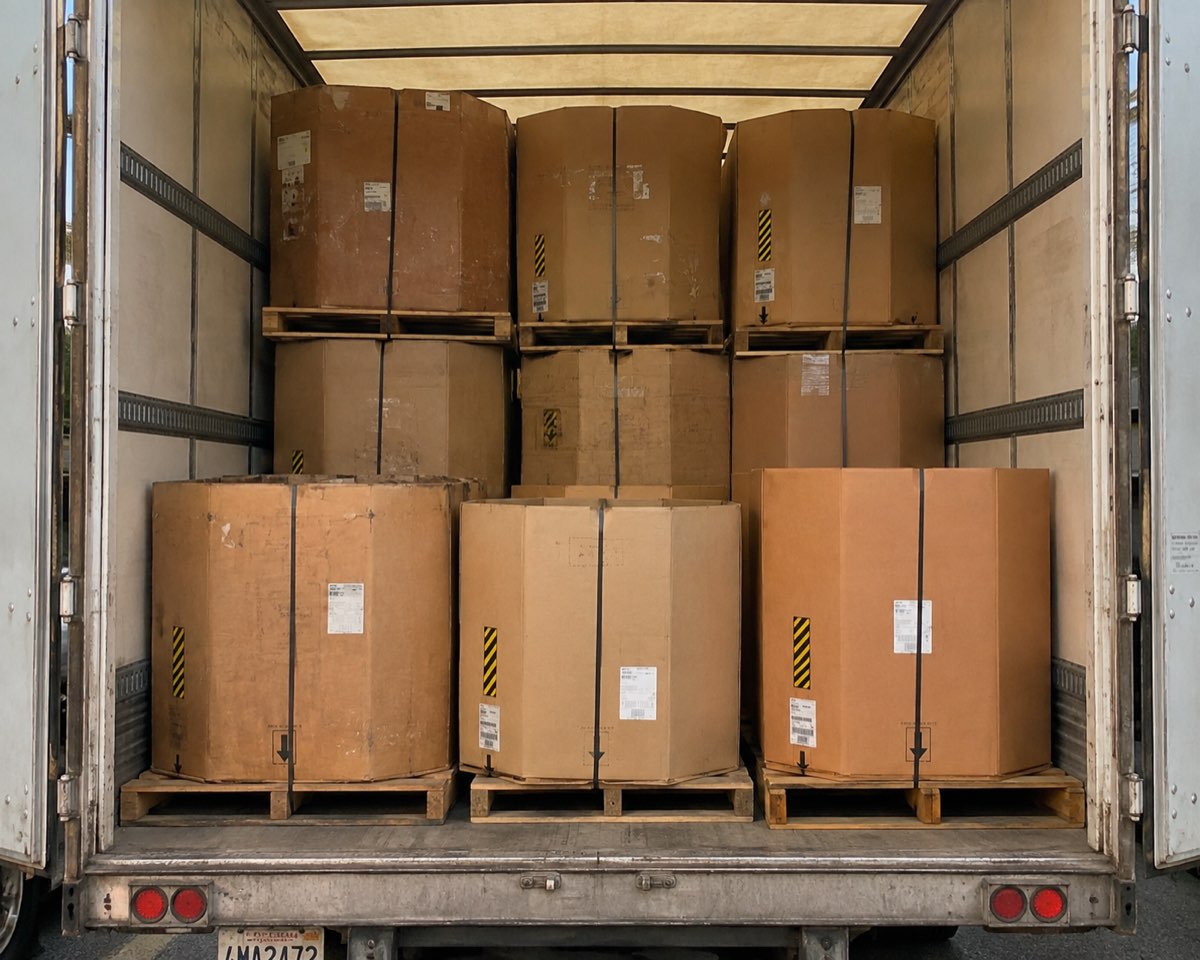
Two 40-inch pallets side by side gives 80 inches. A 53-foot trailer's interior width is about 98 to 100 inches, so 48-inch-wide pallets loaded the other way — two across at 96 inches — fit with a couple of inches to spare. That single arithmetic fact locked in the footprint for the next sixty years.
Then the box had to match
Once the pallet was fixed, any bulk container that wanted to move through the same system had to match it. A box narrower than the pallet wastes deck. A box wider than the pallet overhangs, and overhang removes support from the corners — which carry roughly 60 to 70 percent of a stacked compression load. One inch of overhang costs about 20 percent of stacking strength, and it costs it exactly where you cannot afford it.
What that cost the rest of the world
Europe went a different way. The EUR pallet is 1200 by 800 millimetres — roughly 47 by 31 inches — and the ISO 1 pallet is 1200 by 1000, or about 47 by 39. Close to 48 by 40, but not the same, and in packaging 'close' is a problem rather than a comfort.
In Houston we see the consequences weekly. Resin arrives from an overseas compounder in boxes built for a 1200 by 1000 pallet. They land on a GMA pallet with an inch of slop on two sides, they never quite square up in a rack, and when a customer tries to reorder the same box domestically nobody stocks it. Those boxes are perfectly good — we buy them by the hundred — but they will spend the rest of their working life being slightly the wrong size for everything around them.
The heights were never standardised the same way
This is the part that surprises people. The footprint is rigid; the wall height is not. Thirty-six inches is the most common, but 24, 30, 42, 45 and 48 all exist in volume, and there is no standards body behind any of them. They exist because specific materials made specific heights sensible.
| Wall height | Why it exists |
|---|---|
| 24" | Hand-picking height. Line-side cells and heavy castings. |
| 30" | Dense material hits weight before it fills volume. |
| 36" | The generalist. Fits everything reasonably, nothing perfectly. |
| 42" | Light bulky material — you buy volume, not strength. |
| 48" | The practical ceiling for a single stack on a standard dock. |
Which means the buying decision is genuinely only one dimension wide. Footprint is decided for you. Height is where you can actually save money, and it is the dimension most operations never revisit after the first order.
The practical lesson
If you inherited a box size from a supplier a decade ago, the footprint is almost certainly right and the height is worth questioning. We see boxes shipping at 60 percent full by volume and 100 percent by weight all the time. That customer is paying for six inches of cardboard and a taller centre of gravity, and getting nothing for either.
Weigh a full box. Divide by your material's bulk density. Compare the answer to the cubic capacity you are buying. If the gap is more than about 20 percent, there is a shorter box with your name on it.
- ECT
- Edge Crush Test. Pounds per linear inch a board edge withstands before buckling. The best single predictor of stacking performance.
- GMA pallet
- The Grocery Manufacturers Association standard pallet, 48" × 40". The reason the standard gaylord box footprint is what it is.
- Overhang
- Box extending past the pallet edge. One inch can cost 20% of stacking strength because the corners lose support.
Tom Brennan — Founder
Written on the yard at 1050 E Richey Rd, Houston. Everyone who writes here works the grading line, the baler, the routes or the quote desk — there are no guest posts and nothing on this blog is syndicated.