The fifteen-minute dock training that adds a trip and a half per box
The complete script we deliver on customer floors: four habits, why each one matters, and how to teach them in a shift handover without a classroom.
By Luis Barrera, Yard supervisor · 6 min read · Published January 14, 2025
Have a question this raised?
Tell us what you have or what you need. A real person in Houston reads every one of these — usually within a couple of hours during dock time.
- Open with the number, not the rule
- Habit one: nothing touches the slab
- Habit two: knock down within 48 hours
- Habit three: cut across the top flap, never down a corner
- Habit four: sort at the moment of emptying
- Close with the check-back
- The one-page version
Four habits do most of the work: keep boxes off bare concrete, knock down empties within 48 hours, cut across the top flap rather than down a corner, and sort reusable from scrap at the moment of emptying. Delivered as a fifteen-minute shift-handover talk, these typically add one to two trips to average box life.
- Category
- Operations
- Published
- January 14, 2025
- Written by
- Luis Barrera, yard supervisor
We deliver this on customer floors, standing next to a pallet, in English and Spanish. No slides. It fits in a shift handover and it is the highest-return fifteen minutes in this business. Here it is in full, so you can run it yourself.
Open with the number, not the rule
Start by telling people what a box costs and how many trips it should get. People follow rules they understand the point of. 'This box costs twelve dollars and should last four trips. Right now ours are lasting one and a half. Here is why.'
That framing turns four instructions into a shared problem. It also tends to produce useful information — the crew usually knows exactly which step in the process is killing boxes, and nobody has ever asked them.
Habit one: nothing touches the slab
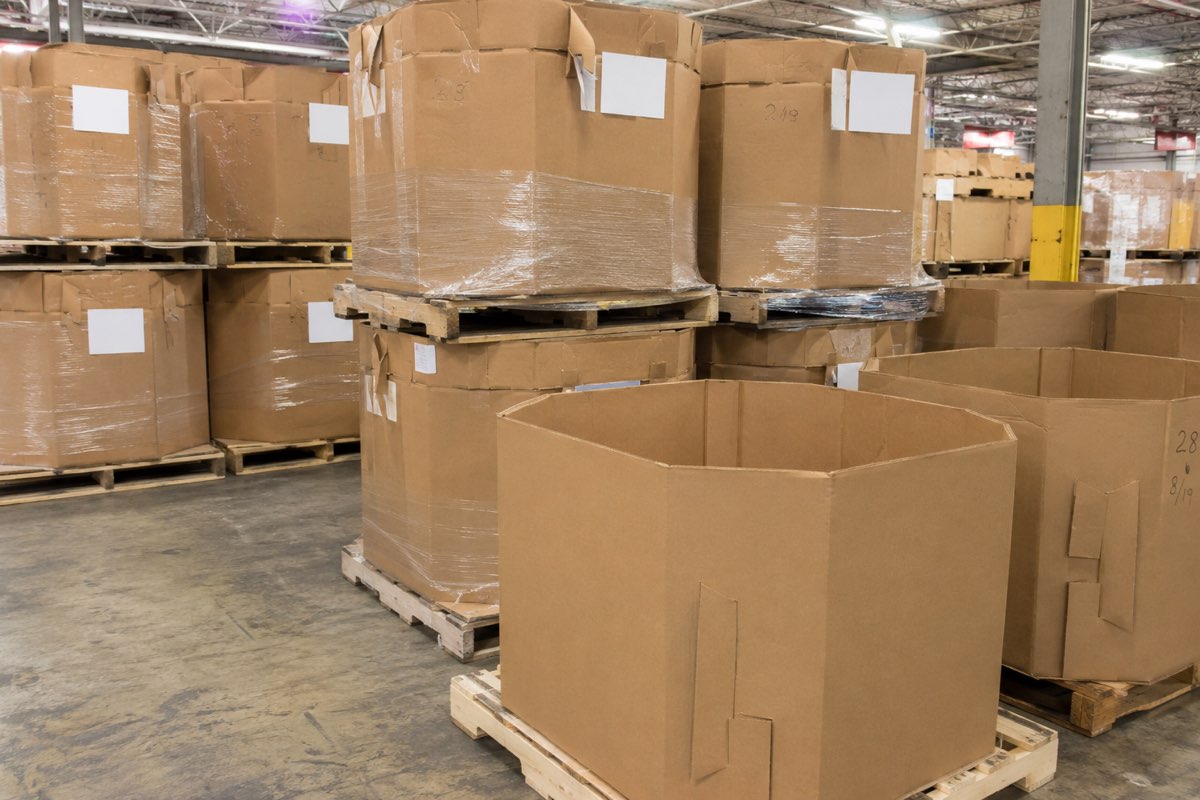
Concrete wicks ground moisture upward continuously. A box set directly on a slab is drinking through its bottom board for as long as it stands there, and moisture damage is permanent — the fibers swell, the glue lines stress, and the strength does not come back when it dries.
The demonstration: put a hand flat on the slab in a corner of the warehouse and then on a pallet deck. People feel the difference. 'Always on a pallet. Even for an hour. Even if you are coming right back.'
Habit two: knock down within 48 hours
A standing empty box gets crushed by a passing forklift, used as a trash can, filled with sweepings, and eventually disappears. Flat and stacked, it takes a quarter of the space and none of the abuse.
Make it a specific person's job at a specific time. 'Empties get knocked down before the end of shift' works. 'Everyone should knock down empties' does not.
Habit three: cut across the top flap, never down a corner
This is the one that matters most and the one nobody has ever been told. Show it physically: hold a box, run a finger down the vertical corner, explain that the corners carry most of the load in a stack. Then run a finger across the top flap and say 'this part does nothing structural'.
Then put the rule where the knives are. A laminated card by the knife box outperforms any amount of talking.
Habit four: sort at the moment of emptying
Two piles, decided by the person who just looked inside the box: goes again, or does not. They have information nobody downstream has — they saw the inside, they know whether it smelled, they know whether the bottom flexed when they lifted it.
If that decision is deferred to a sorting exercise next week, it is made by someone looking at the outside of a box, and the outside of a box tells you almost nothing.
Close with the check-back
Tell them you will come back in a month with the numbers. Then actually do it. Post the average trips-per-box figure somewhere visible and update it. Crews that can see the number move keep the habits; crews that get a talk and never hear about it again revert within about six weeks.
The one-page version
- Boxes never touch the slab. Always on a pallet.
- Empties knocked down before end of shift.
- Cut across the top flap. Never down a corner.
- Two piles at emptying: goes again, or does not.
Print it. Laminate it. Put one by the knife box and one by the dock door. If we do the training for you it is included with a closed-loop programme, but there is nothing proprietary about it — the whole thing is above.
- ECT
- Edge Crush Test. Pounds per linear inch a board edge withstands before buckling. The best single predictor of stacking performance.
- Knocked down (KD)
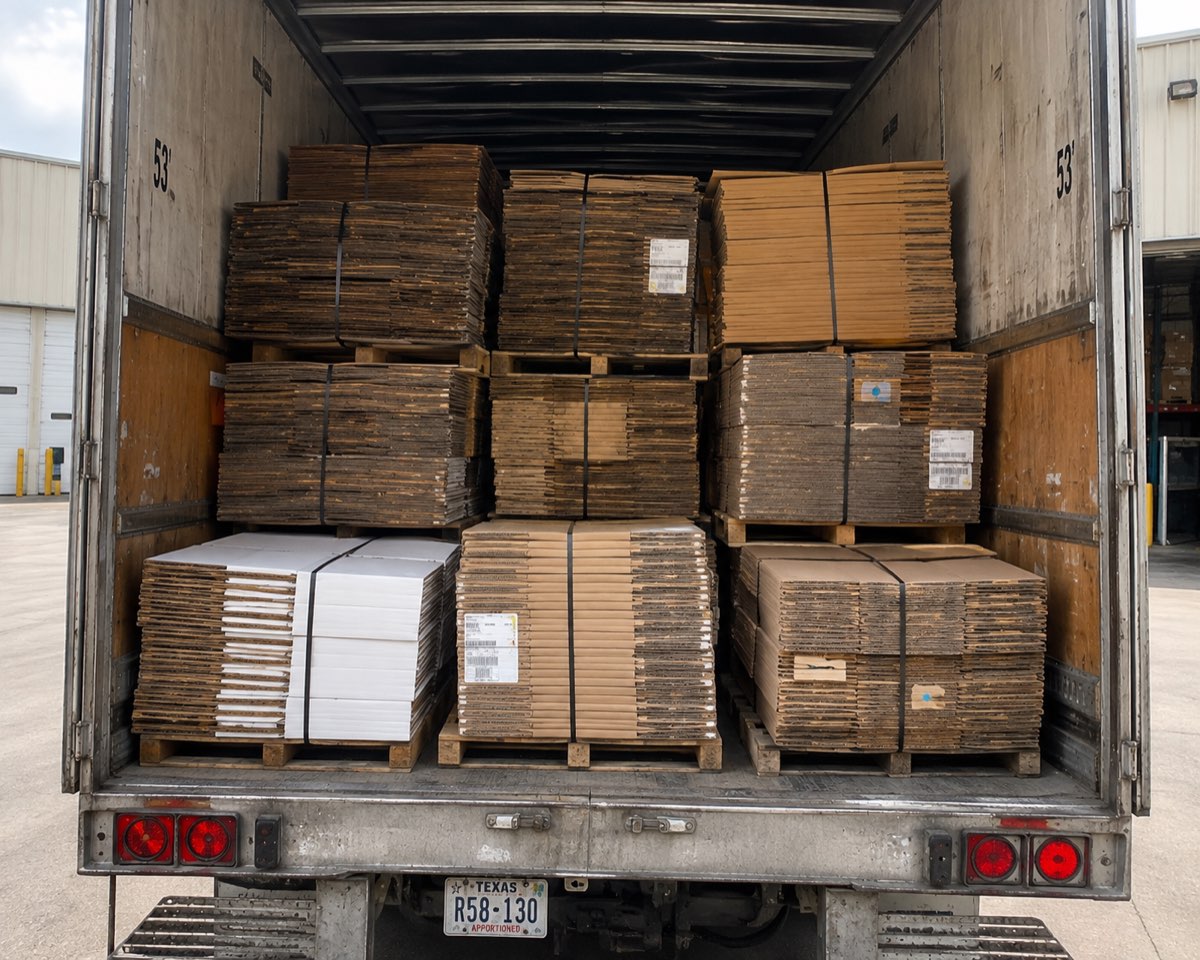
- Shipped flat rather than assembled. Roughly four times more boxes per trailer, which is why almost all used inventory ships this way.
Luis Barrera — Yard supervisor
Written on the yard at 1050 E Richey Rd, Houston. Everyone who writes here works the grading line, the baler, the routes or the quote desk — there are no guest posts and nothing on this blog is syndicated.