Cut-downs: turning a damaged 36 into a working 30
Top-edge crush is the most common damage we see and the easiest to fix. How cut-downs work, and when they beat buying a shorter box.
By Ray Castellanos, Fabrication · 5 min read · Published December 10, 2024
Have a question this raised?
Tell us what you have or what you need. A real person in Houston reads every one of these — usually within a couple of hours during dock time.
- What a cut-down is
- When it works
- When it does not
- The economics, including the direction people miss
- What you give up
- Doing it yourself
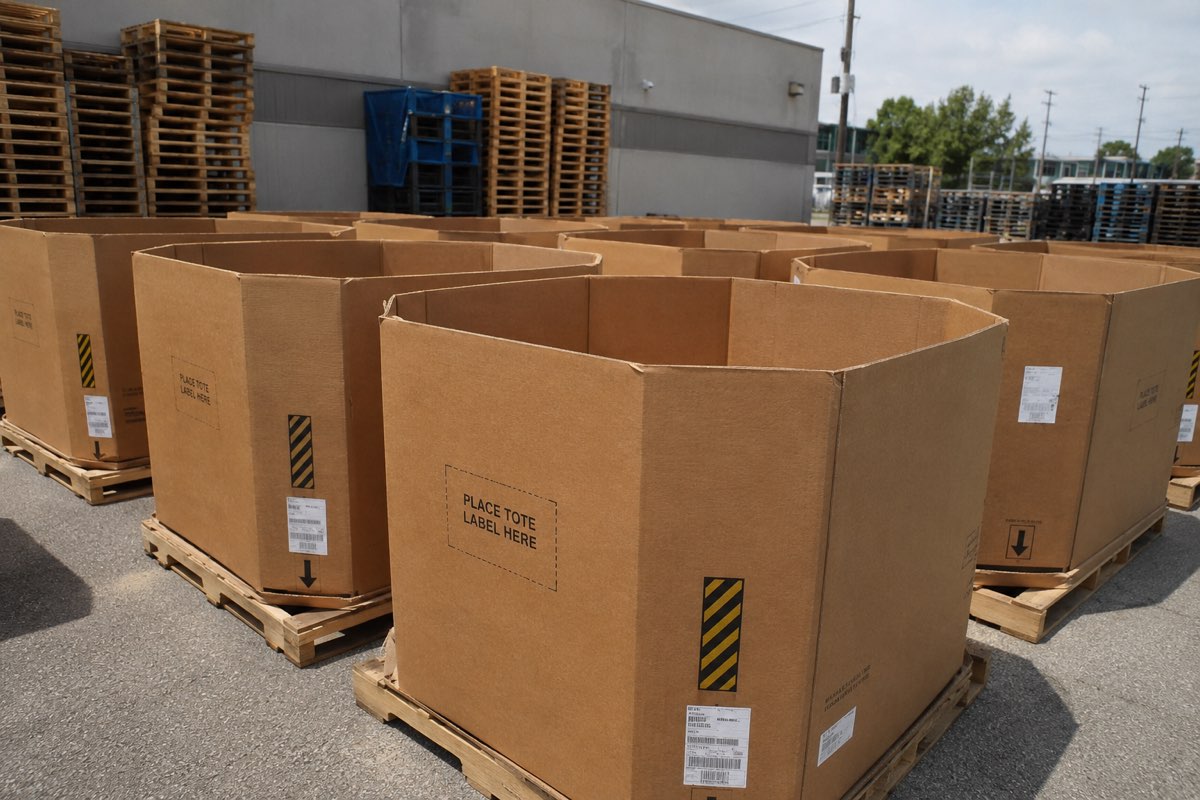
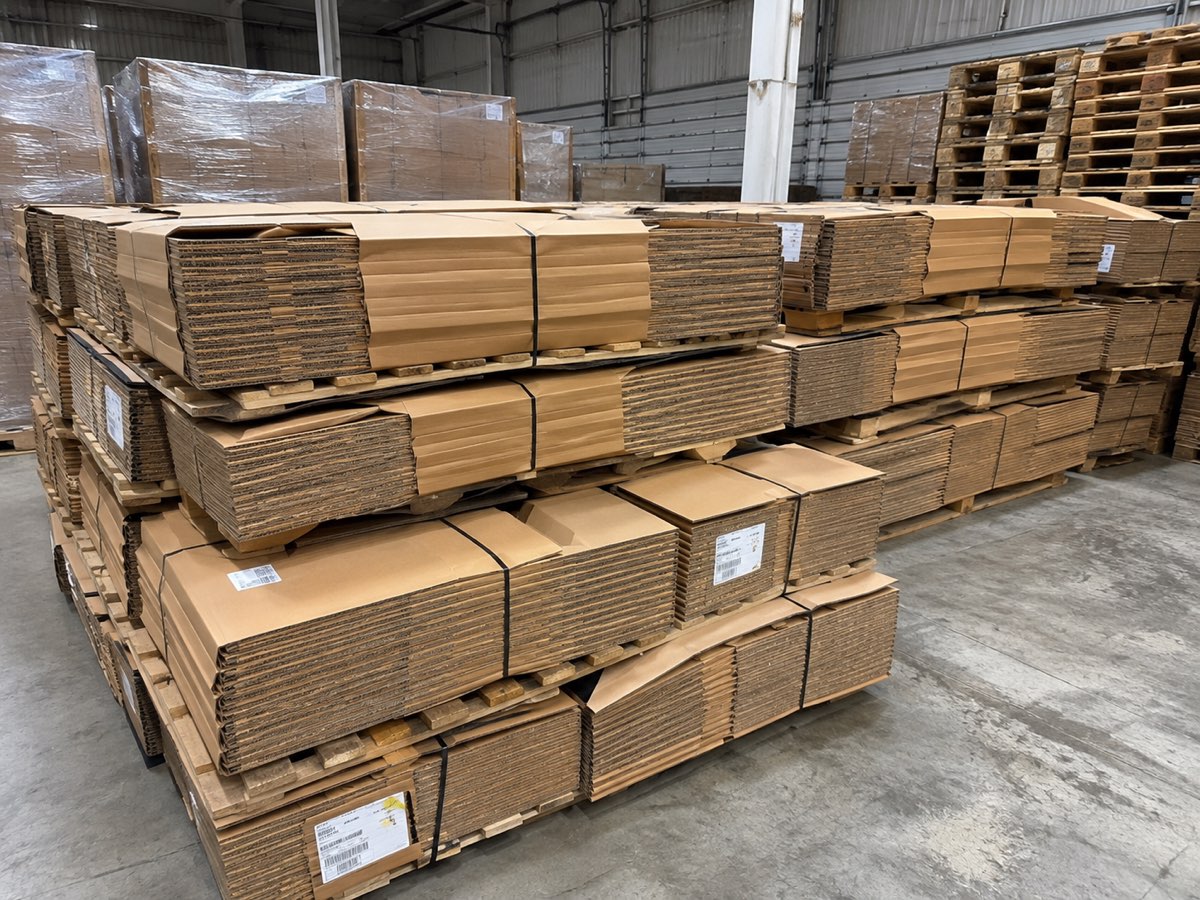
A cut-down removes the damaged top band of a box and re-scores new flaps, converting a crushed 36″ box into a structurally sound 30″ or 24″ one. It works whenever damage is confined to the top few inches and the corners, bottom and lower walls are intact — which describes most handling damage.
- Category
- Operations
- Published
- December 10, 2024
- Written by
- Ray Castellanos, fabrication
Top-edge crush is the most common damage we see, by a distance. Forklifts hit the top rim, lids get forced on, stacks settle unevenly, and the top three or four inches take it. Below that band the box is usually perfect.
What a cut-down is
The damaged band is cut off cleanly, new flap scores are cut into the remaining wall, and the box comes back as a shorter container with full structural integrity below the original damage. A 36-inch box with a crushed rim becomes a sound 30. A badly damaged 42 becomes a 30 or a 24.
That is the whole idea. It is not clever, it is just a use for a saw and a scoring tool that the market mostly does not bother with.
When it works
- Damage confined to the top few inches of wall.
- Corners sound below the cut line — this is the requirement that decides everything.
- Bottom seam intact, no bulge.
- No moisture history. A cut-down does not fix a tide line.
- Enough wall left to be useful — below about 20 inches you are making a tray, not a box.
When it does not
- Soft or rounded corners. Structural, and cutting does not reach it.
- Bulged bottom. The flutes down there are already crushed.
- Delamination anywhere. The glue line has failed and it will keep failing.
- Odour or residue. You are not cutting that out.
The economics, including the direction people miss
The obvious case is salvage: a damaged box worth fiber value becomes a working box worth several times that. Straightforward.
The less obvious case is deliberate. If your material only ever fills a box to 24 inches, and 36-inch stock is deep and 24-inch stock is thin, buying 36s and cutting them down can be cheaper than sourcing 24s — and it uses boxes that would otherwise have been downgraded. We do this regularly for customers whose ideal height is not a size the market carries in volume.
| Route | When it wins |
|---|---|
| Buy the shorter size new | You need a lot, consistently, and the size is stocked |
| Cut down your own damaged stock | You already own the boxes and the damage is top-band |
| Cut down purchased taller stock | Your ideal height is not commonly stocked |
| Scrap and rebuy | Corners, bottom or moisture are involved |
What you give up
- Volume, obviously. Check that the shorter box still fits your fill weight.
- Lid compatibility. A cut-down box has the same footprint, so lids still fit — but if you cut to a non-standard height, pallet caps and sleeves may not.
- A grade. The box is Grade B afterwards, and it should be sold and used as one.
- Some flap quality. Re-scored flaps are not quite as crisp as factory scores, and after several folds they show it.
Doing it yourself
Plenty of operations can. What matters: cut with a straight edge and a fresh blade so the cut line is clean rather than torn, score rather than cut the fold line, keep the cut square to the corners, and stand the box up empty afterwards to confirm it still holds shape. If you are cutting more than a pallet a week it is worth a proper scoring tool rather than a knife.
- ECT
- Edge Crush Test. Pounds per linear inch a board edge withstands before buckling. The best single predictor of stacking performance.
- Flute
- The wavy medium between liners. Its arch geometry is what gives corrugated its strength-to-weight ratio.
- Grade (box)
- A condition classification for used boxes. 1A new, A one clean use, B up to two repairs, C multiple repairs, then scrap.
- Pallet cap
- A corrugated cover placed over a loaded pallet or box to protect the top and enable stacking.
- Scrap
- A box that is no longer viable as a container. Still valuable — as fiber, by the ton.
- Sleeve
- A four-sided corrugated body without top or bottom, used with a separate cap and base.
- Tide line
- A wavy discoloured band showing a box stood in water. Permanent strength loss even after drying.
Ray Castellanos — Fabrication
Written on the yard at 1050 E Richey Rd, Houston. Everyone who writes here works the grading line, the baler, the routes or the quote desk — there are no guest posts and nothing on this blog is syndicated.