Rail versus truck for bulk corrugated, and why rail almost never wins
Rail is cheaper per ton-mile and worse at nearly everything else bulk corrugated needs. The four conditions under which rail makes sense.
By Dwayne Okafor, Dispatch & freight · 6 min read · Published April 9, 2024
Have a question this raised?
Tell us what you have or what you need. A real person in Houston reads every one of these — usually within a couple of hours during dock time.
- Where rail genuinely wins
- Why it usually loses anyway
- The four conditions where we would recommend it
- What we do instead on long lanes
Rail beats truck on cost per ton-mile but loses on transit time, damage exposure and the need for rail-served docks at both ends. For bulk corrugated it only makes sense above roughly 800 miles, with high volume, flexible timing and rail access on both ends — which describes very few box moves.
- Category
- Logistics
- Published
- April 9, 2024
- Written by
- Dwayne Okafor, dispatch & freight
Every few months a customer with a rail spur asks whether we can move boxes by rail. The honest answer is usually no, and the reasons are worth writing down because they explain a lot about how bulk corrugated behaves in transit.
Where rail genuinely wins
Cost per ton-mile, and it is not close. On long hauls with high volume, rail can be a fraction of trucking cost. If your material were dense and your timing were loose, this would be the end of the discussion.
Why it usually loses anyway
1. Corrugated is a cube commodity, not a weight commodity
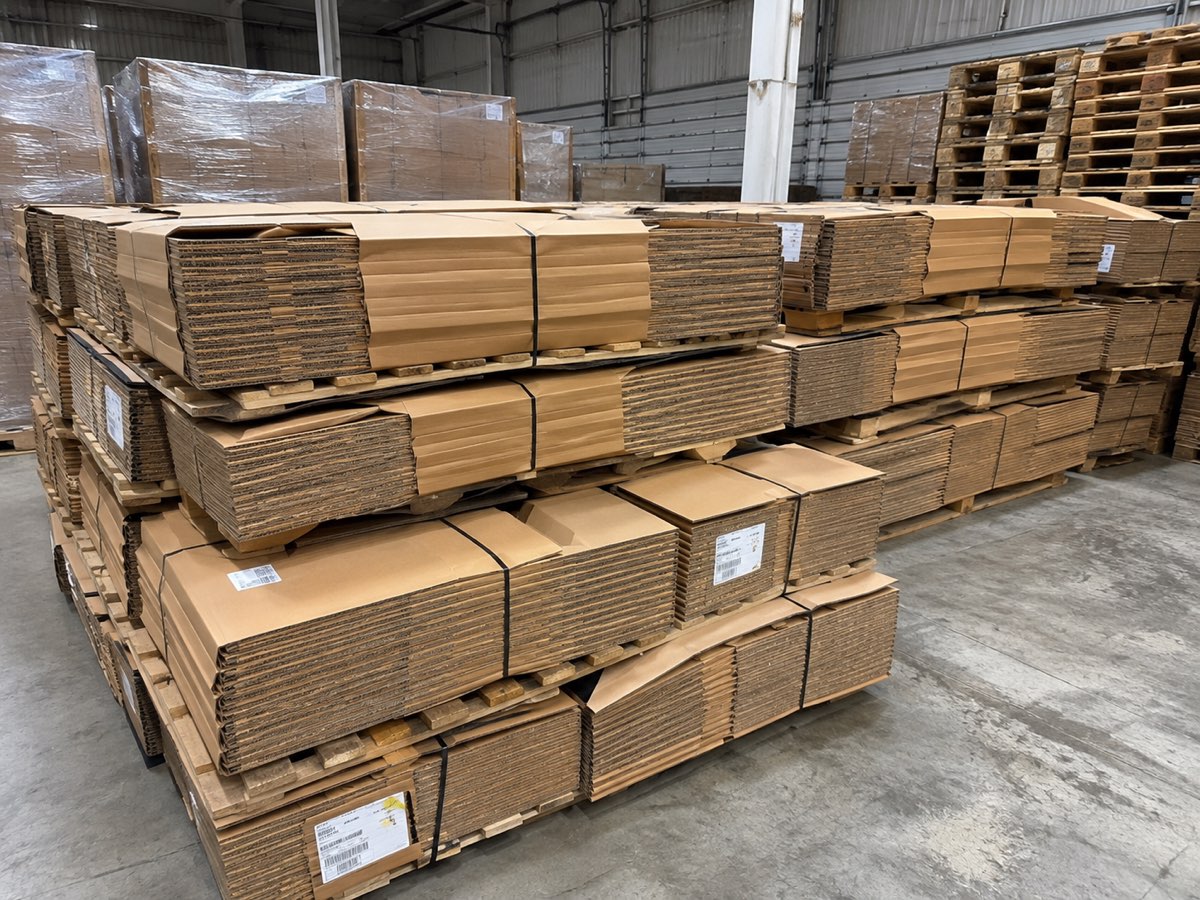
Rail pricing advantages compound with weight. A boxcar can carry far more weight than a trailer, but knocked-down corrugated fills the cube long before it approaches the weight limit. You end up paying for a very large container of air, and the per-unit advantage shrinks dramatically.
2. Transit time and variability
A truck from Houston to Dallas is a same-day move. The same lane by rail involves switching, yard time and a delivery window measured in days with meaningful variance. For a customer who called on Tuesday needing boxes Thursday, that is not a service.
3. Vibration
This is the interesting one. Rail cars experience sustained vibration and longitudinal shock at coupling that a highway trailer does not. Corrugated tolerates it poorly, and granular material inside a corrugated container tolerates it worse — it settles, compacts and pushes outward on the walls for the entire journey.
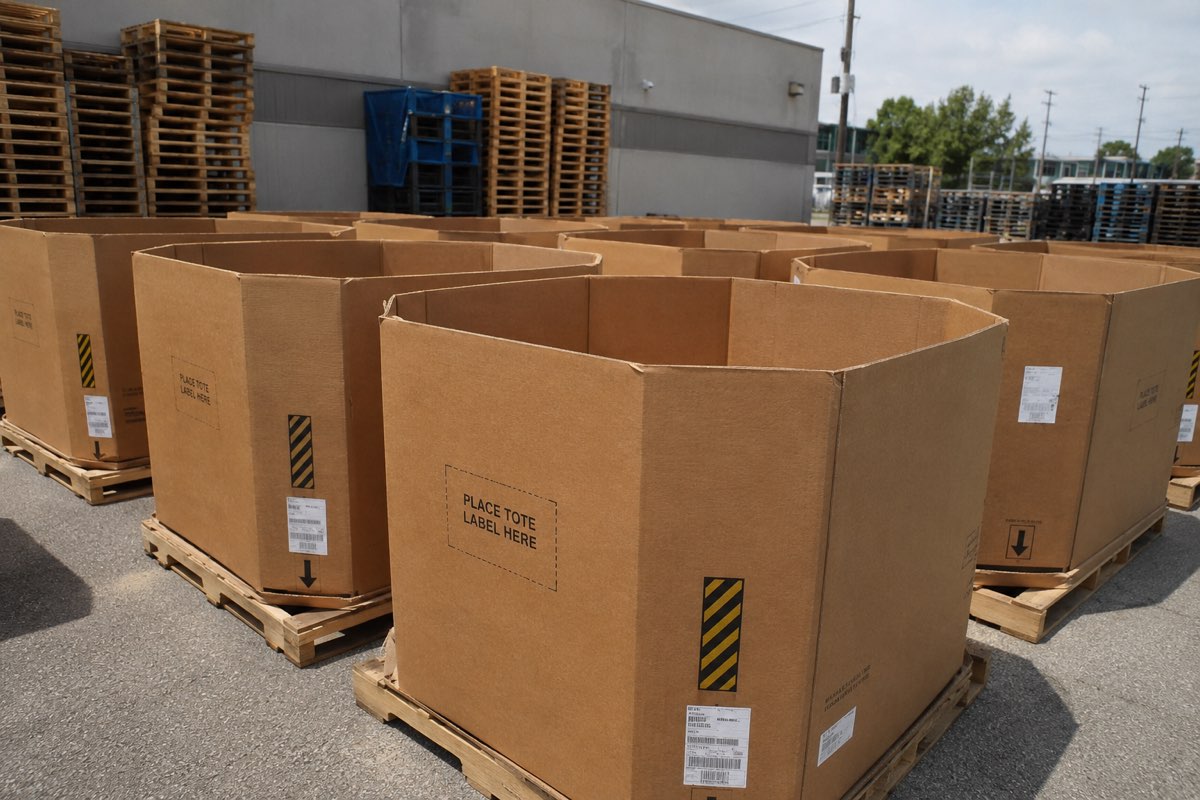
This is precisely why octagon bins exist. Eight sides distribute that outward pressure instead of concentrating it in four corners, which is where square boxes fail. If you are going to move flowable material any distance by rail, the container geometry is not optional.
4. Rail-served docks at both ends
Even with a spur, you need loading capability, staging space and someone to handle the car. Transload — rail to truck at an intermediate point — adds handling, and every handling event on bulk corrugated is a damage opportunity.
The four conditions where we would recommend it
- Distance above roughly 800 miles.
- Volume that fills a car — partial car pricing destroys the advantage.
- Timing measured in weeks, with real buffer stock at the destination.
- Rail access at both ends without transload, or a transload partner you already trust.
Meet all four and rail is genuinely worth pricing. Miss one and the savings evaporate into damage, delay and handling.
What we do instead on long lanes
Backhaul pairing. A trailer that delivers boxes to Dallas is going to return to Houston, and it will do it empty unless someone fills it. Loading fiber, empties or pallets on that return leg means one linehaul instead of two, which typically takes 40 percent off each direction.
That gets most of the way to rail economics without any of the transit-time or vibration problems, and it is available on lanes we already run. Which is why the answer to 'can we do rail' is usually 'let me show you what pairing does first'.
- ECT
- Edge Crush Test. Pounds per linear inch a board edge withstands before buckling. The best single predictor of stacking performance.
Dwayne Okafor — Dispatch & freight
Written on the yard at 1050 E Richey Rd, Houston. Everyone who writes here works the grading line, the baler, the routes or the quote desk — there are no guest posts and nothing on this blog is syndicated.