Pallet overhang: the 20 percent you are giving away every stack
An inch of overhang costs roughly a fifth of your stacking strength, and it takes it from the corners that carry most of the load.
By Marisol Vega, Grading line lead · 5 min read · Published August 13, 2024
Have a question this raised?
Tell us what you have or what you need. A real person in Houston reads every one of these — usually within a couple of hours during dock time.
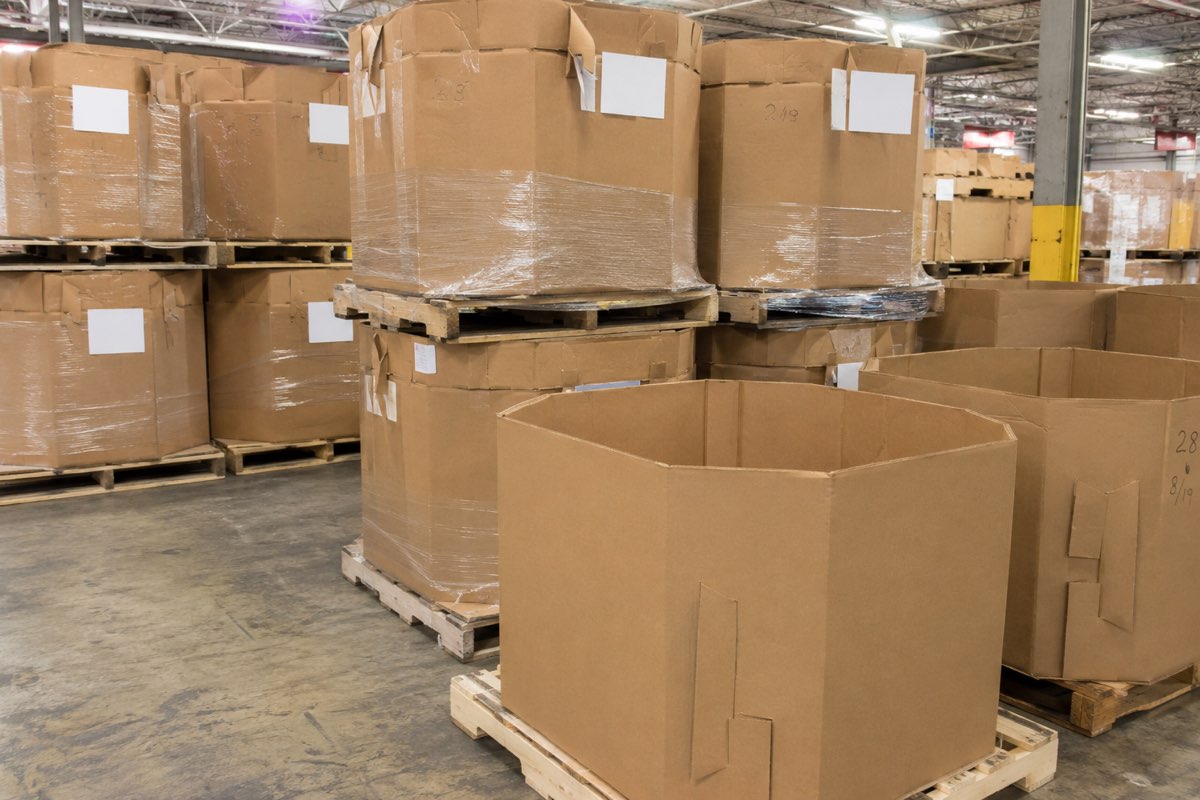
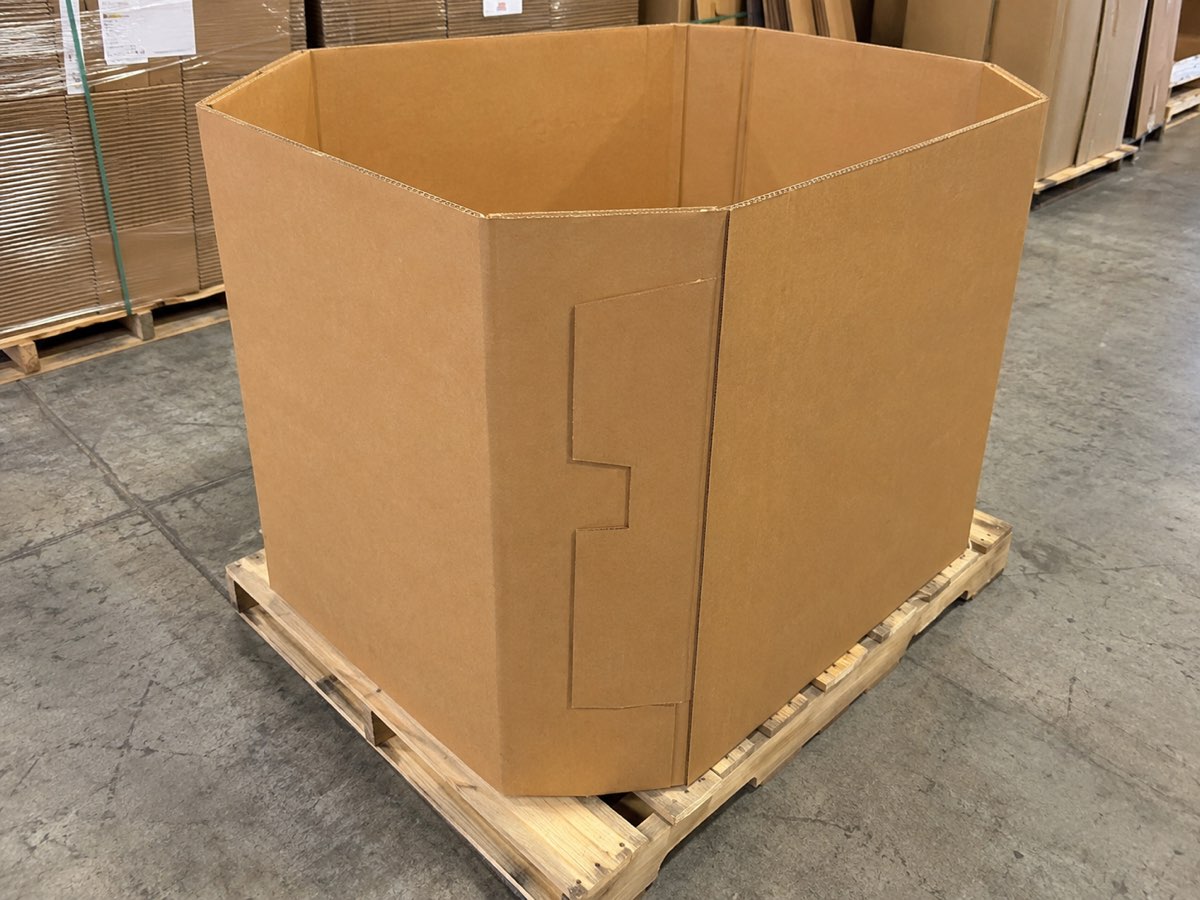
- Why corners carry the load
- What overhang actually looks like
- The four ways it happens
- How to check in one minute
- What to do when the pallet is wrong
- The other direction: undersized boxes
Box corners carry roughly 60–70% of a stacked compression load. When a box overhangs the pallet, those corners are supported by air. One inch of overhang costs about 20% of stacking strength, two inches costs substantially more, and the failure appears at the bottom of the stack where it does the most damage.
- Category
- Operations
- Published
- August 13, 2024
- Written by
- Marisol Vega, grading line lead
This is the cheapest problem in the industry to fix and one of the most common to find. It takes a tape measure and about a minute per pallet type.
Why corners carry the load
Corrugated gets its compression strength from the flutes, which act as a series of arches. At a corner, two walls meet and brace each other — the vertical fold is effectively a column. Along a flat wall, there is nothing preventing the panel from bowing outward under load.
Measurements consistently put 60 to 70 percent of a box's compression capacity in the four corners. Take the support away from a corner and you are not losing a quarter of the box, you are losing the part that was doing the work.
What overhang actually looks like
| Overhang | Approximate strength retained |
|---|---|
| 0 (flush) | 100% — the reference condition |
| ½" | ~ 90% |
| 1" | ~ 80% |
| 2" | ~ 65% |
| Corner unsupported entirely | Unpredictable — treat as unsafe |
Those are rules of thumb rather than laboratory constants, but the direction and the magnitude hold. And the effect is worst at the bottom of a stack, which is exactly where a failure does maximum damage.
The four ways it happens
- Square boxes on rectangular pallets. A 48 × 48 box on a 48 × 40 GMA leaves eight inches unsupported on two sides. This is the big one, and it is entirely a purchasing mistake.
- Metric boxes on GMA pallets. Imported boxes built for 1200 × 1000 mm are close but not equal, and they sit either short or proud depending on which dimension.
- Wall count. A 5-wall box has thicker walls than a 2-wall, so its outside dimensions are larger by an inch or so. Switch wall count and keep the pallet and you can introduce overhang without changing anything you thought mattered.
- Damaged pallets. A pallet with a broken deck board is not 48 × 40 where it counts; it is 48 × 40 with a hole under one corner.
How to check in one minute
- Put an empty box on the pallet you actually use.
- Look along each edge at floor level. Any daylight between the box wall and the pallet edge is overhang.
- Measure the worst one.
- Check all four corners specifically — a box can sit flush on two sides and hang on the other two if the pallet is out of square.
What to do when the pallet is wrong
In order of preference: change the pallet, change the box, or reduce the stack height. The first is usually cheapest — pallets in the right footprint cost far less than the boxes sitting on them, and we sell both, which is why we ask about the pallet before quoting a square box.
Reducing stack height is the fallback when neither can change quickly. It costs floor space, but floor space is recoverable and a collapsed stack is not.
The other direction: undersized boxes
Boxes smaller than the pallet are less dangerous but not free. The load is supported, but the pallet edge is exposed to forklift damage and neighbouring pallets, and stacking becomes imprecise because there is nothing registering the box position. Flush is the target in both directions.
- ECT
- Edge Crush Test. Pounds per linear inch a board edge withstands before buckling. The best single predictor of stacking performance.
- Flute
- The wavy medium between liners. Its arch geometry is what gives corrugated its strength-to-weight ratio.
- GMA pallet
- The Grocery Manufacturers Association standard pallet, 48" × 40". The reason the standard gaylord box footprint is what it is.
- Grade (box)
- A condition classification for used boxes. 1A new, A one clean use, B up to two repairs, C multiple repairs, then scrap.
- Overhang
- Box extending past the pallet edge. One inch can cost 20% of stacking strength because the corners lose support.
- Tri-wall
- Three-ply corrugated board. The most common construction for bulk boxes and the default for most industrial applications.
- Wall count
- The number of fluted layers. 2-wall through 5-wall in common use.
Marisol Vega — Grading line lead
Written on the yard at 1050 E Richey Rd, Houston. Everyone who writes here works the grading line, the baler, the routes or the quote desk — there are no guest posts and nothing on this blog is syndicated.